Document Type : Review Paper
Graphical Abstract
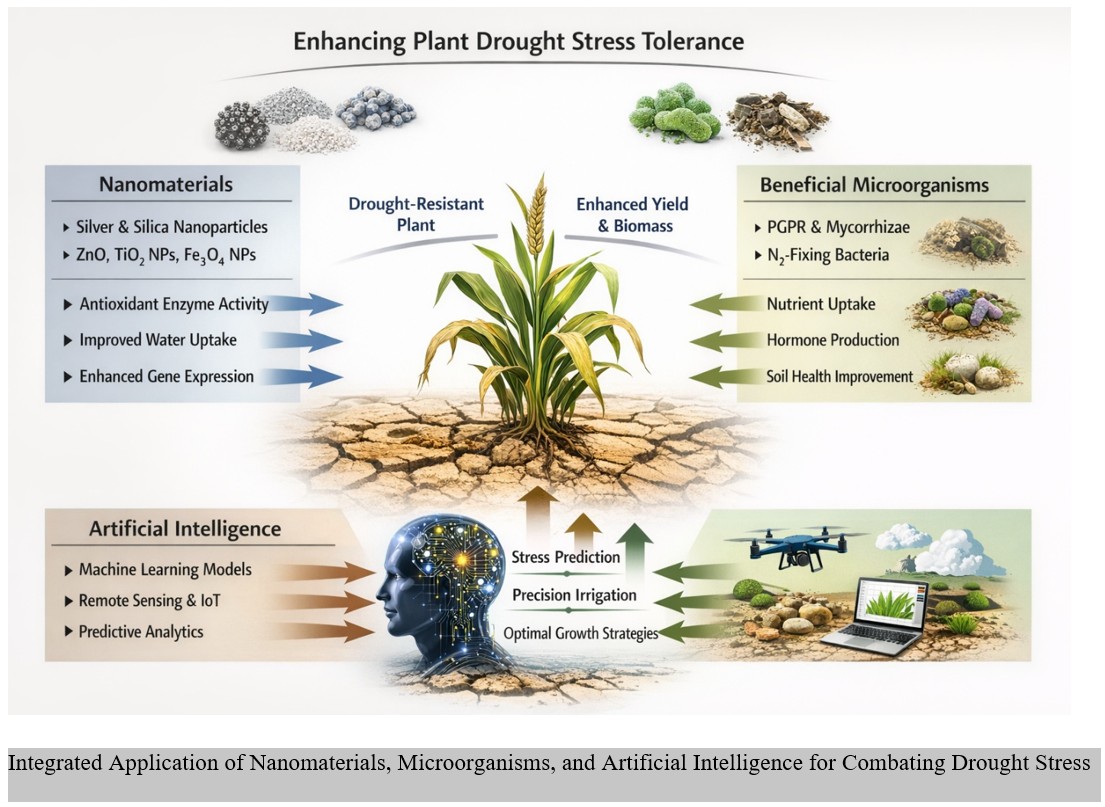
Highlights
Integration of AI, nanotechnology, and microbes enhances drought-resilient agriculture
Nanomaterials improve soil water retention and controlled nutrient delivery
Beneficial microbes boost plant drought tolerance via hormonal and root regulation
AI-driven irrigation optimizes water use under climate variability
AI–Nano–Biotech systems support sustainable water-smart agriculture
⚠️ THE FOLLOWING SECTION IS TEXT-ONLY
No equations, tables, figures, or color graphics are shown below. For the complete version, please use the free PDF available on this page (top right).
INTRODUCTION
Water is the foundational resource for global food production and a critical determinant of ecological stability; agriculture presently accounts for roughly 70% of global freshwater withdrawals, placing immense pressure on water systems amid population growth and climate change [1]. The water challenge in agriculture is multi-faceted: constrained spatial and temporal access to water, rising costs of extraction and storage, and increasing hydrological variability (more frequent droughts and episodic floods) together require both short-term adaptive measures and long-term strategic planning, including explicit accounting of the true economic cost of water for agricultural production [2]. Renovation and renovation of established infrastructure and approaches, such as aqueducts, wells, reservoirs, water harvesting, along with developing controlled agriculture (e.g., greenhouse, hydroponic and aeroponic systems, plant factories, and microgreen production), can substantially reduce water losses, but their scalability and resilience are limited by climate pressures, energy costs, and regional water availability [3,4].
Beyond infrastructure-based solutions, technological interventions targeting plant-level drought resilience have gained increasing attention. Meanwhile, scientific research results are also emerging that show that biological and chemical interventions have shown promise for improving crop drought tolerance. plant growth–promoting rhizobacteria (PGPR), a group of soil bacteria that colonize plant roots and stimulate growth through biochemical and physiological mechanisms, and other beneficial microbes enhance drought resilience via osmolyte accumulation, modulation of stress hormones, improved root architecture, and enhanced nutrient uptake. However, it should be noted that the ultimate efficacy of microbial inoculants lacks sufficient consistency due to variations in soil physicochemical conditions, competition among microbial strains, and other similar influencing factors. [5,6]. Similarly, targeted hormonal [7,8] treatments and osmo-protectants [9] can help mitigate physiological stress responses and improve survival under limited water availability. Nanotechnology offers complementary tools for water-efficient agriculture: engineered nanomaterials (e.g., nano-hydrogels, nano-clays, metal/metal-oxide nanoparticles, and nano-enabled fertilizers) can improve soil water retention, controlled nutrient release, and plant physiological resilience to drought when properly designed and deployed [10]. Recent reviews document both promising efficacy and the need to evaluate environmental safety and dose/residue issues [11]. The potential use of nanomaterials, especially when combined with beneficial microbes, could also be useful in combating another water-related challenge. Advances in water purification and reuse — notably nano-enabled membranes and hybrid microbial–nanomaterial treatment systems — increase the feasibility of safely recycling municipal and agro-industrial wastewaters for irrigation, reducing pressure on freshwater sources where regulatory and safety frameworks allow [12].
Artificial intelligence (AI) and data-driven approaches are accelerating a shift from reactive to predictive water management: ML and hybrid models ingest multi-source data (soil sensors, weather forecasts, remote sensing) to optimize irrigation scheduling, detect leaks/failures, and design smart cropping patterns at farm-to-regional scales. A crucial consideration in this context is that the long-term generalizability of models and their transferability across diverse agroecological zones remain key technical challenges. However, successful deployment requires robust local calibration, cost–benefit analysis, and attention to equity and data governance [13].
The convergence of AI, nanotechnology, and biotechnology (microbial and genetic solutions) points to integrated AI–Nano–Biotech systems that can intelligently manage water resources, enhance crop resilience, and enable sustainable intensification. Realizing this potential will require interdisciplinary research on plant–nano–microbe interactions, field-scale validation, environmental safety assessment, and techno-economic evaluation. Despite significant advancements to date in the fields of nanotechnology, microbial biotechnology, and artificial intelligence, no integrated framework has yet been developed that employs all of these achievements within a cohesive platform for drought management. This study examines the impact of each of these technologies on drought mitigation independently, which consequently creates a translational gap between conceptual synergy and practical implementation. Therefore, the objective of the present review article is to evaluate current advancements in the fields of artificial intelligence, nano-enabled agricultural systems, and the impact of microorganisms on drought mitigation, to propose an integrated conceptual framework aimed at addressing technological fragmentation.
Global Water Access Restrictions
Humanity has always required water to achieve development; however, the growth of agriculture, urbanization, climate change, and population increase—and consequently the increased demand for food—have led in recent years to water instability and shortages. This situation will bring about extensive political and social transformations; therefore, it has multiplied the necessity for planning to ensure optimal and sustainable use of water resources. The most commonly used indicator for assessing water scarcity is the ratio of water supply to demand, known as blue water scarcity (BWS). BWS refers to freshwater, such as groundwater, lakes, or rivers. In fact, the greatest problem facing today’s world is the shortage of freshwater. Estimates indicate that the rate of groundwater depletion ranges between 100 and 200 km² per year. However, it should be noted that due to climatic differences, the rate of groundwater depletion varies across different regions. Reports show that if the declining trend of water available for agriculture continues, global food production may face a 30% reduction by 2040. Furthermore, water scarcity may reduce the overall income of agricultural products in the Mediterranean region by up to 40% by 2040. By 2040, water shortages may threaten up to 30% of the world’s food production [14,15]. Therefore, it seems necessary to make significant use of modern technologies to plan for the optimal utilization of this limited amount of water at the global level.
Ensuring Water Safety
Every day, 1,000 children worldwide lose their lives due to water-quality–related diseases [15]. Considering the shortage of freshwater required by humans and its consumption in agriculture, solutions must be sought for the treatment of industrial and wastewater so that such water can be reused for agricultural purposes. Numerous emerging contaminants exist in wastewater and industrial discharges that gradually affect soil quality. Emerging contaminants are generally divided into two categories: polar organic compounds, such as pesticides, pharmaceuticals, and chemicals, and non-polar contaminants such as microplastics. In recent years, with the help of methods such as nanotechnology using surface adsorbents made from carbon-based nanomaterials, membrane technologies based on nano filters, solvent-based pollutant removal, biotechnology using microorganisms to degrade biological pollutants, such as biofilm production by microorganisms, and advanced oxidation processes, a significant portion of water contaminants has become removable [16]. If contaminants remain in recycled water used for agriculture, the levels of heavy metals in the soil gradually increase, causing soil salinity, which negatively affects soil quality, plant health, final crop quality, and especially human health. Therefore, it is essential to employ modern methods and artificial intelligence to identify emerging contaminants and remove them from recycled water used in agriculture, thereby ensuring the quality of water used for agricultural purposes [17, 18, 19].
Water Extraction and Storage Costs
Accessing water required for agriculture or drinking involves costs that are often overlooked, particularly in the agricultural sector. For example, considering that 40% of irrigation water worldwide is supplied from groundwater, the costs of locating wells, construction, extraction, and water storage are among the factors that must be taken into account. Various models have been developed to estimate these costs. Niazi and colleagues in 2025 estimated that more than 90% of groundwater can be extracted at a cost of about 0.5 USD per cubic meter [20]. Other water-supply methods include desalination of saline water, such as seawater, and water recycling. Research has shown that the benefit-to-cost ratio of recycled water is 17.02, indicating a high return on investment, whereas the benefit-to-cost ratio of producing usable water from saline sources is around 4, which, although beneficial, is less efficient than water recycling [21]. A similar study conducted in Egypt demonstrated that pumping water from wells to upstream lands costs between 2 and 17 USD per cubic meter [22]. Water storage in various forms, such as ponds, is another method used for dry regions; however, a significant portion of the stored water evaporates. Studies in several Middle Eastern and African countries have shown that 2,400 million cubic meters of water evaporate annually from storage ponds, indicating considerable water loss [23]. Therefore, it must be acknowledged that at all stages—from extraction to delivering water to the point of use—costs are incurred, and these costs must be considered relative to the benefits of production.
It should be noted that producing freshwater has become extremely costly today, and transporting water over long distances is also highly expensive. According to reports from the World Economic Forum, the agricultural sector consumes more than 70% of the world’s freshwater resources. Sixty percent of this amount is lost due to inappropriate irrigation systems, incorrect cropping techniques, and the production of water-intensive crops. Several major food-producing countries, such as China, India, and the United States, have already exceeded the permissible levels of their water-resource use and are on the verge of exceeding critical thresholds. Meanwhile, the excessive use of pesticides and fertilizers in agriculture has led to contamination of a large portion of surface and groundwater. Evaluating the economic value of the water consumed relative to the produced crops plays an important role in conserving water in agriculture. Strategies such as volumetric or tiered water-pricing mechanisms in Iran, as well as the high price of water in Brazil, have encouraged farmers to turn to modern irrigation methods to reduce agricultural water consumption. Using water at specific stages of plant growth has more significant effects and leads to improved plant development and ultimately higher crop yield. Managing the appropriate timing of irrigation is one of the most important factors in preventing agricultural water loss [15]. It should be noted that economic assessments only estimate the costs of water extraction and distribution, quantifying them in monetary terms, but cannot optimize water allocation efficiency under changing climatic conditions. Therefore, this gap must be addressed through predictive and climate-adaptive management tools. It appears that the use of artificial intelligence tools to estimate the optimal irrigation time for plants—based on the integration of meteorological, soil, and plant data—can play a significant role in reducing water costs in agriculture.
Water Cycle Management
The natural water cycle is critically important for biodiversity [15]. One of the key features of climate change is its impact on the water cycle, resulting in altered precipitation patterns and temperature changes. The water cycle is the continuous movement of water through atmospheric, surface, and underground reservoirs on Earth, yet climate change—by intensifying evaporation, altering cloud patterns, and modifying surface runoff and groundwater—has disrupted this process. Climate change has altered precipitation patterns and led to drought. To address this problem, approaches such as reducing greenhouse gas emissions, implementing sustainable water-resource management, and focusing on environmental protection have been proposed. However, using new tools such as artificial intelligence, by simultaneously employing multiple mathematical models, predicting climate change, and assessing soil and atmospheric conditions in real time, can significantly enhance water-cycle management [24]. Machine learning models such as Random Forest (RF), Support Vector Machines (SVM), and Long Short-Term Memory (LSTM) networks have demonstrated superior performance compared to traditional hydrological models in forecasting precipitation variability and streamflow dynamics [25]. In 2025, Khan and colleagues used artificial intelligence to develop a mathematical model based on fractional-order differential equations that simulates global temperature trends, precipitation, and water availability [26]. In another study, agricultural managed aquifer recharge (Ag-MAR) to enhance groundwater availability for irrigation, an integrated intelligent system based on artificially recharging aquifers through controlled flooding of agricultural lands, was introduced [27. Moreover, artificial intelligence can improve water-cycle management by optimizing the transfer of surface water to groundwater and enhancing the predictability of water and weather data related to flood events [28].
Drought
Drought and water scarcity have various causes, and several categories of water shortage exist, including absolute or severe, chronic, seasonal, temporary, cyclical, and life-threatening [15]. Climate-change-induced droughts inflict major damage on agricultural production and consequently on global food output. On average, drought has caused a 20% reduction in global food supply [29]. Long-term analyses of drought records over the past six decades indicate persistent vulnerability to recurrent drought events at the global scale, with East Africa and South Asia emerging as particularly high-risk regions.[30]. Overall, drought in major food-producing countries such as the United States, China, and Brazil serves as a warning signal for the entire world. Studies have shown that with increasing dryness in these countries, the risk of famine becomes apparent because these countries produce agricultural food supplies for various nations across the globe. The greatest crop losses due to drought have occurred in major agricultural producers and involve crops such as corn, soybean, and spring and winter wheat [29]. For example, studies in Brazil have shown that drought from 1974 to 2020 resulted in production losses of 4.56, 3.55, and 14.30 billion USD in rice, corn, and soybeans, respectively [31]. Therefore, drought can be considered one of the most important drivers of reduced agricultural production and increased food insecurity worldwide. On the other hand, groundwater resources serve as a critical reservoir during times of crisis. Over-extraction from these sources can lead to land subsidence, reduced river flow, and the drying up of wells [32]. A study on water level changes across 170,000 wells and 1,693 aquifer systems in different countries revealed that groundwater levels have decreased by approximately 0.5 meters per year. This phenomenon has been exacerbated in the 21st century due to recurring droughts. [33]. Continuous use of groundwater for agricultural purposes is projected to reduce the groundwater levels by 21, 33, 40, and 42 meters in the years 2030, 2050, 2070, and 2100, respectively [34]. This underscores the necessity for effective management and sustainable utilization of groundwater resources.
Drought Management Strategies in the Past and Current
One of the most significant challenges of the 21st century is freshwater scarcity, which has directly affected more than 2.7 billion people. The World Economic Forum has stated that global water scarcity has become even more dangerous than the spread of infectious diseases, and it is predicted that by 2080, more than half of the world will struggle with water scarcity, creating numerous social, economic, and political risks. Predictions indicate that by 2040, more than 40% of children worldwide will live in water-stressed regions, and every day, more than 1,000 children will be threatened by water scarcity or unsafe water consumption. Given the severe shortage of water resources and the fact that the agricultural sector consumes the majority of water in different countries, methods such as micro-irrigation (including drip irrigation), fertigation (i.e., delivering fertilizer through irrigation), conservation agriculture (which involves maintaining crop residues on the soil surface and prevents 30–50% of water loss), improving soil structure to reduce compaction through biological fertilizers, crop pattern modification, crop rotation, mulching, and the use of drought-resistant plants can reduce the damages caused by water-stress conditions. On the other hand, demand-side strategies must also be considered, such as water pricing policies and regulations regarding well spacing. In recent years, innovations and new products have played an effective role in improving water conservation in agriculture—for example, superabsorbent polymer hydrogels, which retain water and reduce the rate of water release, thereby decreasing evaporation. The latest achievements aimed at reducing water loss focus on rainwater harvesting systems, solar-powered pumping systems, and cloud-based irrigation systems. The cloud-based irrigation system relies on soil and air moisture sensors, an Arduino Uno, central cloud storage, and a mobile application, such that irrigation is activated when soil and atmospheric moisture are within the defined range. However, looking toward the future, the protection of water resources must involve a combination of science and technology so that aerial and terrestrial metadata can be assessed with higher accuracy. In other words, a need exists for big-data analysis across multiple fields simultaneously—including atmospheric characteristics, soil, plants, agricultural economics, and other relevant factors [15].
Using Microorganisms to Increase Plant Tolerance to Drought Stress
Climate change and the resulting water shortages due to recurring droughts have prompted researchers to explore various methods, including the use of diverse microorganisms, to enhance plant drought resistance (Table 1). The rhizosphere, as a critical zone of interaction between plants and environmental microorganisms, plays a key role in plant growth and resistance to both biotic and abiotic stresses. The rhizosphere is the soil region surrounding plant roots, where bacteria establish close interactions with plants. Through the rhizosphere, plants carry out essential nutrient exchanges with the soil. During drought conditions, specific compounds are secreted by plant roots, which alter the microbial community in the rhizosphere [35]. Two major groups of microorganisms inhabit the rhizosphere: 1) Symbiotic microorganisms, such as nitrogen-fixing bacteria in legume roots, and 2) Plant Growth-Promoting Rhizobacteria (PGPR). Plant growth-promoting rhizobacteria (PGPR), including genera such as Pseudomonas, Bacillus, Azospirillum, Rhizobium, and Enterobacter, inhabit the rhizosphere and play a crucial role in enhancing plant growth by producing phytohormones, fixing atmospheric nitrogen, inducing stress resistance, and solubilizing nutrients that are otherwise unavailable to plants [36]. Under drought stress, the abundance of both Gram-negative and Gram-positive bacteria in the rhizosphere changes. Specifically, the number of Gram-negative bacteria, such as Proteobacteria, Verrucomicrobia, and Bacteroidetes, decreases, while the abundance of Gram-positive bacteria, such as Firmicutes, Actinobacteria, and Acidobacteria, increases. The survival ability of Gram-positive and Gram-negative bacteria is influenced by their capacity to form spores and the thickness of their cell walls. Gram-positive bacteria have a significantly higher spore-forming ability and possess thicker cell walls than Gram-negative bacteria. Gram-positive bacteria in the rhizosphere play a pivotal role in enhancing drought resistance in plants. These bacteria utilize mineral nitrogen to produce extracellular enzymes, which break down complex organic materials in dry soils. Consequently, they improve stem length, root growth, leaf area, dry weight, chlorophyll content, and nutrient levels in plants under drought stress [37]. For instance, Actinobacteria degrade organic matter in the soil, improving nitrogen and phosphorus availability to plants. During drought conditions, ions such as calcium, sodium, phosphorus, and potassium decrease, resulting in changes to the microbial flora in the rhizosphere. Studies have shown that Acidobacteria abundance correlates directly with nitrate and magnesium levels in the soil [38]. Actinomycetes also improve the antioxidant defense of plants under drought stress [39]. Certain microorganisms, such as Mortierella alpine, enhance the expression of drought resistance genes in plants [40]. Other bacteria, like Microbacterium sp. K2 produces extracellular polysaccharides that form biofilms, preventing moisture loss around plant roots [14]. Moreover, the production of IAA (Indole-3-acetic acid) by microorganisms contributes to increased root length and, consequently, enhanced drought resistance in plants [41, 42]. Therefore, bacteria play a significant role in conferring drought resistance to plants.
Using Hormones and Chemicals to Increase Plant Tolerance to Drought Stress
Various hormones and chemicals have been tested to assess their effects on plants’ resistance to drought stress. Plant hormones are low-molecular-weight molecules that regulate osmotic pressure in response to drought stress, helping mitigate the detrimental effects of water scarcity on plants. Plant hormones, such as melatonin, salicylic acid, jasmonates, strigolactones, brassinosteroids, and gamma-aminobutyric acid, have been identified as effective in reducing drought stress in plants. Overall, hormones and other plant materials aid in drought tolerance through mechanisms such as the synthesis of osmotic regulators like proline and soluble sugars, enhancing antioxidant pathways, boosting enzymatic activity (including catalase and dismutase), stimulating photosynthesis, and promoting root growth. Abscisic acid, the most important plant hormone produced in roots, is triggered under drought stress and induces stomatal closure in leaves. Applying this hormone has resulted in positive responses to drought stress in tomato, strawberry, and carrot plants. Salicylic acid also alleviates the oxidative damage caused by drought, reducing its negative impacts on plants. Other plant hormones, such as melatonin, jasmonates, brassinosteroids, strigolactones, and gamma-aminobutyric acid, exhibit unique properties that help plants cope with drought stress [54]. Research has shown that treatments involving these hormones stimulate plant responses to reduce the negative effects of drought stress. For example, applying strigolactones (SLs) increases ABA accumulation, resulting in soluble protein production, osmotic regulation via metabolic pathways such as arachidonic and linoleic acid metabolism, and enhanced root length, ultimately improving drought tolerance in plants [55]. In a similar study, 24-epibrassinolide (EBL), a steroidal hormone, was shown to increase plant resistance to drought stress. Using EBL in drought conditions resulted in increased stem height, fresh and dry stem weight, flower quality index, water content, and antioxidant capacity in Zinnia flowers [56]. In addition to hormones, certain chemicals such as nitrogen and potassium fertilizers have been shown to increase osmolyte production and improve oxidative processes in plants, especially under drought stress [57]. For instance, using KNO3 has been found to stimulate plant hormones, enhance potassium and nitrogen uptake, and reduce drought stress-related damage to plants [58].
Using Nanomaterials to Increase Plant Tolerance to Drought Stress
Nanoparticles have gained considerable attention for their ability to enhance plant resistance to abiotic stresses, particularly drought (Table 2). Nanotechnology relies on materials with sizes ranging from 1 to 100 nanometers [59,60]. Nanoparticles enhance drought tolerance in plants by stimulating growth, producing enzymes, increasing target gene expression, and improving antioxidant activities. Silver and silica nanoparticles are among the most studied nanomaterials for increasing drought tolerance in plants. Silica nanoparticles (SiNPs) positively affect plant growth under drought stress by improving nutrient uptake, synthesizing osmotic compounds, enhancing water exchanges, and modulating antioxidant enzyme activities. Research has shown that SiNPs increase germination, root length, and shoot length in wheat under drought stress, while also enhancing the expression of genes like TaSOD and TaAPX, leading to higher production of antioxidant enzymes like peroxidase [61]. In a similar study, SiNP100 nanoparticles improved gene expression of aquaporins and water potential in ginger plants under drought conditions [62]. Silver nanoparticles (AgNPs), another widely used nanomaterial in agriculture, increase drought tolerance in plants. AgNPs, ranging from 50 to 100 nanometers, improve morphological traits such as root, stem, and leaf length, and increase the water content stored in plants under drought stress. AgNPs also enhance the expression of drought-tolerant genes like CAX2 in plants [63]. However, it should be noted that excessive application of nanomaterials such as silver nanoparticles (AgNPs) may induce phytotoxic effects and adversely affect soil microbiota; therefore, the cautious and controlled use of these nanomaterials is essential [64,65]. Other research has investigated the use of silicon nanoparticles (SiO₂ NPs) in grapevines [66], selenium nanoparticles (nSe) in soybeans [67], and zinc oxide nanoparticles (ZnO-NPs) in strawberries [68] under drought stress, all of which demonstrate the positive effects of nanomaterials on plants under drought stress.
Microbial Wastewater Purification
The World Health Organization reported in 2017 that more than 80% of wastewater is discharged without treatment. Significant progress has been made in recent years in the bioremediation of wastewater using microorganisms. The use of microorganisms is considered an appropriate approach for replacing treated water with potable water for agricultural purposes. Bacteria, fungi, and algae exhibit remarkable capabilities in degrading and absorbing contaminants present in wastewater, including organic compounds, heavy metals, and emerging pollutants. Recent research employing genetically engineered microorganisms has further enhanced their role in water purification. Researchers have been able to improve pollutant removal from wastewater through the design of bioreactors and by utilizing bacterial consortia. Additionally, novel approaches such as omics technologies and next-generation sequencing have created promising opportunities to identify microorganisms with optimal metabolic pathways and effective enzymes for this purpose. Bacteria represent the most abundant and diverse group of microorganisms involved in wastewater treatment, degrading pollutants under aerobic and anaerobic conditions. Pseudomonas, Nitrosomonas, and Nitrobacter are examples of aerobic bacteria, while Clostridium and Methanobacterium represent anaerobic bacteria active in this field [79, 80]. Similar studies have shown that biosurfactant production by microorganisms, due to their hydrophilic and lipophilic properties, reduces the surface tension between non-polar pollutants and water, substantially contributing to the treatment of industrial wastewater [81]. Other studies have demonstrated that microorganisms such as Saccharomyces cerevisiae SH-4, Chlamydomonas reinhardtii NIES-2238 [82], Alicycliphilus denitrificans K601, Thauera aminoaromatica, Cupriavidus necator H16 [83], species of Nitrosomonas, and Nitrobacter [80], as well as species of Pseudomonas, Alcaligenes, Rhodococcus, and Bacillus [84, 85], play essential roles in the purification of industrial and domestic wastewater.
Nanomaterial-Based Wastewater Purification
Nanomaterials are emerging as innovative solutions for removing contaminants from wastewater. A key feature of nanomaterials is their high surface area in contact with pollutants [86, 87]. Using iron nanoparticles, titanium dioxide, and metal oxides, a substantial portion of water contaminants—including heavy metals—can be removed. Filtration technologies based on graphene oxide membranes are capable of removing pathogenic bacteria and dissolved salts with efficiencies exceeding 98% [88]. Research has shown that nanofiltration, a membrane-based technique, is highly cost-effective. Given that these membranes have pore sizes ranging from 1 to 10 nm and a molecular weight cut-off (MWCO) ranging from 100 to 2000 Da, they can remove a wide spectrum of suspended particles, bacteria, macromolecules, viruses, and heavy metals [89]. Various methods exist for synthesizing nanomaterials for wastewater treatment, including thermal decomposition, hydrothermal synthesis, sol-gel processes, microwave-assisted synthesis, and co-precipitation. Nanomaterials—whether used individually or in hybrid forms such as metal-organic frameworks, metal- and carbon-based nanostructures, metal oxides, and nanomembranes—play a pivotal role in removing aquatic contaminants [90, 87]. On the other hand, recent studies indicate that the application of artificial intelligence should not be overlooked as a complementary approach alongside nanomaterials. The synergistic integration of artificial intelligence with nanomaterials can enhance their effectiveness in promoting plant growth and improving tolerance to abiotic stresses. For instance, artificial intelligence–based optimization has been employed to determine optimal concentrations of zinc oxide nanoparticles (ZnO NPs) for Carum copticum, thereby maximizing their beneficial effects on plant performance [91].
Optimizing Smart Cropping Patterns Using Artificial Intelligence
AI Deep learning can now be used as a powerful tool to enhance agricultural production. Agricultural datasets—including meteorological data, soil properties, plant genetic information, and other key variables—are integrated and analyzed to generate advanced algorithms that support prediction and informed decision-making. These diverse datasets are collected using sensors and drones and are combined with historical records. Through data analysis, deep learning assists farmers in making correct decisions regarding crop selection, nutrient management, and pest control. The higher the accuracy of the data provided to deep learning systems, the more reliable the outputs, enabling farmers to choose optimal cropping patterns based on climatic conditions, soil characteristics, and plant traits [92]. In an initiative by the Indian Chamber of Food and Agriculture using data from the Kaggle repository, machine-learning models based on the PART algorithm were developed to assess moisture content, pH, organic matter, temperature, rainfall, and crop characteristics, achieving a prediction accuracy of 98%. These algorithms can effectively support optimal cropping pattern design [93,94]. However, model robustness under unforeseen climatic conditions remains a critical challenge, as high accuracy during the training phase does not necessarily imply transferability across diverse agricultural regions [95].
Plant–Nanomaterial–Microbe Tripartite Interactions
Although no study or book to date has specifically addressed the integrated role of nanomaterials–microorganisms–AI simultaneously, research has demonstrated synergistic cooperation between nanomaterials and microorganisms in enhancing plant drought tolerance. Nanomaterials may be synthesized by microorganisms themselves. They play key roles in nutrient uptake, oxidative and hormonal regulation, and plant growth, and through synergistic interactions with microorganisms, they improve plant performance under drought stress. Microorganisms supply plants with nutrients absorbed by nanomaterials. For example, biofertilizers containing Azospirillum brasilense and chitosan nanoparticles increased root length in maize and enhanced chlorophyll b content by 71% [96]. Another study demonstrated that mycorrhizal fungi, in the presence of iron nanoparticles, positively influenced iron uptake and growth in pot marigold plants [97]. Additional investigations have explored microbial communities in the rhizosphere using AI [98], identified microbial taxa as markers for drought-resilient microbiomes [99], applied machine-learning algorithms to identify drought-resistant bacteria [100], predicted nanoparticle effects in plants [101], and analyzed plant morphological traits related to drought stress, such as root growth [102]. These findings suggest that artificial intelligence, based on datasets related to soil properties, climate, plants, microorganisms, and nanomaterials, may provide an appropriate framework for designing cooperative interactions among these components under drought conditions.
Integrating Breeding, Genetic Engineering, and AI to Enhance Drought Stress Tolerance
Plant breeding and genetic engineering are among the most effective strategies for enhancing drought tolerance in crops. Genetic engineering, combined with omics technologies and synthetic biology, has revealed the complex networks governing plant adaptation to drought stress. Omics approaches such as metabolomics, transcriptomics, and phosphoproteomics have provided deeper insights into plant response mechanisms under drought stress. For example, alkaloid pathways in maize and ureide metabolism form the foundation of drought tolerance in this crop. Transcriptomic studies in wheat have shown that amino acid metabolism and heat-shock proteins are among the key determinants of drought tolerance [103]. Another achievement of genetic engineering is the introduction of drought-resistant genes and regulatory elements into plant genomes. Research has shown that in response to drought, plants activate genes encoding heat-shock proteins (HSPs). CRISPR/Cas technology, consisting of Cas9 endonuclease and guide RNA (gRNA), enables the targeted modification of drought-related genes to enhance plant performance. For example, editing an ethylene response factor (ERF) using CRISPR/Cas improved drought tolerance. Artificial intelligence tools, with their capabilities in collecting and analyzing genetic population data, assessing genetic diversity, improving genome-editing accuracy, and predicting the phenotypic effects of genetic variants, can significantly enhance the precision and efficiency of genetic manipulation and plant breeding [104]. Using algorithms such as Random Forest, AI provides detailed analysis of omics data (transcriptomics, genomics, metabolomics, and proteomics) and genomic selection, enabling the identification of drought-resistant genes and proteins [105,106]. Furthermore, modern gene-editing tools such as CRISPR are being explored to enhance drought tolerance in plants; however, genome editing requires extensive data analysis, a gap that can be effectively bridged using artificial intelligence [107].
Perspective for AI–Nano–Biotech Systems
Sustainable management of agricultural water resources under intensifying drought conditions requires integrative strategies that simultaneously enhance plant resilience and optimize the use of limited water supplies. In this context, nano-enabled formulations and plant growth-promoting microorganisms (PGPM) have emerged as promising tools. Nanomaterials can improve nutrient delivery efficiency, reduce transpirational water loss from foliar surfaces, and function as carriers for bioactive microbial metabolites, whereas drought-tolerant microbial consortia enhance plant performance through hormonal modulation, exopolysaccharide production, and stress-responsive signaling pathways [Fig. 1] [47,101,108]. Nevertheless, critical optimization challenges remain unresolved, including the identification of compatible nano–microbial combinations, appropriate dosage regimes, microbial population thresholds, and environmentally safe application margins [90]. Addressing these multidimensional variables exceeds the analytical capacity of conventional experimental approaches and necessitates advanced data-driven frameworks. Artificial intelligence (AI), encompassing machine learning and deep learning architectures, provides a scalable platform for integrating heterogeneous datasets spanning plant physiological traits, multi-omics profiles, soil physicochemical properties, microbial interactions, and climatic variables [99,109]. Beyond its predictive capability, AI can serve as a dynamic decision-support engine capable of identifying optimal nano–microbial configurations under region-specific drought scenarios. Importantly, the future direction of this field lies not in isolated algorithmic refinement, but in the development of adaptive, feedback-driven systems that continuously optimize nano–microbial interventions using real-time environmental and biological data streams.
Conflict of Interest
The authors declare no conflict of interest.
Funding
This study was not supported by any funding.
Author’s Contributions
Study Conception or Design: RS
Data Acquisition: RS; AS
Data Analysis or Interpretation: RS; AS
Manuscript Drafting: RS; AS
Critical Manuscript Revision: AS
AI Statement
The authors confirm that no AI tools or services were used during the
preparation of this work.