Document Type : Review Paper
Graphical Abstract
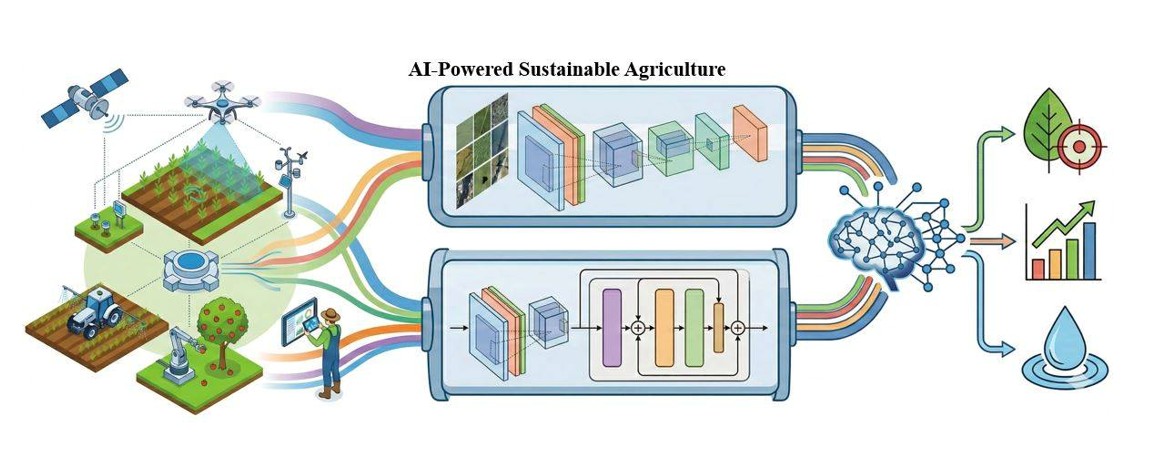
Highlights
AI is transforming agricultural decision-making through data-driven precision and automation.
Nano-enabled systems can enhance targeted delivery, monitoring, and efficiency in smart agriculture.
The integration of AI and nanotechnology offers promising routes toward sustainable and intelligent crop management.
⚠️ THE FOLLOWING SECTION IS TEXT-ONLY
No equations, tables, figures, or color graphics are shown below. For the complete version, please use the free PDF available on this page (top right).
1. Introduction
1.1. AI-Powered Agriculture Background
Agriculture is often discussed in terms of maximizing output, but it is better conceptualized as a coupled socio-ecological system in which biological growth occurs under weather uncertainty, resource constraints, and market and policy pressures. Over an individual growing season, for instance, farm operations related to land preparation, variety selection, irrigation timing, fertilizer application, and pest control can be coupled with weather variation and pathogens to impact yields. Over multiple years, these operations manifest through managed variations in soil health, biodiversity, water use, and economic returns. Accordingly, agriculture represents a suitable domain for AI utilization, where many operations involve time-sensitive information constraints that are increasingly observable through various sensing networks. A period of two decades in precision farming has made it clear that knowledge has become a resource equivalent in value and utility to seed, water, and fertilizer for a specific location on a specific soil type and crop kind. “Smart farming” and “Agriculture 4.0” represent an evolution of this kind into cyber-physical systems where sensing, analysis, decision-making, and actuation are integrated into a web using digital technology [1, 2].
Under this paradigm, AI research is no longer strictly relegated to optimization; rather, AI serves as a coordinating entity that integrates disparate observations into time-critical actions, ostensibly for the purpose of enhancing productivity and mitigating environmental effects. The contemporary concept of smart farming places sensing, connectivity, and analytics at the center of the farm management cycle. Digital systems monitor crop and soil states, predict near-term outcomes, and recommend or automate actions. This paradigm is inherently sensor-centric, as fields function as dense sensing environments composed of Internet of Things (IoT) devices, whose data are transmitted to edge or cloud infrastructures for analysis [2, 3]. Satellite and drone imagery can also be used as a supplement to in situ sensing for estimating canopy health, weed distribution, or water stress, as well as in crop phenotyping. Together, these sources create heterogeneous imagery, time-series, and structured datasets related to soil type, planting dates, and input rates that can be stored, integrated, and analyzed at scales that are difficult to manage locally and are well-suited to contemporary machine learning (ML) and deep learning (DL) algorithms. In this environment, research activities center on several major agricultural applications. AI-powered agriculture supports crop management through context-aware optimization of irrigation, fertilizer, and pesticide scheduling to deliver site-specific recommendations [4]. Computer vision and remote sensing enable crop observation and early diagnosis of diseases, nutrient deficiencies, and pest damage [5, 6]. Yield estimation and resource allocation combine multi-modal variables for predictive modeling and input requirements for efficient production [7]. Robotics and automation utilize AI for navigation, perception, and control for precision harvesting, mechanical weeding, and precision spraying [8, 9]. Beyond the field, supply chain analytics and digital twin technologies stretch the application of AI from the field to the supply chain [10, 11].
1.2. Challenges in Applications of AI for Agricultural Use
A major challenge in AI-powered agriculture arises from the structured and correlated nature of agricultural data, which may lead to misleading AI model evaluation. Data leakage often arises from spatial autocorrelation, whereby neighboring plots with similar properties appear in both training and testing sets, while temporal correlations make predictions within a season easier than generalization across years. Label noise is also a problem because disease symptoms may vary in intensity, and management practices alter class definitions. Thus, reported accuracy must be interpreted in light of the adopted validation strategy and experimental design [12, 13]. The second, emerging focus is on explainability and interoperability. The AI-powered agriculture has been criticized for relying on black-box models with limited interpretability for practitioners, especially where predictions directly influence economically consequential management actions. Explainable AI (XAI), therefore, aims to identify the relationships between predictions and interpretable variables, while semantic web techniques and ontologies provide a standardized vocabulary for the integrated processing of data that enables semantic interoperability across heterogeneous data sources and decision systems. These approaches support trustworthy agricultural intelligence by linking predictive performance with transparency and cross-system compatibility [14]. Consequently, even high-performance models may remain brittle in operational development as they often fail to generalize across agricultural contexts or to integrate knowledge from real farming practices.
A sustainability perspective adds a third dimension. AI-powered agriculture has been viewed as a way of conserving water, fertilizer, and pesticides, but AI itself requires computational resources. The emphasis of “Green AI” is on sustainable predictive models and practices, suggesting that sustainability concerns resource use on farms and the computational use of analytics as well [15]. At about the same time, sensing has evolved into advanced biosensing and nano-enabled diagnostics for pathogen, residue, and antibiotic resistance detection in agricultural and poultry environments. These sensors increase the dimension of complexity and sensitivity of the data that can be captured, but also lead to calibration and risk concerns [16]. These coupled trends represent a set of reasons to conduct a comprehensive review with a critical appraisal. First, the body of evidence has increased rapidly, with a disjointed distribution among various fields, each with a different set of norms for assessing and reporting evidence. Second, high benchmarks of performance are often coupled with poor transferability to independent settings, a phenomenon that has often emerged in plant classification for disease and yield prediction efforts [5, 7]. Third, implementability is challenged by infrastructure, governance, and social aspects that cannot be fully captured by prediction-oriented [2, 17].
As humanity faces climate change, population growth, shrinking arable land, and declining soil quality, global food security is under increasing pressure. Addressing these challenges requires technology-based strategies from various disciplines, especially materials science, information technology, and nanotechnology. AI and nanotechnology-enabled Precision agriculture may allow farmers to manage these changes in crop growth in real time, providing the foundation for sustainable and efficient food production and security. Nanotechnology, through the introduction of agro-nanomaterials and nano(bio)sensors, helps to improve the nutrient uptake efficiency, improve plant resistance to pests and diseases, and enable early detection of pests [18]. It also supports waste reduction and the optimal use of natural resources, especially water and soil, leading to higher crop yield and quality with minimal environmental impact [19]. The convergence of AI and nanotechnologies improves nutrient cycling and crop productivity, enabling the rational design of nano-fertilizers, nano-micronutrients, and nano-pesticides. Using “Safe by Design”, this approach not only improves the safety and performance of these agromaterials but also considers their long-term effects on soil microbial communities.
The objective of this review paper is to integrate and assess the evidence on AI-powered agriculture in four areas. These areas are include, a) interpretive integration: relating research outputs to agriculture related decision making; b) critical assessment: analyzing how studies confirm, contradict, or extend prior evidence, particularly regarding generalization, interpretability, and system-level performance; and c) methodological support: proposing improvements such as spatial and temporal validation and system adaptation to strengthen research transfer to practice; d) this article will also review the potential, challenges, and limitations of AI-driven nanoagriculture, with a focus on the synergistic effects of AI and nanotechnology. On this aspect, the novelty of this paper lies in articulating an integrated perspective that synthesizes the foundation of AI in “smart-farming”, its distinguishing characteristics relative to traditional modern era of farming methods, and its developing role to tackle each level of AI-powered farming. While prior surveys have mostly concentrated on either the learning algorithms of AI in agriculture or the AI-assisted tools in agriculture, this paper interconnects both of these discussions and the innovative topic of AI-driven nanoagriculture. This review adds four new things to the body of work on AI-powered agriculture. First, it doesn’t just list algorithms; it brings the whole field together with a decision pipeline that connects sensing, prediction, recommendation, and actuation across crop production, livestock monitoring, protected cultivation, and post-harvest systems. Second, it moves beyond performance reporting to examine methodological robustness, with particular attention to spatial and temporal leakage, external validation, domain shift, uncertainty, interpretability, and deployment constraints. Third, it brings together the new research on nanoagriculture with the larger conversation about AI in agriculture. It shows how AI can help with the design, screening, optimization, and safe use of nano-enabled inputs and sensing systems. Fourth, the review points out important research areas that need to be worked on to make agricultural AI that is reliable and can be used in other fields. These areas include reproducible evaluation protocols, semantic interoperability, energy-aware deployment, and Safe-by-Design frameworks for nano-enabled applications.
2. Background and Methodological Framework
Methodologically, AI in agriculture can be conceptualized as a series of learning tasks defined by data modality and decision time horizons. Figure 1 delineates the hierarchical architecture of the Agriculture 5.0 ecosystem, illustrating the bidirectional flow between the physical sensing foundation and the cognitive decision-support tier. This framework emphasizes the transition toward human-centric AI and semantic interoperability, ensuring that data-driven interventions are grounded in both agronomic expertise and environmental resilience. Supervised learning dominates the literature because many agricultural outcomes can be formulated as either categorized labels, e.g., disease type, weed, or crop class, animal pose, or continuous variables, e.g., yield, soil moisture, or nitrogen content. In these circumstances, traditional approaches such as Random Forests (RF), Support Vector Machine (SVM), and gradient boosting methods often perform comparably to more complex deep learning models when datasets are moderate in size with well-defined features. However, when the data modalities with high-dimensional and unstructured data, such as images or spectral signals, must be processed, neural network-based methods provide a clear performance advantage [12, 20]. Overall, the AI-powered tools discussed in this section, together with other related technologies, are presented in Figure 1 to provide a comprehensive overview of the topics covered in this article. As shown in the figure, satellites and unmanned aerial vehicles equipped with thermal or multispectral sensors can continuously monitor crop and soil conditions, thereby enabling more precise fertilizer application, targeted pesticide spraying, and optimized irrigation management. At the same time, smart sensors integrated within the IoT framework facilitate the real-time acquisition of weather and climate data. Collectively, these AI-driven systems form the technological foundation of smart and precision agriculture. AI-powered agriculture operates within broader institutional and governance frameworks. Data ownership, privacy, and bargaining power influence not only the distribution of benefits from data analysis but also the adoption rate of analytical tools. It has been anticipated that data-intensive farming could redefine roles across the food system [2]. Subsequent studies on disruptive agricultural technologies emphasize that AI adoption depends not only on algorithmic advances but also on digital infrastructure and platform availability [21]. Systems-oriented analyses of agricultural supply chains indicate increasing integration of demand forecasting, inventory and logistics optimization, and food safety analytics [10]. The literature indicates that the concept of “precision” is extending beyond input management to include distribution and consumption stages; however, its practical application in these areas is still constrained by analogous technical and infrastructural limitations.
Digital twins offer a conceptual bridge between production and supply chain coordination. A digital twin can be defined as a continuously updated virtual representation of physical assets and processes. Although this paradigm in agriculture appears conceptually attractive in agriculture, its implementation remains complex due to the biological variability and dynamic nature of agricultural systems, including crops and livestock.
Current reviews show that comprehensive digital twin frameworks have not yet been widely implemented in agriculture and propose an evolutionary roadmap from monitoring-oriented twins to more interactive and predictive twins [11]. These systems could facilitate extended decision-making horizons, capturing effects of some actions such as irrigation and fertilization on agricultural system dynamics. Trustworthiness becomes central as AI systems move closer to operational decision-making. Agricultural decisions affect livelihoods and environmental compliance, and errors can have delayed or systematic consequences. Explainable AI (XAI) is increasingly proposed as a way to make outputs interpretable for agronomists, advisors, and farmers. However, explanation is not only a post-hoc visualization problem; it also depends on whether inputs and outputs are semantically consistent and interoperable across data sources. It has been argued that semantic resources such as ontologies can improve data integration and support XAI in smart agriculture systems by making context explicit and enabling traceable reasoning across heterogeneous datasets. In parallel, the computational and energy footprint of AI systems has become relevant as models scale and are deployed on edge devices [14]. In aggregate, these system-level perspectives highlight that AI-powered agriculture is evaluated not only in terms of prediction tasks but also considering organizational workflows, governance structures, and the processes of market coordination.
2.1. Paper Methodology
This review followed a PRISMA 2020–guided framework, adapted to the interdisciplinary nature of agricultural AI research [22]. Owing to evidence that not only crosses various publication venues but also varies from methodologically driven to applied agricultural studies. The goal was to incorporate transparency and replicability while reducing potential selection bias and improving coverage of less presented areas and products. This section presents the review principles of the Systematic Literature Review (SLR) inclusion and exclusion criteria, and the quality assessment of the selected studies. To conduct the SLR, a specific search string was designed using keywords, synonyms, and Boolean operators, covering terms related to AI, agriculture, and specific applications. Some of the terms and phrases that were discussed and introduced to our search algorithm. Briefly, the literature search was conducted in Scopus, Web of Science, IEEE Xplore, and ScienceDirect. The search covered publications from 2016 to 2025 and was finalized in December 2025. The search strings combined terms related to artificial intelligence (e.g. artificial intelligence” AND/OR “AI” AND/OR “machine learning” AND/OR “neural networks” AND/OR “support vector machine” AND/OR “decission trees” AND/OR “internet of things” AND/OR “deep learning” AND/OR “Random Forests), agriculture (e.g. agriculture” AND/OR “smart farming” AND/OR “precision agriculture” AND/OR “nanoagrochemicals” AND/OR “nanoagriculture), and specific applications (e.g. “sustainability” AND/OR “yield predictions” AND/OR “nano-biosensors” AND/OR “water management” AND/OR “crop monitoring) using Boolean operators (AND/OR). Only peer-reviewed English-language journal articles and review papers were considered. Conference papers, editorials, book chapters, non-English articles, and studies lacking direct relevance to AI in agriculture or nanoagriculture were excluded.
Due to the heterogeneity of study designs and application contexts, this work should be interpreted as a structured, comprehensive, and systematic mapping rather than a strictly protocol-bound systematic review. Although this study follows the transparency and reporting logic of PRISMA 2020, the review was adapted to the interdisciplinary scope of AI-powered agriculture and AI-driven nanoagriculture. Because the field spans heterogeneous study designs, datasets, and application contexts, a fully conventional meta-analytic protocol was not feasible. Therefore, PRISMA was used as a structured reporting and screening framework rather than as a strict meta-analysis protocol. Evidence identification was done in two phases. First, a citation-based seed set was constructed by using the most relevant papers to the purpose of this review. The data used in the construction included highly impactful surveys and reviews on smart agriculture architectures, IoT and wireless sensor networks, plant health monitoring, yield prediction, and semantic or explainable AI applications. The DOIs were extracted, standardized, and any duplication was removed to create the corpus, which comprises 141 peer-reviewed articles. (Appendix A). Second, there was an expansion of coverage through backward and forward citation chasing of core studies commonly cited as landmarks in agricultural AI research. Backward and forward citation chasing was a means to alleviate concerns of a publication ecosystem bias that could have potentially missed key studies. This included core studies on DL-based plant disease diagnosis, integration of crop yield prediction, intelligent biosensing for the agricultural interface, etc. Studies identified through this process were included only if they were peer-reviewed, solved an agricultural decision-making problem, and provided sufficient methodological transparency for interpretation.
Eligibility criteria were established to maximize applicability and research rigor. For inclusion criteria, studies were included if they: (a) dealt with agricultural production, pest control, livestock monitoring for farm management, or agricultural product chains; (b) utilized AI strategies such as machine learning (ML), deep learning (DL), reinforcement learning, expert systems, natural language processing in agricultural decision support systems, or combined strategies; (c) relied on empirical datasets or agronomic simulations; (d) were published in peer-reviewed journals; and (e) were published between the years 2016 until 2025. As for exclusion criteria, studies were excluded if they: (a) were theoretical papers without empirical evidence, (b) Studies that employed the term “agriculture” merely in a literary or comparative sense, or lacked sufficient methodological transparency to allow evaluation were not selected, unless they supplied a relevant systems-level or governance-oriented synthesis.
A four-phase verification flowchart adapted from PRISMA was followed (Figure 2). However, the screening process itself occurred in three stages. The 1st stage was title and abstract screening for relevance to agricultural decision support systems. The 2nd stage involved screening full-text articles to verify the presence of a clear description of AI methodology and an evaluation or validation plan. The 3rd stage screened articles for redundancy and duplication. Articles were retained when they contributed distinct analytical or integrative perspectives, including energy-efficient modeling, semantic interoperability, or regional frameworks. A total of 2245 articles were retrieved, and after applying the inclusion and exclusion criteria, 141 were included. In order to get perspective, a minimum of 45 articles that were the most relevant and related to recent advances were documented. Also, Analysis of publication dynamics shows a substantial increase in research activity over the past decade. Data extracted from the Scopus and Web of Science databases indicate that the annual number of publications on “Artificial Intelligence in Agriculture” has been growing at an exponential rate (Figure 3). This is because of the availability of open-source datasets (such as PlantVillage) and the democratization of high-performance computing.
2.1.1. Data Extraction and Quality Assessment
A record similar to a PRISMA report was maintained for systematic tracking purposes, as recommended in the PRISMA 2020 Statement [22]. The data extraction process was conducted using a structured coding template that allowed for easy comparison across application domains. For each relevant study, the extracted information included publication details (year, journal, and DOI), application area (crop monitoring, disease and pest control, yield prediction, irrigation/nutrient management, robotics and automation, livestock monitoring, or supply chain/harvest monitoring). The research project consisted of a literature evaluation that began with a search for information on the utilization of AI in agriculture and practices related to it, and was performed using the four most prominent academic databases: Scopus, IEEE, Science Direct, and Web of Science. Quality appraisal emphasized methodological rigor aspects relevant to practical ML applications. Due to the diversity of datasets, task structures, and study designs in AI-powered agriculture, a uniform risk of bias assessment tool cannot be employed across all studies. Instead, bias assessment included a range of common failure modes that directly affected validity, including data leakage (such as taking plot-level data from both the training and testing sets), poor stratification of temporal or spatial autocorrelations, lack of external validation, and a susceptibility to highly polished but potentially unrepresentative image datasets that might differ from field observations. In evaluating evidence quality, narrative synthesis covered, but was not limited to, reporting completeness of model inputs, preprocessing, and model hyperparameters, along with balanced comparisons against baseline approaches. This ensured broad coverage of practical evidence without dismissing a significant proportion of published results due to reporting quality and variability.
2.1.2. Synthesis Approach
The synthesis was organized thematically. Studies were categorized by problem type and analyzed using the pipeline framework described in the introduction: sensing, prediction, recommendation, and actuation. For each category, the most commonly used data types, AI models, and evaluation strategies were compared. Contradictions, or areas where benchmark performance was good but on-farm performance was poor, or where benefit claims hinged on features that could plausibly be unavailable in practice, were also investigated and discussed. In addition to summarizing performance outcomes, provide insights into how well procedures accomplished their goals. The synthesis aimed to explain why specific AI techniques worked effectively under certain conditions. To facilitate reuse, the corpus indexed with DOIs and deduplicated is offered in the Appendix. This may be used as an entry point for replication studies or further readings, within the paywalls that remain pivotal for understanding the current landscape of agricultural AI research.
2.2. Results
2.2.1. Trends in Agricultural AI Integration
Analysis of evidence shows a trend from small-scale and exploratory ML demonstrations to more integrated and system-level contributions. Three predominant themes continually emerge across the literature review: (1) the increased involvement of multimodal datasets, particularly the fusion of remote sensing and field-based sensing, (2) increasing interests in issues related to the deployment stage, including communication protocols, edge computing, and power consumption, and (3) a transition from black-box model predictions to explainable models and semantic integration for facilitating decision interoperability. How AI-powered agriculture has changed from 2016 to 2025 and beyond is shown in Figure 4. It highlights the transition from isolated predictive models to interconnected, intelligent, and increasingly autonomous agricultural ecosystems. In the beginning, as Convolutional Neural Networks (CNNs) became more recognized and utilized in other scientific fields, plant diseases were discovered much faster and with more certainty. Shortly after, as sensors and unmanned aerial vehicles, like drones, became a common practice among farmers, especially in the United States, all of the data gathered was connected through a centralized in situ system. As more data could be gathered from various farms with the same products and similar agricultural situations, ML and then DL algorithms were introduced to predict and practice better outcomes. Recently, IoT systems and edge computing have become essential for practicing real-time analysis in many different agricultural environments. Nowadays, people are in pursuit of AI-powered tools, making sure systems can work together and creating fully autonomous systems. Overall, this major shift from traditional farming, as of a decade ago, means we are moving from using AI to make predictions to creating whole agricultural systems that are connected, smart, and can adapt. These systems use sensors, analysis, and action in a loop to make AI-powered agriculture work with high efficiency. To conclude, Table 2 presents a concise taxonomy of AI-powered agriculture, organizing application domains, data modalities, model families, and deployment considerations. It highlights how different data–model combinations map to key agricultural use cases and summarizes their practical limitations and readiness levels. The framework serves as a flexible structure for synthesizing and interpreting evidence across the included studies.
2.2.2. Sensing and Phenotyping
In sensing and phenotyping, computer vision and remote sensing are at the forefront. Surveys demonstrate the appeal of imagery regarding scalability and resolution. DL in agriculture has historically been traced to image-related tasks such as plant disease identification, crop classification, and fruit counting because of the availability of imagery and the suitability of DL models for pattern recognition [23, 20]. A literature review for major grains focuses on disease detection, quality determination, and phenotyping, exploring how CPU computing and advanced models might be exploited. A common theme within both surveys is that while high accuracy is found under laboratory conditions, field variants remain a major error source [24].
2.2.3. Crop Monitoring, Disease Diagnosis, and Pest Control
Plant disease monitoring is one of the most mature and critical application areas of AI-powered agriculture. The primary challenge in plant disease monitoring is in the generalization across datasets, such that one set can inform about another. Data for plant disease monitoring is extremely heterogeneous when applied to different geographic regions, crop varieties, imaging devices, or environmental conditions, and therefore, visual features are likely to explain more effectively than the actual pathological content. The issue has stuck, as noted by Rani et al. (2023), who surveyed AI applications in plant disease monitoring and highlighted the demand for new solutions to solve the problem of generalization. The implication for the subject is that the claim “early detection” needs to be understood with the data in context, such that the model developed on laboratory data is evidently very different from real-world data [25].
Beyond leaf-level disease identification, there is a growing recognition of integrated pest and disease management systems that combine sensing, connectivity, and automated reasoning. The “AIoT” (AI of Things) paradigm, in which AI models are embedded within IoT infrastructure, is increasingly used in agricultural systems related to crop protection. For instance, Elijah et al. (2024) presented an IoT-centered research on pest and disease control in ginger crops, exemplifying the trend toward cohesive systems integrating real-time sensing, connectivity, and automated analysis [26]. There is a general system-level similarity, independent of particular crop type, including resistance to sensor failure, network connectivity robustness, and decision thresholds that matter to users (e.g., treatments consider uncertainty and cost). It is emphasized that the effectiveness of decision support systems should be judged by decision quality under constraints rather than predictive accuracy alone. It has been noted that ML solutions for precision farming involve considerable supervised learning on farm and sensor data to inform management decisions [4]. Technology options include tree-based solutions for tabular features and deep learning for image-based features, often combined with rule-based decisions on agronomic constraints. However, findings indicate that a considerable portion of decision support research remains in prototype form, demonstrating feasibility and predictive capability without quantifying applicative impacts, such as water saved per hectare or application reduction per production quantity.
The application of image-based diagnosis is one of the empirically best-established areas. Figure 5 illustrates the role of AI in plant disease detection, e.g., leaf photographs from field cameras, smartphones, or UAVs are processed through computer‑vision pipelines, typically involving feature extraction with CNNs or transformers, followed by classification or segmentation models. The figure highlights the workflow from data acquisition to model inference and decision outputs, demonstrating how AI enables early, scalable, and non‑destructive detection of plant stresses and diseases. The classic study proved that deep convolutional neural networks (CNNs) can accurately diagnose plant diseases from leaf photographs, underpinning the concept of smartphone-based diagnosis [5]. Subsequent studies showed that DL-based methods trained on large image datasets can achieve high diagnostic accuracy when exposed to optimal lighting conditions in the field [6]. The mapped corpus includes several such lines of follow-on research on different crops, symptoms, and sensors. However, a common finding in these studies is that accuracy is highly context-dependent, e.g., well-trained algorithms may not perform well on field-level photographs under challenging or varied conditions. Specifically, this is a domain-constraining issue, as accurate diagnosis in the field or during a different season would be of immense use. The diagnostic pipeline depicted in Figure 5 encapsulates the transformation of raw unstructured imagery into actionable phytosanitary intelligence via a tiered deep learning workflow. This sequence highlights how initial preprocessing and augmentation stages are leveraged to mitigate field-induced noise, ensuring that the subsequent feature extraction and classification modules maintain diagnostic robustness across diverse environmental conditions.
The corpus also provides further evidence of IoT-based pest and disease control solutions that integrate sensing, communication, and analytical components. A technical paper on ginger cultivation reports that the “AI of Things” enables rapid detection of pests and diseases, compared to traditional scouting methods as well as standalone AI-based identification and monitoring approaches [26]. Although this research targets a specific crop, it reflects a broader trend that disease control solutions seek to link sensing (images or environmental cues) with intervention timing or on-farm processes. In general, key performance indicators (KPIs) in such solutions shift from “Does the classification model work?” to more system-level considerations, such as “Does the system improve detection speed and enable effective interventions without generating high false positives?” However, only a few studies have systematically documented this performance criterion.
2.2.4. Yield Prediction and Optimization
Crop yield prediction and optimization are central issues in AI-powered agriculture, as predictive models inform farm-level decisions, credit and insurance policies, and national food security planning. Two recent systematic reviews provide a useful baseline for contextualizing current developments. Van Klompenburg, T. et al. (2020) examined ML models for crop yield prediction and identified temperature, rainfall, and soil characteristics as the most frequently used input features [7]. Their investigation also highlighted the well-representation of neural network–based models, along with a growing adoption of convolutional models in studies utilizing satellite imagery. They further highlighted the scope and scale of this research ecosystem: hundreds of studies are found in broad searches, but only a percentage are suitable for a narrow definition of yield prediction. Recently, Screpnik et al. (2025) synthesized literature on AI applications in yield prediction and optimization, identifying shared models such as SVM, k-nearest neighbors, and gradient boosting, with shared predictive variables such as soil type, climate, and plant type [27]. This points to an underlying trend in predictive models that are persistently tapped into, but many studies are plagued by missing management variables such as variety, density, and fertilization timing.
2.2.5. Resource Management
Water resource management and irrigation control system implementation represent a transition from prediction to control. IoT and wireless sensor network (WSN) technologies can provide near-real-time readings of soil humidity and microclimatic conditions, enabling data-driven irrigation optimization. For a smart agricultural IoT or WSN system, Mowla et al. (2023) emphasize the importance of communication protocols like ZigBee, Wi-Fi, SigFox, and LoRaWAN; the choice affects not only the network’s technical capabilities but also the feasibility of the irrigation control model [3]. As a case study, the field-level applications have been implemented, e.g., Araújo et al. (2024) described a system for vineyard management that incorporates proximal sensing, LoRa communication technology, cloud storage, and ML algorithms to forecast soil humidity and degradation, linked with weather data from third-party sources for decision-making [3, 28]. These applications demonstrate how model-aided irrigation control can integrate prediction, forecasting, and domain knowledge through decision-making rules instead of AI alone. There is greater variability in nutrient management and fertilization, partly due to the complexity of nutrient processes and the cost of obtaining actual labels (e.g., plant available nitrogen). Nevertheless, AI applications are increasing in plant nutrition diagnosis through image analysis, feature prediction at various layers, and fertilization advising. Surveys stress that AI applications in agriculture are usually categorized into decision support systems, related to soil or crop analysis, prediction, and robotics, and that applications should not halt at a particular application or technique but at decision support, which is usually the unit of deployment [29]. Given that decision-making concerning nutrient application has applications in decision theory, they usually combine variables from soil analysis, climate prediction, past practices, or image analysis.
2.2.6. Robotics and Supply Chain
Another category that represents a specific group, drawing a line from perception to action, is robotics and automated machines. Unlike purely predictive applications, robotics requires closed-loop control performance, including practical issues such as navigation uncertainty, occlusion, and variance in plantation geometry. Although this review focuses on AI-powered agriculture rather than machine engineering, robotics literature suggests that AI’s primary contribution lies in object detection and task planning, enabling selective harvesting, precision spraying, and mechanical weeding. Bac et al. (2014) presented challenges in robotic harvesting, ranging from unstructured scene perception to integrated sensing and manipulation tasks. Within the context of a broader smart-agriculture framework, it appears that robotics, like decision-support systems, shares common data resources, where compatibility and common data formats can improve automation. Supply chain and post-harvest optimization are receiving more attention as an instantiation of on-farm intelligence [8]. Wolfert et al. (2017) postulated that big-data applications for smart farming extend their impact from primary production to the whole food supply chain [2]. A clear implication of this relationship, defined by Sharma et al. (2020), is a list of ML applications for sustainable supply chain optimization, prioritized by demand prediction, inventory optimization, quality tracking, and risk analysis [18]. The common angle to most relationships in supply chain models, as opposed to farm models, involves their potential for accessing more detailed transactional data, while, at a different level, a lack of information related to biological processes.
2.2.7. Cross-Cutting Challenges and Future Directions:
Two cross-cutting outcomes are highlighted as important for pointing toward the interpretation of results across all domains. Firstly, the importance of explainability and semantic integration is critical. Grati et al. (2025) argued that a review on ontologies and semantic web technology for smart agriculture culminated in a solution for a more explanation-friendly AI system. It emphasized that instead of explaining a neuron’s importance in AI systems for results interpretation, systems should be able to interpret knowledge of crops, bugs, and phenology. Secondly, green AI practices are being followed by ML for agriculture[14]. It’s been argued that “green AI” for smart agriculture refers to designing predictive models that explicitly account for energy costs and deployment constraints. On the other hand, it is pertinent to note that many AI systems run on constrained resources or devices or in areas with limited infrastructure [15].
In the final analysis, the evidence base is becoming ever more enriched through reflexive, practice-focused input that conceptualizes AI as a constitutive part of a larger human and institutional system. It’s been outlined how the adoption of AI-powered agriculture follows best practices at architectural levels, but observe that while there has been benefit gained through the ability to analyze large datasets and make decisions in a timely fashion through the adoption of DL, that increased performance must be considered in light of data availability [30]. Similarly, through the example of the ChatGPT language model, Ray et al. (2023) proposed an outlook on the future adoption potential of conversational AI [31]. Both instances show that the literature is beginning to treat adoption issues and usability questions as central research concerns in their own right.
2.3. Discussion on AI-Powered Agriculture
The results confirm a pivotal implication repeatedly asserted in previous surveys and growing in importance as systems scale and deploy, where performance is not solely a property of an algorithm but rather a property of an algorithm as implemented within a specific data-generating process. Studies showing high accuracy; this is obtained utilizing controlled settings that minimize intra-class variation and the ambient environment. As controlled studies are important for assessing solution feasibility, they often fail to capture the non-stationarity inherent on the farm. However, non-stationarity, and thus the challenge of distribution shift, must be addressed for fielding AI, and the literature clearly indicates that distribution shift is the rule rather than the exception. A prominent early example is presented by Mohanty et al. (2016); a model that performs exceptionally well on carefully annotated images of plant leaves may dramatically fail on more representative images that vary in lighting, camera type, plant cultivar, and symptoms [5]. Follow-up literature reviews of AI-powered agriculture confirm that this lack of robustness persists across different plant species and sensing platforms, often intensified by evaluation strategies that favor random data splits over geographically and temporally [7, 27].
This also explains discrepancies in results across different research areas. For instance, DL surveys highlight that convolutional nets significantly outperform traditional approaches, while reviews of tabular yield prediction continue to find that tree-based AI models and neural networks are equally effective. None of these observations is contradictory when considering data regimes. Traditional DL techniques are better suited to tasks involving representation learning and where there is sufficient labeled data to capture relevant variations. However, when data are small, noisy, and tabular, tree-based models often prove better suited, more data-efficient, and stable. Therefore, model selection should align with specific dataset regimes and architectural layers rather than prevailing trends. For example, yield prediction tasks illustrate this methodological weakness. Systematic syntheses agree that weather terms such as temperature and rainfall are ubiquitous, and often soil type or soil texture surrogates are used to denote specific sites. This reliance reveals that many yield models are driven by dataset availability rather than underlying causal mechanisms. Management decisions, plant genetic characteristics, diseases, and the timing of these practices are influential sources of yield variability that are often absent or sparsely recorded [7].
While a model may perform adequately on historical testing conditions yet not generalize well across different management and seasonal conditions. More recent studies have addressed this deficiency through multimodal learning that combines vegetation indices from satellite imagery together with weather and sparser management information. The overall existing body of work suggests that the supplementation of yield prediction models through the inclusion of process model outputs for crop growth conditions might offer better model performance and promote robust learning, as illustrated by the role of process-coupled crop models and ML in the Corn Belt region. Therefore, the yield prediction is basically an inference task in the presence of missing information on agricultural practice conditions. This requires the specific information regarding management conditions for the model validation, and that uncertainty estimates regarding prediction reliability are provided.
The field of crop protection presents a mixed story of success and challenges. The combination of imaging technologies and DL has led to important progress in detecting diseases and pests, resulting in many algorithmic solutions. However, a significant gap remains between laboratory and field effectiveness. Common issues include relying on leaf- or image-level labels rather than more relevant plant- or plot-level labels. Additionally, many systems depend on visual diagnosis without lab confirmation, and they often overlook the challenges of class imbalance and the costs associated with incorrect diagnoses. As a result, models may show high overall accuracy but fail to identify crucial low-prevalence conditions. New methods such as few-shot learning, domain adaptation, and active learning show promise, but we have limited real-world evidence compared to the number of methodological studies. Therefore, assessing crop protection models should go beyond traditional classification metrics to include decision-related measures, such as time to detection, false-negative rates in real-world situations, and economic feasibility.
In water management, there is a noticeable shift from predictive modeling to integrated control systems. Studies on IoT and WSNs indicate that the reliability of sensing and communication systems limits practical applications. While low-power wide-area networks such as LoRa allow for broad coverage, restrictions on bandwidth and duty cycles force limited data transmission and the need for smart edge processing [3]. Case studies, such as the vineyard management system discussed by Araújo et al. (2024), show that effective irrigation management needs a close integration of sensing, predictive analytics, external weather data, and decision-making processes. It is helpful to differentiate between models that predict system states, e.g., soil moisture levels, and those that directly optimize control actions, e.g., scheduling irrigation. Although reinforcement learning is often suggested for closed-loop control, most systems in use combine predictive models with heuristic or rule-based methods. This reflects the high data needs and safety concerns associated with learning-based control in agriculture. This finding supports the excitement about advanced control methods by stressing that safety, clarity, and adherence to constraints are crucial design factors [28]. Robotics and autonomous machinery follow a similar principle: the main obstacle often lies not in accuracy but in achieving reliable performance under real-world conditions, such as occlusion, uneven soil, and mechanical limitations. While computer vision can identify fruits, weeds, and crop rows, its true value emerges only when integrated with planning and action systems that can perform selective harvesting, targeted spraying, or mechanical weeding. Subsequently, a thorough evaluation should include operational metrics such as throughput, damage rates, and savings in labor or energy, in addition to traditional precision and recall. Despite impressive technology showcases, adoption varies widely, limited by costs, maintenance needs, and regulatory hurdles. This highlights the importance of assessing AI systems within their broader social and technical environment, rather than viewing them as standalone tools.
A major shift in interpretability research is moving from post-hoc model explanation to focusing on foundational data and knowledge representation. Grati et al. (2025) argue that ontologies and semantic technologies can both improve data interoperability and support explainable AI by clearly defining entities, relationships, and context [14]. This marks a significant change from methods that try to make sense of a model after it has been trained. Semantic frameworks can standardize variable meanings, connect diverse datasets, and track data origins. An important takeaway is that investing in semantic infrastructure can provide benefits alongside algorithmic improvements. This helps explain why some successful applications rely on simpler models backed by strong data integration and contextualization.
Energy usage and sustainability have become critical topics in recent literature. Earlier research often overlooked computing costs, but new studies emphasize the need for energy-efficient model design and edge deployment. “Green AI” is described for smart agriculture as aiming for accurate predictions within strict energy limits, especially important in limited in resources rural areas [15].
This broadens the sustainability conversation to include the energy impact of AI itself, not just input efficiency. The goal is not to dismiss complex models, but to clearly report the costs associated with training and inference while considering the practical benefits of model complexity.
At the same time, AI is increasingly integrated with other advanced sensing in the chemistry-biology overlap. For example, nano-enabled optical biosensors are set to facilitate rapid on-site detection of pathogens and residues, using ML to interpret sensor signals for diagnostics [16, 32]. This merging of nanotechnology and AI holds promise for more accurate and sustainable solutions, but it also raises questions about sensor reliability, ecological safety, and long-term effects [22, 9]. A key insight is the need to design sensor hardware alongside analytical models, as their limitations and assumptions are closely linked.
Throughout various application domains, the review identifies recurring methodological flaws that could inflate reported performance and hinder practical implementation. These issues include insufficient external validation, poor management of spatial or temporal correlations, inconsistent data split reporting, and inadequate uncertainty quantification. For instance, yield models tested with random splits may reflect spatial proximity instead of generalizable trends, while disease models trained on data from a single season often struggle to generalize. Calls for enhanced validation and standardization are frequently made in systematic studies [7, 27]. Tangible improvements would involve normalizing spatial and temporal cross-validation, reporting performance across multiple sites and seasons, and sharing data and code within privacy limits.
This review also notes its own limitations. The sources used may give more weight to English-language publications from specific journals (e.g., IEEE Access, Computers and Electronics in Agriculture), possibly missing region-specific innovations found in local journals or reports. While paywalled articles were identified through DOI, access limitations may skew the findings towards open-access sources. Such challenges, common in interdisciplinary reviews, are acknowledged to provide context for the generalizability of the conclusions. An accompanying DOI appendix is available to promote transparency and facilitate further examination. Overall, the literature points to several practical implications. First, AI can improve resource efficiency and resilience when integrated into a clear process from the sensing stage to the decision-making stage and evaluated under realistic conditions. Second, the most significant advancements arise not just from new algorithms but from strong data integration, thorough validation, and careful workflow design. Third, the next generation of agricultural AI will focus on trustworthy systems: models that measure uncertainty, offer clear explanations, and function within real-world energy and connectivity constraints. These insights provide useful guidance for both researchers and practitioners, shaping the research agenda in the next section.
3. AI-Driven Nanoagriculture
3.1. Nanotechnology in Sustainable and Precision Agriculture
The current scenarios of rapid population growth, climate change, and resource depletion, which influence global food systems, highlight nano-enabled agriculture as a promising pathway toward more sustainable and efficient agricultural production. Recent studies on nano-enabled agriculture, including pest and disease control, nutritional improvements, biofortification, and smart sensor systems, highlight the potential, possibilities, and challenges of large-scale use.
Nutrient utilization efficiency (NUE) can be improved through smartly delivering fertilizers and micronutrients to specific tissues or organisms using nanoscale carriers [33-37]. Nano-encapsulated, stimuli-responsive, and intelligent agrochemical formulations, compared to their traditional analogues, offer high potential to enhance active ingredient efficacy at lower dosages as well as reduce side effects on human health and ecosystems by minimizing chemical residues [38-44]. Nano(bio)sensors can be utilized to detect many forms of stress, encompassing both biotic and abiotic factors in plants [34]. In other words, nano-enabled smart agriculture uses fewer inputs, which reduces farm-to-field stress on soil and biodiversity, and these advances contribute to sustainable agriculture and improved food security. An application of nanotechnology in sustainable agriculture is shown schematically in Figure 6.
Figure 6 shows the ways that nanotechnology can help with sustainable precision agriculture. Nanotechnology can be used to make nanofertilizers that deliver nutrients in a targeted way and help plants get nourished with higher efficiency. It can also be used to make nanopesticides that slowly release and only when they are needed to control pests [45-49]. Nanotechnology can be used to make nanosensors to get alerted in case of any issue occurrence, with either plants or the surrounding environment in real-time. Furthermore, it can help reduce the toxic waste released to the environment by using fewer chemicals and making sure they do not get into water supplies or the air. This can be done by using doses of chemicals and special nano-based packaging to reduce losses after crops are harvested. The traditional trial and error approach for developing effective and cost-effective nanoagrochemicals is often time-consuming, costly, and inefficient, as it needs the synthesis and testing of a large number of various compounds without a comprehensive predictive framework. This method covers only a limited subset of the parameters involved in nanoproduct efficacy and safety; therefore, it’s unable to identify complex and nonlinear relationships between the physicochemical properties of nanocarriers and biological or environmental responses. Furthermore, the results obtained are often dependent on laboratory and operator conditions and, in many cases, may not correspond to actual field performance.
As nanotechnology makes undeniable advances in both agricultural and biosensor fields, the need for further research, utilization of this technology, and interconnection of these three major fields (e.g., AI, agriculture, and nanotechnology) is felt now more than ever. This study creates a framework that combines data-driven ideas with nanotechnology-based agricultural methods. In smart agricultural systems, this process usually includes sensing, data processing, decision-making, and actuation. Herein, nanoagriculture is not a single area, but collaborates with other sectors to make the entire process more precise and efficient. Nano-devices allow us to monitor biological and environmental factors in real time and with high resolution. This gives us more reliable data to work with. This good data helps us get results when we process it. When we process data, we use computer models that examine different types of data. These models help us find patterns and make predictions. They also help us understand how nanomaterials and living things interact, which helps in the assessment of safety, efficiency, and sustainability. When it comes to decision-making, we can use the insights from accessible Large Language Models (LLMs) to create highly efficient programs that take any specific context into account. This helps to apply more efficient and safer nanoagrochemicals, such as nano/nanobiofertilizers and nano/nanobiopesticides, in a targeted manner. This integration helps to use resources efficiently and reduce the negative impact on the environment. In the actuation phase, we go beyond automation systems and use smart delivery platforms. These platforms can release nanomaterials in a controlled manner using AI-derived intelligent nanocarriers. Finally, we use a feedback loop to improve our system. We use real-time data from the farm to refine our models and optimize our system. This loop helps our decision support systems and nanoagrochemicals or nanodevices design work together. The models get better, and this makes our farming practices more adaptable and sustainable. In general, AI-enabled nanoagriculture is an extension of AI-based farming systems. It combines the intelligence of the system with the precision of nanomaterials, making agriculture more resilient, efficient, and sustainable.
3.2. AI Application in Nanoagriculture
As previously mentioned in the first part of this study, the application of AI-based agriculture began three decades ago for the integrated resource management, digital imaging of soil and crops, and controlling light and temperature for plant growth. Integrated agricultural management models are being developed in field explorations, including global rangelands, crops, livestock, fertility, and diseases. The convergence of AI and nanotechnology enables improving nutrient cycling, crop productivity, and soil microbiome management in sustainable agriculture.
The converging AI-driven technologies in nanoagriculture must investigate several essential dimensions to ensure their adoption and sustained effect[10,33]. Notably, the most important considerations are the high efficiency, safety assessment, and subsequent regulation frameworks of these advanced materials. As with other advanced technologies, risk assessment and management need to be thoroughly evaluated for nano-enabled agricultural products. For this reason, despite their high efficacy, regulatory uncertainty and incomplete safety datasets have kept many applications of nano-enabled products in the early research and commercialization stages. Major challenges include inadequate understanding of plant–material interactions, delivery and release mechanisms, accumulation in edible tissues, impacts on human health, soil quality, and microbial diversity. Focusing on these barriers is crucial for developing efficient, eco-friendly nano-agrochemicals that achieve sustainable development objectives. For this purpose, interdisciplinary research integrating human and environmental health is required. In this context, AI-, ML-, and DL-based modeling approaches are becoming essential for advancing nano-enabled agriculture. These approaches support regulatory acceptance, facilitate the development of safe nanomaterials, and accelerate the development of agricultural nanoproducts by providing insights to overcome commercialization barriers [33,35-37].
Advances in computing have led to the increased use of AI, ML, DL, and ANN in analyzing big datasets and developing robust predictive models in the field of nanoagriculture. In the field of nanoagriculture, data-driven models such as QSAR, KNN algorithms, and Bayesian networks can predict the effects of chemicals and nanomaterials on the environment and plants, introducing uncertainty into decision-making systems. For example, in plant genomics and proteomics studies, with thousands of genetic and protein data points, gene-protein interactions can be analyzed, which is critical for the fabrication of intelligent and safe nanomaterials.
Access to plant omics and soil microbiome databases, such as PlantOmicsDB and PlantSecKB, combined with the integration of environmental and agricultural data, e.g., soil properties, climate, socio-economic indicators, and historical pesticide data, allows the development of machine learning models to predict the effects of nanomaterials on plant growth and soil microbial activity. [50]. For example, the PEST-CHEMGRIDS database collects information on 20 pesticide active ingredients at a resolution of ~10 km, and nano-informatics tools such as Enalos+ KNIME enable data integration and analysis of pesticide effects to design optimal and sustainable use strategies [51].
AI models can also predict the effect of nanomaterials on plant growth and soil microbiome with multi-source data (soil properties, weather, nanomaterial compositions) and optimize the release rate of nanofertilizers. Unsupervised learning methods such as k-means have been applied in the analysis of spICP-MS data to determine particle size and investigate surface changes. In smart agriculture, reinforcement learning models help adjust irrigation rates and nanofertilizer application according to environmental conditions. Comprehensive databases such as Nano Solve IT and NanoCommons also enable the integration of physicochemical, biological, and environmental data on nanomaterials and improved ML for safe and functional design [50, 52, 53].
3.3. Safe by Design
The aim in the field of nanomaterials development is to introduce a reliable process for designing novel nanomaterials with specific functions and predictable and tunable biological properties. However, such a process for designing perfect nanomaterials does not yet exist, but materials science and computational modeling are the building blocks. Significant progress has been made towards achieving such models, but more research is still needed.
As shown in Figure 7, Safe-by-Design of agricultural nanomaterials has been developed to reduce toxicity and minimize bioeconomic and environmental impacts by rational selection of chemical composition, size, shape, surface, and other physicochemical properties of nanoparticles at early stages. Since the behavior of nanomaterials is highly dependent on source, elemental type, size, production, physicochemical transformations, and biological interactions, predicting their safety isn’t possible with limited experimental data, and it can lead to errors in real risk assessment [36,54,55]. Data visualization, AI tools, machine models (such as RF, SVM, and existing neural networks), nano-QSAR algorithms, and optimization algorithms allow simultaneous analysis of physicochemical, biological, and environmental effects and can act earlier, before synthesis. In this context, physicochemical (size, morphology, surface area, and composition), biological (cytotoxicity, effects on soil microbiome), and environmental (pH, soil organic matter) data are first collected from laboratory studies and standardized databases. ML and DL models then model the complex nonlinear relationships between structural features and biological outcomes, and in nano-QSAR tuning, structural and surface descriptors are used as input to learn the models to predict the likelihood of toxicity and environmental stability (Figure 7)[56].
The next step is to use optimization algorithms, such as Bayesian optimization or developmental algorithms, to search the virtual space and propose compounds with minimal toxicity and efficacy. Molecular simulation methods can also build complementary models and consequently investigate interactions between nanoparticles and cultivators, cell membranes, or soil compounds. This data-driven framework permits virtual screening of multiple structures, reducing costly experimental tests and selecting safer options at an early design stage. Validation of models with independent experimental data is considered a prerequisite for regulatory assessment and sustainable development of agricultural nanomaterials. With growing worldwide research on nanoagromaterials, comprehensive databases have been generated, enabling the construction of predictive AI models and optimal management of nanomaterials. The main goal is to develop methods in nanomaterials engineering using SBD that both improve its applications and minimize biological and environmental risks. This will be a key step in the sustainable, safe, and responsible use of nanoagromaterials such as nanopesticides, nanofertilizers, nanosensors, and nano-packaging, and will help to strengthen public trust and acceptance of the technology by providing advanced tools for prediction and evaluation [57].
3.4. Limitations, Foresight, and Roadmap for AI-driven nanoagriculture
Although AI and nanotechnology have great potential for diverse applications in agriculture, natural resources, and the food industry, many challenges and limitations must be overcome to advance this field and successfully commercialize innovative nanomaterials. Lack of detailed mechanistic understanding of the three-way interactions of nanoagromaterials, plants, and soils; insufficient knowledge and understanding of the fate of nanoagromaterials; lack of field studies under real-world conditions, especially at large scales; and problems in data collection and coordination remain major obstacles that need to be managed for the development of AI models to increase agricultural sustainability and reduce potential adverse effects on ecosystem health and non-target organisms. To overcome these limitations for the widespread application of AI-driven nanomaterials in agriculture, there is an urgent need for long-term ecosystem-scale studies under real environmental conditions and improvement of standard data-driven methods, as much of the available data comes from short-term experiments under controlled conditions that are difficult to generalize to the real environment.
The convergence of artificial intelligence with nano-enhanced agriculture methods offers potentially revolutionary strategies for sustainable development. This confluence may enhance food security, augment productivity and production, and mitigate environmental issues. The utilization of AI and nano-informatics in nanoagriculture is crucial for predicting the behavior and interactions of nanomaterials with plants and ecosystems, thereby aiding in the achievement of sustainability objectives.
Using laboratory data, weather conditions, plant type, and physicochemical properties of nanomaterials, AI models can predict the potential bioavailability of different nanoagromaterials for production, plant health, and agricultural ecosystems, and subsequently provide safe and efficient recommendations. Deeper AI integration enables the identification of useful and safe agricultural nanomaterials and the optimization of their release and transport for sustainable agriculture. In this context, future research directions may include: a) completing and enhancing the quality and reliability of datasets, b) assessment of the long-term ecological impact of nanoagromaterials, c) employing systematic methods in meta-analysis, d) identifying data-driven key nanomaterials, and e) integrating physical and data models.
4. Conclusion
Artificial intelligence and nanotechnology have moved from a promising concept in precision agriculture to a practical set of methods that can improve monitoring, forecasting, and control across the agricultural value chain. There are basic research studies and exemplary research that ML and DL approaches can reach effective performance levels for plant disease diagnosis, yield prediction, and precision agriculture decision support tasks, having been trained and validated in representative conditions [4, 5, 7]. IoT and WSN now provide the data foundation for such technologies, with case studies such as water resource management and irrigation control systems, vineyard management, and nanobiosensors beginning to illustrate the impact of connectivity and power availability on their implementation [3, 28].
The literature synthesized in this review demonstrated consistent gains from computer vision and remote sensing in making crop state more observable, and from ML in translating heterogeneous data into yield, risk, and resource-use predictions. Simultaneously, the evidence also shows that performance claims must be interpreted through the lens of data and validation design, because models that excel on curated datasets can struggle when exposed to field variability.
Several recurring constraints explain why translation to practice remains uneven. Agricultural data are heterogeneous, often incomplete, and strongly shaped by local context. Models trained on limited contexts can underperform in the field because lighting, cultivar, soil background, and management regimes shift the distribution of inputs. Practical systems, therefore, required external validation across seasons and sites, uncertainty estimates that communicate risk, and monitoring strategies that detect degradation so that decision makers can fall back to safer procedures when confidence is low.
The field is maturing in ways that matter for adoption. Explainability is increasingly addressed through semantic resources and knowledge modeling, not only through post-hoc explanation methods. Energy-aware and resource-efficient design is becoming part of the conversation, acknowledging that rural systems often operate under power and connectivity constraints. At the sensing frontier, nano-enabled biosensors and rapid diagnostics point to new data streams that could make disease, nutrient, and residue monitoring more timely and less labor-intensive, while also introducing new questions about safety, governance, and data interpretation.
For non-specialists, a useful mental model is that agricultural AI is a pipeline. Sensing produces digital evidence; models transform evidence into predictions; decision support converts predictions into actions; and actuation, whether human or automated, changes the system being monitored. Because each stage affects the next, success depends on the coherence of the pipeline as much as on the sophistication of any one component. When systems fail, the failure is often upstream of the algorithm, such as poor calibration of sensors, unreliable connectivity, or missing management records that bias the inputs.
For specialists, the research agenda is clear. The field needs datasets that represent domain shift, evaluation strategies that respect spatial and temporal structure, uncertainty quantification that supports risk-sensitive decisions, privacy-aware learning that reduces barriers to data sharing, and reproducibility practices that improve comparability and cumulative progress. Addressing these needs will require collaboration among agronomists, data scientists, engineers, and social scientists, because adoption depends on incentives, infrastructure, and trust as much as on accuracy.
In conclusion, AI can support more productive and sustainable agriculture, but only when studies and systems are designed for transfer, transparency, and use. This review seeks to consolidate evidence across various modalities and decision problems, while identifying specific methodological enhancements, to provide a dependable resource for students and researchers, as well as practical guidance for practitioners aiming to implement reliable AI-driven agriculture, particularly in data-centric nanoagriculture. The future of sustainable agriculture will rely on nano-enabled innovations as well as transparent, explicable, and data-driven AI frameworks that can harmonize productivity with ecological integrity. Future research should focus on developing comprehensive and more varied agricultural datasets that capture real seasonal and management variability, enabling models to be tested under realistic domain shifts. Another critical direction is building multi-modeling approaches that integrate ML with agronomic and biophysical knowledge to improve interpretability and robustness. From an implementation standpoint, the design of energy‑efficient, edge‑based systems is essential to ensure dependable performance in rural areas with limited power and connectivity. In nano‑enabled agriculture, further interdisciplinary work is required to standardize sensing protocols, validate nanobiosensor performance under field conditions, provide specific and smart nanoagrochemicals using intelligent and biodegradable nanocrystals, and evaluate long‑term environmental safety. Ultimately, broader adoption will depend on participatory system design, transparent decision-support tools, and practical cost–benefit assessments that align technological solutions with the needs of environmental and food sustainability.
Acknowledgement: The authors would like to express their sincere gratitude to Professor Mohsen Jahanshahi, the Head of Nanotechnology Research Institute, School of Chemical Engineering, Babol Noshirvani University of Technology, for his valuable scientific support, provision of essential research data, and continuous academic guidance throughout the course of this project.
Declaration of AI-Assisted Tools: During the preparation of this manuscript, generative AI tools were used to assist in the initial design and layout of conceptual diagrams and graphical schematics. The authors subsequently reviewed, modified, and refined all figures to ensure their scientific accuracy, clarity, and professional presentation. The authors take full responsibility for the final content and quality of all figures included in this work.
Conflict of Interest
The authors declare no conflict of interest.
Funding
This study was not supported by any funding.
Author’s Contributions
LM: Conceptualization, writing—review and editing, and supervision. SS, ZY, and ZZ: Literature review, and writing the original draft preparation. All authors have read and agreed to the published version of the manuscript.