Document Type : Original Research Paper
Graphical Abstract
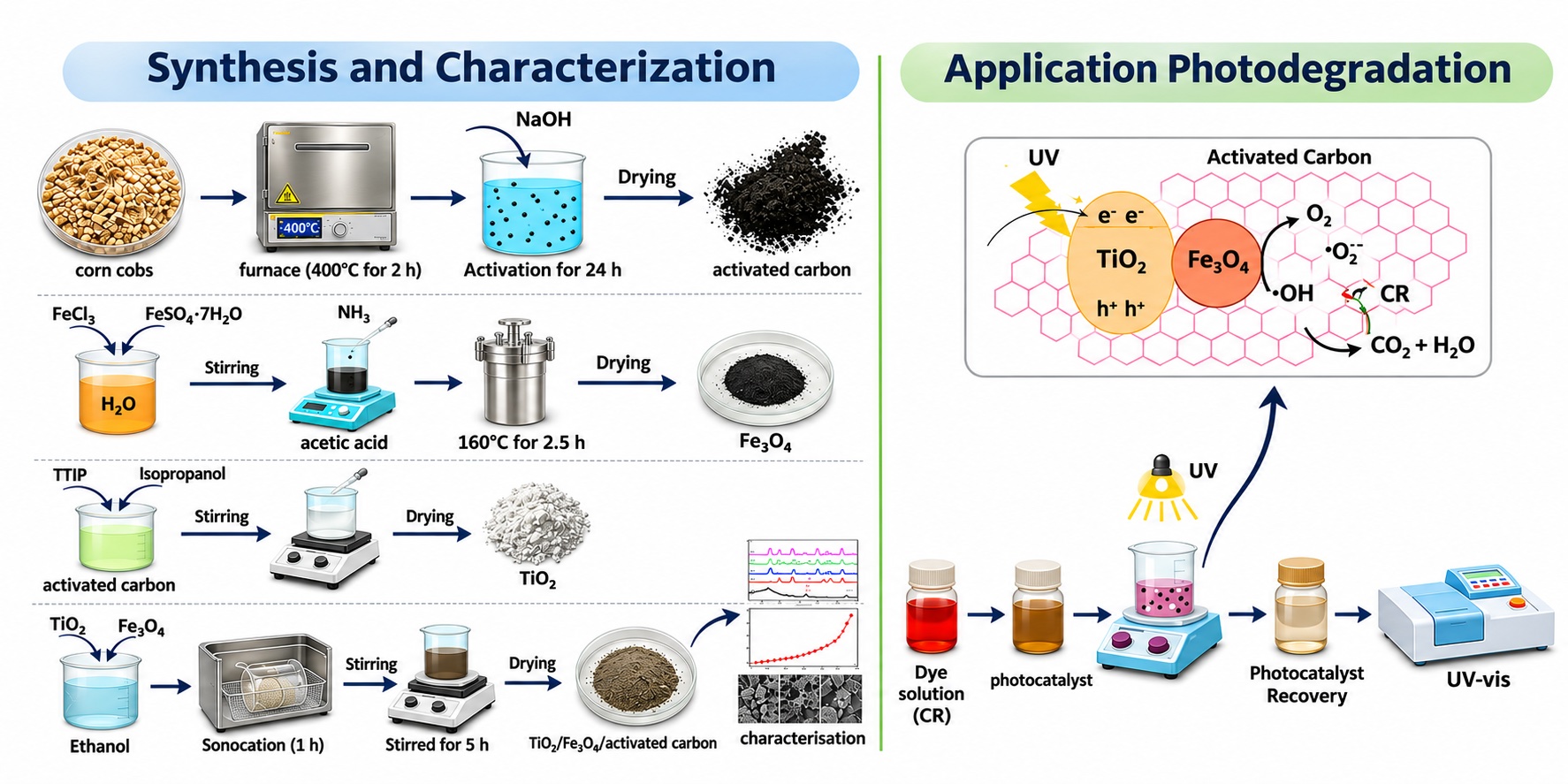
Highlights
Please note: The following content displays the text-only preview. For the full article, complete with all illustrations, data tables, and equations, please download the free PDF from the sidebar at the top of this page.
1. INTRODUCTION
Industrial activities have substantially contributed to the accumulation of organic pollutants in aquatic environments, resulting in a major environmental problem [1]. Among these pollutants, synthetic dyes are a major source of global water contamination. They accounted for about 17–20% of total water pollution [2], [3]. Azo dyes are dominant in industrial applications, comprising nearly 60–70% of all dye usage due to their strong affinity for substrates and vivid color properties [4].
Congo Red (CR), an anionic diazo dye, poses significant health risks as it can degrade into benzidine, a known carcinogen that interacts with DNA [5]. Various methods have been utilised to remove dyes from wastewater, including adsorption, membrane filtration, and advanced oxidation processes (AOP) [6]. Among these, AOP has attracted considerable attention due to its ability to degrade dye molecules into harmless products such as carbon dioxide (CO₂) and water (H₂O) [7]. This method requires the use of photocatalysts. Semiconductor-based photocatalysts, including ZnO, TiO₂, ZnS, and WO₂, have been widely investigated for dye degradation [8], [9], [10], [11]. Among these materials, titanium dioxide (TiO₂) is one of the most widely studied due to its high photocatalytic activity, good chemical stability, non-toxic nature, and relatively low cost [12]. Several studies have also reported that TiO₂ exhibits a relatively high efficiency in degrading dye pollutants [13], [14], [15]. However, TiO₂ photocatalysts have inherent drawbacks, particularly their low specific surface area and limited active sites, which reduce adsorption capacity and photocatalytic performance [16]. To address these limitations, TiO₂ is often combined with high-surface-area porous materials such as zeolites, clays, AC, or chitosan. These composite materials significantly enhance dye adsorption and overall photocatalytic efficiency [17], [18], [19], [20].
Activated carbon is widely used as a support material for catalysts because it offers a large surface area, abundant surface functional groups, and high porosity [21]. In photocatalysis, pollutants are adsorbed onto the catalyst’s surface, where they are degraded into harmless substances, such as CO₂ and H₂O, by reactive oxygen species, including hydroxyl radicals and superoxide anions [1]. The integration of AC into TiO₂-based photocatalysts facilitates the separation of electron-hole pairs, reduces the rate of recombination, prolongs electron lifetime, and enhances overall photocatalytic performance [21]. Nevertheless, a significant drawback of TiO₂ photocatalysts is the difficulty in recovering the material after photocatalytic reactions, which impacts their reusability [22]. Incomplete retrieval could lead to residual catalyst particles leaching into aquatic ecosystems, posing potential ecological risks to both organisms and humans [23]. An effective approach to address this challenge is the combination of TiO₂ with magnetic particles, which facilitates facile separation using a magnetic field after photocatalysis [24]. The incorporation of magnetic materials, such as Fe₃O₄, not only aids in catalyst recovery and reuse but also enhances energy efficiency and simplifies operational procedures [25].
Several studies have demonstrated that incorporating TiO₂ with magnetic Fe₃O₄ enables efficient photocatalyst separation after the reaction while maintaining high photocatalytic activity. For instance, magnetic AC functionalized with TiO₂ showed excellent degradation performance toward indigosol green dye and effectively reduced Cr(VI) in aqueous solution [11]. Similarly, Fe₃O₄@TiO₂@zeolite nanocomposites exhibited high adsorption efficiency for the antibiotic levofloxacin and demonstrated good reusability over multiple cycles, attributed to the porous zeolite structure and magnetic properties of Fe₃O₄ [26]. Fe₃O₄@TiO₂-based magnetic photocatalysts have also been successfully employed for degrading enrofloxacin and other organic compounds under both UV and visible light irradiation [24]. Another study explored visible-light-active Fe₃O₄/SiO₂/TiO₂ composites for 4-nitrophenol degradation, showing good stability through multiple reuse cycles [27]. Despite these advances, studies on TiO₂/Fe₃O₄ composites supported on biomass-derived AC have rarely focused on CR degradation, particularly in terms of systematic photocatalyst reusability evaluation. Therefore, this study offers novelty through the utilisation of corn cob-derived AC as an adsorptive support, the application of TiO₂/Fe₃O₄/AC composites for CR degradation, and a systematic evaluation of photocatalyst stability and reusability, thereby contributing to the development of practical magnetic photocatalysts for dye wastewater treatment.
In this work, TiO₂/Fe₃O₄/AC composites were prepared using corn cob-based AC via a simple, cost-effective, and energy-efficient physical mixing method. The AC functioned as an adsorptive support to enhance dye uptake, while Fe₃O₂ imparted magnetic properties that enabled efficient separation and recovery of the photocatalyst after the reaction. Furthermore, the structural characteristics, morphology, magnetic behaviour, and photocatalytic performance of the composites were systematically evaluated through CR degradation experiments, with emphasis on both efficiency and reusability.
2. METHODOLOGY
2.1 Materials
The photocatalysts materials used in this study are corn cobs, titanium tetra isopropoxide (TTIP) Ti(OCH(CH₃)₂)₄ (Sigma-Aldrich), isopropyl alcohol (Merck), ethanol (Merck), sodium hydroxide (NaOH) (Merck), iron(III) chloride (FeCl₃·6H₂O) (Merck), iron(II) sulfate (FeSO₄·7H₂O) (Merck), ammonium (NH₃) (Merck), citric acid (Merck), hydrochloric acid (HCl) (Merck), Congo Red (CR) C₃₂H₂₂N₆Na₂O₆S₂ (Merck).
2.2 Preparation of activated carbon
The synthesis was carried out based on the method of Lala et al. [28], with some modifications. Corn cobs were initially cleaned and subsequently dried under direct sunlight for three days. The dried materials were then placed in an oven and heated at 100°C for 24 hours. Following this thermal treatment, the samples were carbonized in a furnace at 400°C for 2 hours. The resulting charcoal was ground and sieved using a 200-mesh sieve. Chemical activation was performed by soaking the charcoal in 1 mol/L NaOH solution for 24 hours at room temperature, followed by neutralization. Finally, the product was dried in an oven at 100°C for 6 hours.
2.3 Synthesis of Fe3O4
The synthesis was conducted following the method described by Ahmad et al. [29]with slight modifications. A solution was prepared by dissolving FeCl₃ and FeSO₄·7H₂O in distilled water at a Fe³⁺: Fe²⁺ molar ratio of 2:1. The solution, with a total volume of 20 mL, was stirred using a magnetic stirrer until complete dissolution was achieved. Ammonia (NH₃) was carefully added dropwise under continuous stirring until the pH reached 10, resulting in precipitate formation. The mixture was then transferred to an autoclave and heated at 160°C for 2.5 hours. The resulting precipitate was washed three times with distilled water and subsequently dried in an oven at 80°C for 1 hour.
2.4 Synthesis of TiO2
The synthesis was carried out based on the method of Ramalingam [30], with some modifications. A 5 mL aliquot of TTIP precursor was mixed with 25 mL of isopropanol under continuous stirring to ensure thorough blending. Subsequently, 0.1 mol/L acetic acid was added dropwise under continuous stirring until a precipitate formed. The mixture was then placed in an oven and heated at 80°C for 48 hours. Once dried, the powder was transferred to a porcelain crucible and calcined in a furnace at 400°C for 3 hours.
2.5 Synthesis of TiO₂/Fe₃O₄ and TiO₂/Fe₃O₄/AC
The composite synthesis was performed following the method described by Utami et al. [11], with slight modifications. Both TiO₂/Fe₃O₄ and TiO₂/Fe₃O₄/AC composites were prepared using a simple physical mixing method. The TiO₂/Fe₃O₄ composite was synthesized by mixing 1.67 g of Fe₃O₄ and 3.33 g of TiO₂ in 30 mL of isopropanol. The mixture was subjected to ultrasonication for 1 hour to obtain a homogeneous suspension, followed by vigorous stirring for 5 hours. The suspension was then filtered and dried in an oven at 80°C for 4 hours. Similarly, the TiO₂/Fe₃O₄/AC composite was prepared by combining 1.11 g of Fe₃O₄, 1.67 g of AC, and 2.22 g of TiO₂ in 30 mL of isopropanol. The mixture underwent ultrasonication for 1 hour to ensure uniform dispersion, followed by stirring for 5 hours, filtration, and drying at 80°C in an oven for 4 hours. Fig. 1 illustrates the schematic diagram for the synthesis of TiO₂/Fe₃O₄/AC composite.
2.6 Characterization
The materials were characterized using X-ray diffraction (XRD) on a Shimadzu Maxima-X 7000 diffractometer with CuKα radiation (λ = 1.54 Å). Measurements were performed over a 2θ range of 10°–70° at 40 kV and 30 mA. Fourier Transform Infrared (FTIR) spectroscopy was conducted using a Shimadzu IR Prestige-21 spectrometer over a wavenumber range of 300–4000 cm⁻¹. The morphology of the TiO₂/Fe₃O₄/AC catalyst was examined using Scanning Electron Microscopy (SEM, SU3500) at magnifications ranging from 1,000× to 15,000×, coupled with Energy Dispersive X-ray Spectroscopy (EDX) for elemental analysis. The magnetic properties of the composites were measured using a Vibrating Sample Magnetometer (VSM) at room temperature over a magnetic field range of -1 to 1 T. Ultraviolet-visible diffuse reflectance spectroscopy (UV-DRS, UV3600) was employed to investigate the optical absorption spectrum across wavelengths of 200–800 nm. The specific surface area was determined using a Surface Area Analyzer (SAA). Before measurement, the samples were degassed at 300°C for 4 hours using an Almita Micro-200 Surface Area Analyzer. The thermal properties of the materials were assessed using Thermogravimetric Analysis (TGA) and Differential Scanning Calorimetry (DSC) with a Linseis STA PT1600 instrument. The samples were heated at a rate of 20°C/min up to 1000°C under a nitrogen atmosphere.
2.7 Photocatalytic activity
The photocatalytic procedure was carried out with a 250-watt mercury lamp positioned 25 cm above the reaction solution. In each experiment, 0.1 g of either the photocatalyst composite, TiO₂/Fe₃O₄ or TiO₂/Fe₃O₄/AC, was added to 25 mL of a CR solution with a concentration of 20 mg/L in separate beakers. The solution was exposed to lamp irradiation while being continuously stirred for a duration of 3 hours. After irradiation, the composite was separated using an external magnet. The absorbance of the solution was measured at the maximum absorbance wavelength of CR (499 nm) using a UV–Vis spectrophotometer to calculate the degradation efficiency according to the following equation (1)
(1)
C₀ represents the initial concentration of CR dye (mg/L), while Ct refers to the concentration after treatment. Fig. 2. Illustration of the photocatalytic degradation process using TiO₂/Fe₃O₄/AC.
2.8 Photocatalyst reusability
To assess the reusability of the photocatalyst, the material was retrieved using a commercial magnet, cleansed with distilled water, oven-dried at 70°C, weighed, and subsequently reintroduced to the CR solution [31].
3. RESULTS AND DISCUSSION
3.1 X-Ray Diffraction (XRD)
The structural characteristics of AC, TiO₂, Fe₃O₄, and the composites were examined using XRD, as depicted in Fig. 3. The XRD spectrum of AC exhibits a broad diffraction band in the 2θ range of 10°–30°, indicating an amorphous nature due to the disordered carbon structure. However, the presence of peaks at 24.11°, 44.27°, and 64.61°, corresponding to the (002), (101), and (110) planes, respectively, suggests that the AC still retains a small fraction of micro-graphitic structures. Thus, the AC can be characterized as semi-amorphous with nanometer-sized graphitic domains [32]. Fig. 3(b) presents the XRD spectrum of Fe₃O₄, which displays six distinct peaks at 2θ angles of 30.24° (220), 35.63° (311), 43.28° (400), 53.70° (422), 57.28° (511), and 62.88° (440). These diffraction patterns are consistent with the cubic crystal structure of magnetite, as referenced in JCPDS card No. 19-0629 [31].
Fig. 3(c) shows the XRD spectrum of TiO₂, while Figs. 3(d-e) display the diffraction peaks of TiO₂/Fe₃O₄ and TiO₂/Fe₃O₄/AC composites at 2θ values of 25.2° (101), 37.97° (004), 48.11° (200), 54.07° (105), 55.00° (211), and 63.02° (204), indicating that TiO₂ exists in the anatase phase (JCPDS No. 21-1272) [33]. Additional peaks at 30.33° (220), 35.73° (311), and 57.42° (511) confirm the presence of magnetic Fe₃O₄ particles (JCPDS No. 19-0629) [31], [33]. These results suggest that the anatase phase is the dominant crystalline phase in the composites, while AC is not detected in the XRD spectra due to its amorphous nature. The crystallite size of the materials was determined using the Scherrer equation (Equation 2) with K = 0.9 and λ = 0.15406 nm [34]. The average crystallite size of the TiO₂/Fe₃O₄/AC composite is 8.25 nm, while that of TiO₂/Fe₃O₄ is 10.65 nm. These results indicate that the synthesized materials exhibit nanoscale morphology.
(2)
where:
D = average crystallite size (nm)
K = Scherrer constant (0.9)
β = full width at half maximum (FWHM) of the diffraction peak (radians)
θ = Bragg diffraction angle (degrees)
The size of the crystal particles plays a crucial role in determining photocatalytic efficiency, as it influences both surface area and adsorption capacity. Smaller crystals provide a larger surface area, enhancing adsorption and improving the material’s ability to degrade dyes. In addition, reduced crystal sizes decrease the recombination rate of electron-hole pairs (e⁻-h⁺), further enhancing photocatalytic performance [35].
3.2 Fourier Transform Infrared (FTIR)
Fig. 4(a) shows the FTIR spectrum of AC, displaying several distinct absorption bands. The broad peak at 3417 cm⁻¹ is attributed to O–H stretching vibrations, indicating the presence of hydroxyl groups and suggesting hydrogen bonding likely due to adsorbed water molecules on the AC surface. The band at 2922 cm⁻¹ corresponds to C–H stretching vibrations from aliphatic hydrocarbons. The band at 1702 cm⁻¹ is assigned to C=O stretching vibrations, attributed to carbonyl, carboxylate, and lactone groups. The band at 1606 cm⁻¹ relates to C=C vibrations, reflecting the aromatic structure in AC. The band at 1222 cm⁻¹ indicates C–O stretching vibrations found in esters, phenolic compounds, carboxylic acids, and alcohols. The bands at 524 cm⁻¹ and 441 cm⁻¹ are associated with C–C stretching vibrations [36]. Fig. 4(b) reveals a prominent absorption band at 590 cm⁻¹, attributed to Fe–O stretching in Fe₃O₄ [37]. Fig. 4(c) presents a peak at 582 cm⁻¹, assigned to Ti–O stretching. The peaks at 3419 cm⁻¹ and 1635 cm⁻¹ correspond to the bending and stretching of –OH groups, respectively, indicating the presence of adsorbed water molecules in the composite [38]. The FTIR spectra of both composites feature broad bands between 500 and 800 cm⁻¹, representing Ti–O–Ti stretching vibrations. The breadth of these bands likely results from overlapping Ti–O and Fe–O peaks, confirming the successful integration of the composite components [33].
3.3 Vibrating Sample Magnetometry (VSM)
The magnetic behavior of the synthesized photocatalysts was evaluated using VSM at room temperature under an applied magnetic field ranging from −1 to 1 T. The magnetic properties of the materials are presented in Fig. 5, showing that the saturation magnetization values for Fe₃O₄, TiO₂/Fe₃O₄, and TiO₂/Fe₃O₄/AC are 70.71 emu/g, 22.13 emu/g, and 14.78 emu/g, respectively. The decrease in saturation magnetization is attributed to the presence of non-magnetic AC and TiO₂ layers on the Fe₃O₄ surface, as indicated by the hysteresis curves. Both composites retain superparamagnetic properties, with negligible coercivity values close to zero, suggesting their potential applicability in applications requiring magnetic separation [39].
3.4 Ultraviolet-Visible Diffuse Reflectance Spectroscopy (UV-DRS)
UV-DRS analysis of TiO₂, TiO₂/Fe₃O₄, and TiO₂/Fe₃O₄/AC was conducted in the wavelength range of 200–800 nm to evaluate their optical properties. The band gap energy (Eg) was determined using the Kubelka–Munk method to elucidate the optical characteristics of each material. As illustrated in Fig. 6, the Eg values for TiO₂, TiO₂/Fe₃O₄, and TiO₂/Fe₃O₄/AC are 3.1 eV, 2.76 eV, and 2.68 eV, respectively. The lower band gap energy in the composites indicates enhanced visible light absorption capability, thereby improving their photocatalytic effectiveness compared to pristine TiO₂. Therefore, the incorporation of Fe₃O₄ and AC into TiO₂ increases its light absorption capacity, enhancing its performance in photocatalytic applications.
3.5 Surface Area Analyzer (SAA)
The surface textural properties of the AC and TiO₂/Fe₃O₄/AC composite, including specific surface area, pore volume, and pore size distribution, were analyzed using SAA. The isotherm curves of AC and TiO₂/Fe₃O₄/AC exhibit a typical type IV pattern, indicating the presence of mesoporous structures (Figs. 7a and 7c). AC exhibits a high specific surface area of 211.6 m²/g with a relatively small pore volume (0.15 cm³/g) and an average pore diameter of 2.8 nm, indicating the dominance of mesoporous structures. In contrast, the TiO₂/Fe₃O₄/AC composite shows a lower specific surface area of 115 m²/g but with an increased pore volume of 0.30 cm³/g and an enlarged average pore diameter of approximately 12 nm, suggesting a more pronounced mesoporous contribution. These differences indicate that although the surface area decreases due to partial pore blockage by metal oxides, the composite retains its effectiveness in adsorbing larger molecules, facilitating reactant diffusion, and enhancing photocatalytic activity.
3.6 Thermogravimetric Analysis (TGA) and Differential Scanning Calorimetry (DSC)
TGA-DSC analysis was performed to assess the thermal stability of the synthesized composites. The measurements were carried out under a nitrogen (N₂) atmosphere with a constant heating rate of 10°C min⁻¹ over the temperature range of 30–1000°C. As shown in Fig. 8a, TiO₂ experienced a slight weight loss of approximately 2.89% up to 1000°C due to the evaporation of adsorbed water and decomposition of residual solvent, indicating its high thermal stability [40]. The DSC curve shows an endothermic peak at 51.91°C, an exothermic peak at 688°C corresponding to anatase crystallization, and another endothermic peak at 714°C related to the anatase-to-rutile phase transformation, which typically occurs between 600–800°C and affects TiO₂’s photocatalytic performance [41]. As shown in Fig. 8b, Fe₃O₄ exhibits minor weight losses between 76–400°C due to adsorbed water, residual solvent, or minor by-products formed during synthesis, with stabilization observed above 500°C. The DSC curve exhibited an endothermic peak at 116°C, indicative of initial dehydration, and another peak at 265°C, likely associated with the removal of residual solvent or minor by- products from the synthesis process. A strong exothermic peak at 560°C indicates the oxidation of Fe₃O₄ to hematite (α-Fe₂O₃), suggesting enhanced crystallinity and thermal stability due to the formation of a more thermodynamically stable crystalline phase [42], [43]. In Fig. 8c, the TiO₂/Fe₃O₄/AC composite exhibits two stages of weight loss—3.64% at 60–200°C and 11.67% at 450–860°C—attributed to the evaporation of water and the degradation of organic groups, primarily from the AC. The absence of exothermic peaks indicates that no new crystallization occurred, suggesting the composite maintains thermal stability even at elevated temperatures.
3.7 Scanning Electron Microscope (SEM)
Fig. 9 illustrates the surface morphology of AC, TiO₂, Fe₃O₄, TiO₂/Fe₃O₄, and TiO₂/Fe₃O₄/AC composites, highlighting the structural alterations that occurred during synthesis. In Figs. 9a and 9e, AC particles display a porous structure that undergoes physical transformation upon the incorporation of TiO₂ and Fe₃O₄. The integration of these components resulted in the formation of new particles that attach to the AC framework, particularly filling the previously vacant spaces and pores. TiO₂ and Fe₃O₄ particles are distributed on the pores and surface of the AC, indicating an increase in active sites on the catalyst’s surface. This allows the dye molecules to penetrate the AC’s pores and interact with the TiO₂ particles, a critical prerequisite for the catalytic reaction [32]. With TiO₂ particles present on the catalyst surface, the photocatalytic reaction becomes more efficient, as these particles act as active centers for light absorption and electron-hole pair generation [39].
The SEM image of TiO₂ (Fig. 9b) reveals a morphology consisting of fine, small-sized granules that tend to form slight agglomerations. In contrast, the SEM image of Fe₃O₄ (Fig. 9c) displays irregular particle aggregates with relatively larger dimensions, indicating strong agglomeration typically attributed to magnetic interactions among Fe₃O₄ particles. The EDX spectrum for activated carbon and TiO₂/Fe₃O₄/AC provides insight into the elemental composition of the synthesized samples. Fig. 9f confirms that Ti, Fe, C, and O are present as indicated in the table. EDX analysis determined the mass percentage of these elements in the synthesized sample, validating their integral role in the photocatalyst structure. Furthermore, SEM-EDS elemental mapping of the TiO₂/Fe₃O₄/AC composite (Figs. 9g–k) demonstrates that Ti and Fe elements are uniformly distributed and overlapped with the carbon matrix across the observed surface. This confirms that TiO₂ and Fe₃O₄ particles were successfully deposited onto the AC surface, thereby partially blocking its pores.
3.8 The Photodegradation Activity of the Material Studied
At the initial stage (adsorption under dark conditions for 30 minutes), the concentration of CR decreased due to adsorption between CR molecules and the photocatalyst surface. The adsorption efficiencies of each photocatalyst were 18.9% for TiO₂/Fe₃O₄ and 51.5% for TiO₂/Fe₃O₄/AC, as shown in Fig. 10. For comparison, pure AC showed an adsorption efficiency of 75% under the same conditions, indicating its strong ability to attract CR molecules to its surface. After the adsorption stage, UV irradiation for 180 minutes initiated the actual photocatalytic process.
The control experiment, conducted without a photocatalyst, showed no significant decrease in concentration, indicating that pure photolysis was ineffective. After the photocatalytic degradation process, the total CR removal reached 74% for TiO₂/Fe₃O₄ and 96.7% for TiO₂/Fe₃O₄/AC. The enhanced photocatalytic efficiency of the TiO₂/Fe₃O₄/AC composite is attributed to the incorporation of AC, which can adsorb a greater number of CR molecules onto the photocatalyst surface. This process increases the probability of contact between dye molecules and the active sites of TiO₂, allowing the photocatalytic reaction to proceed more effectively under UV irradiation. Therefore, the improvement in CR degradation efficiency is not solely due to the photocatalytic activity of TiO₂/Fe₃O₄ but also to the adsorption capacity of AC, which synergistically enhances the overall performance of the composite [44]. The kinetics of CR degradation were analyzed during dark adsorption (−30 to 0 min) followed by photocatalysis (0–180 min). The rate constants were determined using the Langmuir–Hinshelwood (LH) pseudo-first-order and pseudo-second-order models (Equations 3 and 5) [44], with results presented in Table 2. The TiO₂/Fe₃O₄/AC composite exhibited higher degradation rates than TiO₂/Fe₃O₄, with the pseudo-first-order rate constant kₐ₁ = 0.0159 min⁻¹ (R² = 0.953) and the pseudo-second-order rate constant kₐ₂ = 0.2267 L mg⁻¹ min⁻¹ (R² = 0.941). In comparison, TiO₂/Fe₃O₄ gave kₐ₁ = 0.0065 min⁻¹ (R² = 0.840) and kₐ₂ = 0.0246 L mg⁻¹ min⁻¹ (R² = 0.917). These findings indicate that the pseudo-second-order model better fitted the kinetics of CR degradation by TiO₂/Fe₃O₄/AC.
= (3)
(4)
where
Ct : the remaining concentration of CR dye at irradiation time t,
C0 : the initial concentration of CR dye after adsorption–desorption equilibrium,
k1 and k2: the apparent Langmuir–Hinshelwood pseudo-first-order and pseudo-second-order rate constants, respectively, and
t : is the irradiation time.
To further evaluate the photocatalytic performance of the synthesized TiO₂/Fe₃O₄/AC composite, a comparison with previous studies is presented in Table 2.
3.9 The efficiency of CR photocatalytic degradation is influenced by pH parameters
The initial pH of the solution is a critical parameter in the photocatalytic degradation process, as it strongly influences the degradation of CR. Variations in pH can alter the catalyst’s surface charge and ionization state, thereby affecting interactions between the catalyst and dye molecules. Moreover, pH influences the dissociation of compounds and the distribution of charges on the catalyst surface, ultimately affecting photocatalytic performance [51]. The degradation performance of TiO₂/Fe₃O₄ and TiO₂/Fe₃O₄/AC composites was evaluated at different pH values ranging from 5 to 8 to compare their effectiveness in degrading CR. As shown in Fig. 12, photocatalytic efficiency decreased with increasing pH from 5 to 8. At lower pH, the catalyst surface becomes positively charged due to the dominance of H⁺ ions, resulting in electrostatic attraction with the anionic CR molecules and thereby accelerating photocatalytic degradation. In contrast, under alkaline conditions, the catalyst surface becomes negatively charged owing to the dominance of OH⁻ ions, leading to electrostatic repulsion that hinders adsorption and reduces photocatalytic activity [52]. At pH 5, the TiO₂/Fe₃O₄/AC composite achieved a degradation efficiency of 95.69%, whereas TiO₂/Fe₃O₄ reached approximately 74.7%.
3.10 Reusability of photocatalyst
The reusability of photocatalysts is a crucial aspect of the photodegradation process. Magnetic materials play a pivotal role, as they enable the composites to be rapidly separated from solutions using an external magnetic field, making the reuse of the composites more efficient. This study examines the recycling potential of the TiO₂/Fe₃O₄/AC composite for degrading CR dye solution. The findings are illustrated in Fig. 13, highlighting the composite’s effectiveness over multiple cycles. After four cycles, the photodegradation efficiency of TiO₂/Fe₃O₄/AC decreased from 96.7% to 72%, representing a reduction of approximately 25%. This decline can be attributed to several factors, including material loss during recovery processes (e.g., washing), which may reduce the amount of photocatalyst available for subsequent cycles and diminish surface activity [31]. Furthermore, the properties of magnetic nanoparticles may change after several cycles due to particle aggregation, reducing the effective surface area and the number of active sites. Additionally, pore blockage and surface contamination can contribute to the decreased adsorption and photodegradation activity observed after repeated use [46].
The FTIR spectrum of the TiO₂/Fe₃O₄/AC composite after four cycles of degradation (Fig. 14) shows no significant changes in the absorption bands compared to the spectrum before use. The major absorption bands observed at 3441, 1695, 1614, 636, and 590 cm⁻¹ remain essentially unchanged, indicating that the structural integrity of the composite is maintained throughout the repeated degradation cycles. However, sharp bands appear in the 1500–1000 cm⁻¹ region, which indicates the presence of residual functional groups from CR molecules that remain adsorbed on the photocatalyst surface. This residual adsorption results in a slight reduction in the composite’s overall adsorption and photocatalytic degradation performance.
3.10 Reaction Mechanism
The scavenger test results showed that the addition of IPA and AgNO₃ did not significantly affect the degradation efficiency, indicating that hydroxyl radicals (•OH) and electrons (e⁻) had minimal contribution to the photodegradation process of CR. In contrast, holes (h⁺) acted as the primary oxidative species in the degradation of CR dye using a TiO₂/Fe₃O₄/AC photocatalyst (Fig. 15). These findings are consistent with the results reported by Delafrouz et al. (2024) [53]. This radical scavenging test provided fundamental information regarding the reactive species involved in the photocatalytic mechanism, thereby enhancing the understanding of the processes underlying the effectiveness of organic pollutant degradation.
The proposed reaction mechanism is as follows [54]:
Photocatalyst + hy → e-CB + (5)
O + → •O₂⁻ (6)
•O₂⁻ → H2O → + OH- (7)
OH- + → •OH (8)
•O₂⁻ + + CR → degradation products (CO2+ H2O) (9)
The process begins with the adsorption of CR molecules onto the photocatalyst surface, establishing an equilibrium between CR and the active sites. When TiO₂ is irradiated with UV light, electrons (e⁻) in the valence band (VB) are excited to the conduction band (CB), leaving holes (h⁺) in the VB. AC enhances this process by adsorbing more CR molecules in proximity to TiO₂, increasing their contact with active sites and creating a synergistic effect between adsorption and photodegradation [55], [56]. Fe₃O₄ not only serves as a magnetic component for facile catalyst recovery but also facilitates electron transfer from TiO₂ to AC, thereby reducing electron–hole recombination [24], [46], [57]. In addition, AC acts as an electron sink, transferring the photoexcited electrons to dissolved oxygen to form reactive oxygen species (•O₂⁻), while the holes (h⁺) react with hydroxide ions (OH⁻) or adsorbed water molecules to produce hydroxyl radicals (•OH). Both species contribute significantly to the oxidative degradation of CR [58].
4. CONCLUSIONS
The TiO₂/Fe₃O₄/AC composite was successfully synthesized using a simple physical mixing method. The synergy between Fe₃O₄, AC, and TiO₂ produces a material that is effective, stable, and reusable for the efficient photodegradation of CR dye. The composite exhibited a degradation efficiency of 96.7%, which is significantly higher than that of TiO₂/Fe₃O₄, which achieved 74%. This improvement is attributed to the high adsorption capacity of AC and the magnetic separation capability provided by Fe₃O₄. The incorporation of AC into TiO₂ also contributes to the enhancement of photodegradation activity by increasing the surface area and facilitating faster electron transfer during the reaction. Moreover, the magnetic properties of Fe₃O₄ enable efficient separation of the material using an external magnetic field, supporting reusability and sustainability in the photodegradation process. After four regeneration cycles, the degradation efficiency decreased from 96.7% to 72%; nevertheless, the composite still demonstrated good structural and functional stability upon repeated use. Based on these findings, the TiO₂/Fe₃O₄/AC composite shows excellent potential as a photocatalyst for degrading various anionic and cationic organic pollutants.
Conflict of Interest
The authors declare that they have no known competing financial interests or personal relationships that could have appeared to influence the work reported in this paper.
Acknowledgements
The author would like to express their appreciation to Kementerian Pendidikan, Kebudayaan, Riset dan Teknologi DIKTI Indonesia for their financial backing through the Thesis Research Magister program (Contract Number: 02209/UN4.22/PT.01.03/2025). Gratitude is also extended to Microsoft Copilot for its help with language editing, grammar enhancements, and clarifying the manuscript. The authors have thoroughly reviewed and approved all content supported by AI to maintain scientific precision and honesty.