Document Type : Review Paper
Graphical Abstract
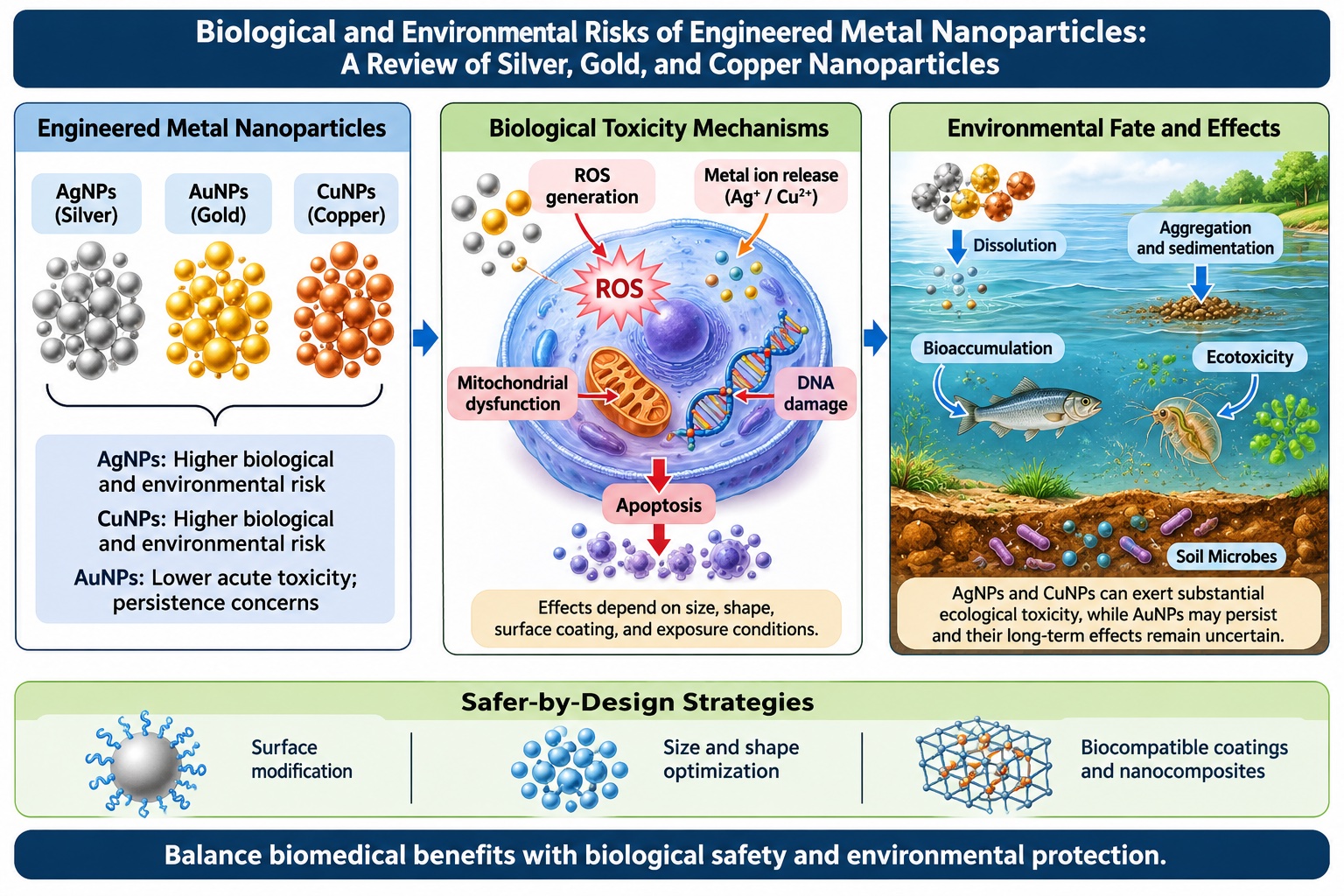
Highlights
Please note: The following content displays the text-only preview. For the full article, complete with all illustrations, data tables, and equations, please download the free PDF from the sidebar at the top of this page.
1. Introduction
Nanotechnology has been rapidly advancing, and with it, the use of metallic nanoparticles (MNPs) in various applications has gained significant attention. Among these nanoparticles, silver (Ag), copper (Cu), and gold (Au) have emerged as prominent materials due to their unique physicochemical properties, such as high surface-area-to-volume ratios and the ability to enhance the reactivity of biological molecules. These properties make MNPs useful in applications ranging from drug delivery to environmental remediation (1-3).
However, the unique properties that make metallic nanoparticles effective in various applications also raise new concerns about their potential toxicity, particularly their impact on genomic integrity. Research has shown that MNPs can induce reactive oxygen species (ROS), which can cause oxidative stress and lead to DNA damage, mutations, and chromosome fragmentation (4, 5). These concerns are particularly critical in medical and environmental contexts, where nanoparticle exposure may pose long-term health risks, including carcinogenesis. For example, several studies have shown that silver nanoparticles (AgNPs) can have mutagenic effects in bacterial models (6, 7).
The genotoxic effects of MNPs are not only limited to bacteria but also extend to mammalian cells. Recent studies suggest that copper nanoparticles (CuNPs) and silver nanoparticles (AgNPs) exhibit genotoxicity in human cell lines by disrupting cellular functions and inducing apoptosis (4, 8). The effects of these nanoparticles can vary depending on size, surface charge, and concentration, with smaller nanoparticles often exhibiting higher toxicity levels due to their increased ability to penetrate biological membranes (9, 10).
Despite their promising applications in nanomedicine and biotechnology, the safety profile of metallic nanoparticles remains a critical issue. Several researchers have called for more comprehensive studies to understand the interactions between nanoparticles and cellular structures, as well as the long-term effects of their exposure to genetic material (11, 12). Furthermore, the regulatory framework for the use of MNPs in the clinical setting has yet to be fully established, requiring ongoing research into safe thresholds and monitoring techniques (13, 14).
This review aims to investigate the molecular mechanisms by which metallic nanoparticles interact with genetic material, causing damage and potentially leading to mutagenesis. By examining the current literature on the genomic and cytotoxic effects of MNPs, we can gain a deeper understanding of their potential risks and benefits. Additionally, this review will highlight the methods used to assess genomic damage caused by nanoparticles, including molecular assays and in vitro models. The methodology used to identify, select, and critically evaluate relevant studies on the biological and environmental risks of metallic nanoparticles is described in the following section.
2. Methodology of Literature Review
This review was conducted using a structured narrative approach to provide a comprehensive and critical overview of the biological and environmental risks associated with engineered metallic nanoparticles, with a particular focus on silver (Ag), gold (Au), and copper (Cu) nanoparticles. Although this study does not follow a fully systematic review protocol, efforts were made to ensure transparency, reproducibility, and relevance in the literature selection process.
2.1. Literature Search Strategy
A comprehensive literature search was performed across major scientific databases, including Web of Science, Scopus, PubMed, and Google Scholar, to identify peer-reviewed articles published primarily between 2000 and 2024. The search strategy combined keywords related to nanoparticle composition, biological effects, and environmental risks. Keywords included combinations of: “metallic nanoparticles,” “silver nanoparticles,” “gold nanoparticles,” “copper nanoparticles,” “genotoxicity,” “cytotoxicity,” “oxidative stress,” “environmental toxicity,” “ecotoxicology,” and “nanomedicine.”
2.2. Inclusion and Exclusion Criteria
Studies were included if they (i) investigated engineered metallic nanoparticles composed of Ag, Au, or Cu; (ii) reported biological, genotoxic, cytotoxic, or environmental effects; and (iii) were original research articles or authoritative review papers published in English. Studies focusing solely on bulk metals, non-engineered particles, or nanoparticles unrelated to biological or environmental risk assessment were excluded. Conference abstracts, non-peer-reviewed articles, and studies lacking sufficient experimental or methodological detail were also excluded.
2.3. Data Extraction and Analysis
Relevant information was extracted from selected studies, including nanoparticle physicochemical characteristics (e.g., size, shape, surface coating), exposure conditions, biological models (in vitro and in vivo), environmental compartments (aquatic and terrestrial systems), and reported toxicological outcomes. The extracted data were analyzed qualitatively to identify recurring toxicity mechanisms, comparative risk profiles among Ag, Au, and Cu nanoparticles, and key knowledge gaps. Particular emphasis was placed on oxidative stress–mediated pathways, DNA damage, mitochondrial dysfunction, and environmental persistence.
2.4. Synthesis and Critical Evaluation
Rather than providing a purely descriptive summary, the selected literature was critically evaluated and comparatively synthesized to highlight similarities and differences in toxicity mechanisms across metallic nanoparticle types. Conflicting findings were discussed in the context of nanoparticle properties, experimental models, and exposure conditions. This approach allowed for the identification of trends, uncertainties, and research gaps relevant to both nanomedicine applications and environmental risk assessment.
3. Toxicity and Biocompatibility of Metallic Nanoparticles
Metallic nanoparticles (NPs), with their unique size-dependent properties such as high surface area and reactivity, have shown promise in various biomedical applications. However, concerns about their toxicity to cells, tissues, and the environment must be addressed before they can be widely used in clinical settings. These nanoparticles, including silver (AgNPs), copper (CuNPs), and gold (AuNPs), interact with biological systems in complex ways that can lead to significant toxicological effects.
3.1. Cytotoxicity and Tissue Toxicity of Metallic Nanoparticles
Several metallic nanoparticles have been shown to cause toxicity by disrupting cellular functions through oxidative stress, inflammation, and DNA damage. The following nanoparticles have been extensively studied:
1. Silver Nanoparticles (AgNPs): AgNPs are well-known for their antimicrobial and anticancer properties. However, their toxicity to human cells is significant. AgNPs generate reactive oxygen species (ROS) upon cellular exposure, which leads to oxidative stress and cellular damage. Additionally, silver ions (Ag⁺), which are released from AgNPs, bind to cellular proteins and nucleic acids, further exacerbating toxicity. These effects include mitochondrial dysfunction, apoptosis, and necrosis. Studies have demonstrated that AgNPs accumulate in organs like the liver and kidneys, where they induce inflammation and tissue damage (15). Chronic exposure can lead to multi-organ toxicity, particularly in the kidneys and liver (11, 16).
2. Copper Nanoparticles (CuNPs): CuNPs also pose a toxicity risk due to their ability to generate ROS. Cu²⁺ ions released from CuNPs play a critical role in initiating oxidative stress, leading to cellular damage in various tissues, including the liver and lungs. CuNPs have been linked to mitochondrial dysfunction, DNA damage, and apoptosis in human cells, particularly in lung and liver models. In animal studies, CuNPs cause inflammation, fibrosis, and liver toxicity. Furthermore, CuNPs have been shown to accumulate in tissues, exacerbating their harmful effects (17-19).
3. Gold Nanoparticles (AuNPs): Gold nanoparticles (AuNPs) are generally considered less toxic than AgNPs or CuNPs due to their inert nature and biocompatibility. However, their toxicity depends on factors such as size, shape, and surface coating. Smaller AuNPs, with their larger surface area, exhibit higher reactivity and can induce oxidative stress, inflammation, and cytotoxicity at higher concentrations. While AuNPs are often used in drug delivery systems due to their relatively low toxicity at optimal doses, studies have shown that high concentrations can still lead to DNA damage and cellular apoptosis (20, 21).
3.2. Mechanisms of Toxicity
The key mechanisms through which metallic nanoparticles cause toxicity include the generation of ROS, mitochondrial dysfunction, and DNA damage. These processes lead to cellular dysfunction, inflammation, and, ultimately, cell death. The major mechanisms underlying metallic nanoparticle–induced toxicity and their comparative biological and environmental risk profiles are schematically illustrated in Figure 1.
1. Oxidative Stress: ROS production is the primary driver of NP-induced toxicity. NPs, particularly AgNPs and CuNPs, generate ROS upon contact with biological systems, leading to lipid peroxidation, protein denaturation, and DNA damage. This oxidative stress can activate cell signaling pathways that lead to apoptosis or necrosis (22). ROS-induced inflammation has been linked to chronic diseases, including cancer and neurodegenerative disorders (23).
2. DNA Damage and Genotoxicity: Metallic nanoparticles can interact directly with DNA or generate ROS that cause DNA strand breaks and mutations. AgNPs and CuNPs have been shown to induce oxidative DNA damage, leading to chromosomal instability, mutations, and potential carcinogenesis. These effects are a major concern for therapeutic applications, particularly in cancer therapy (24).
3. Mitochondrial Dysfunction and Apoptosis: NPs can disrupt mitochondrial function by interfering with the electron transport chain, leading to reduced ATP production and increased ROS. This dysfunction initiates apoptotic pathways, including the intrinsic mitochondrial pathway, contributing to cellular death (25).
3.3. Studies on Metallic Nanoparticle Toxicity in Bacteria and Eukaryotic Cells
1. Bacterial Studies: Metallic nanoparticles like AgNPs and CuNPs exhibit potent antibacterial activity. They damage bacterial cell membranes, causing leakage and disruption of cellular processes. AgNPs, in particular, have been shown to induce DNA damage and mutations in Escherichia coli and Staphylococcus aureus, leading to bacterial death (26). CuNPs also generate ROS that impair bacterial DNA and proteins, contributing to antimicrobial activity (27).
2. Human Cells and Animal Models: In vitro studies have demonstrated that exposure to metallic nanoparticles leads to ROS production, DNA damage, and apoptosis in human cell lines, including lung and liver cells. For example, AgNPs induce DNA strand breaks in human lung cells, while CuNPs cause inflammation and cell death in liver cells (25). In animal models, AgNPs accumulate in organs such as the liver, lungs, and kidneys, which induce oxidative damage and inflammation (28). As summarized in Table 1, AgNPs and CuNPs exhibit significantly higher biological and genotoxic risks compared to AuNPs.
4. Environmental Risks of Metallic Nanoparticles
The increasing production and application of engineered metallic nanoparticles (MNPs) have raised significant concerns regarding their release into natural environments, particularly aquatic and terrestrial ecosystems. Once introduced into the environment, nanoparticles such as silver (AgNPs), copper (CuNPs), and gold (AuNPs) may undergo physicochemical transformations that influence their mobility, persistence, and ecological impact. Environmental exposure occurs through multiple pathways, including industrial effluents, medical waste, agricultural runoff, and wastewater treatment plants (29-32).
4.1. Fate and Transport in Aquatic and Terrestrial Systems
In aquatic environments, MNPs can remain suspended in the water column, aggregate, or settle into sediments depending on factors such as particle size, surface charge, and water chemistry. AgNPs and CuNPs are particularly prone to dissolution, releasing metal ions that significantly contribute to their environmental toxicity. These nanoparticles may also interact with natural organic matter, altering their bioavailability and transport behavior. In soil systems, MNPs can affect soil structure and microbial communities, potentially disrupting essential biogeochemical cycles (31, 33, 34).
4.2. Ecotoxicity and Bioaccumulation
Numerous studies have demonstrated that metallic nanoparticles exert toxic effects on a wide range of aquatic organisms, including algae, invertebrates, and fish. AgNPs are among the most ecotoxic metallic nanoparticles due to their high ion release and strong antimicrobial activity, which can impair photosynthesis in algae and induce oxidative stress in aquatic invertebrates. CuNPs similarly exhibit significant toxicity to aquatic species, particularly through the generation of reactive oxygen species (ROS) and disruption of enzymatic systems. In contrast, AuNPs generally display lower acute toxicity; however, their long-term accumulation and sublethal effects remain insufficiently understood (32, 35, 36).
Bioaccumulation of MNPs has been reported across different trophic levels, raising concerns about biomagnification in food chains. Accumulated nanoparticles may induce oxidative stress, inflammation, and genotoxic effects in exposed organisms, potentially affecting ecosystem stability and biodiversity (35-37).
4.3. Impact on Microbial Communities and Ecosystem Functions
Environmental microorganisms play a critical role in nutrient cycling, organic matter decomposition, and ecosystem resilience. Metallic nanoparticles, particularly AgNPs, can significantly alter microbial community composition due to their strong antimicrobial properties. Disruption of beneficial microbial populations in soil and aquatic environments may impair processes such as nitrogen fixation, carbon cycling, and wastewater biodegradation. These effects highlight the potential for unintended ecological consequences following widespread nanoparticle release (34, 38).
4.4. Environmental Transformation and Risk Implications
Upon environmental exposure, MNPs may transform such as oxidation, sulfidation, and aggregation, which can either mitigate or enhance their toxicity. For instance, sulfidation of AgNPs may reduce ion release and toxicity, whereas oxidative transformations of CuNPs can increase their reactivity. Understanding these transformation processes is essential for accurate environmental risk assessment and the development of safer nanoparticle formulations (34).
Overall, environmental risk assessment of metallic nanoparticles requires a comprehensive evaluation of their fate, ecotoxicity, bioaccumulation potential, and long-term ecosystem effects. Integrating laboratory studies with environmental monitoring and modeling approaches will be critical for predicting nanoparticle behavior and minimizing their ecological impact. Table 2 provides a comparative overview of the environmental fate, ecotoxicity, and bioaccumulation potential of AgNPs, CuNPs, and AuNPs across different ecosystems (34, 39).
4.5. Strategies to Reduce Toxicity and Improve Biocompatibility
Several strategies can be employed to mitigate the toxicity of metallic nanoparticles while enhancing their therapeutic efficacy:
1. Surface Modification: Functionalizing nanoparticles with biocompatible materials such as polyethylene glycol (PEG), chitosan, or phospholipids can prevent direct interactions between NPs and cell membranes, thereby reducing toxicity. These modifications enhance stability, improve biocompatibility, and promote targeted drug delivery (40).
2. Size and Shape Optimization: The toxicity of nanoparticles is strongly influenced by their size and shape. Smaller nanoparticles are more toxic due to their larger surface area and higher reactivity. By optimizing the size and shape of nanoparticles, their toxicity can be reduced while maintaining their efficacy (41).
3. Nanocomposites and Coatings: Developing nanocomposites, in which metallic NPs are incorporated into biocompatible matrices such as silica or polymers, can reduce the release of toxic ions and reduce oxidative stress. Biopolymer coatings, such as those made from chitosan or dextran, have been shown to improve the biocompatibility of NPs, preventing inflammation and enhancing safety (42).
5. Therapeutic Applications of Metallic Nanoparticles
Metallic nanoparticles (NPs), particularly silver nanoparticles (AgNPs), have emerged as a prominent class of nanomaterials with substantial promise in biomedical applications, owing to their unique physicochemical properties such as high surface area, ease of functionalization, and potential for controlled drug delivery. These characteristics make metallic NPs highly suitable for a variety of therapeutic applications, including drug delivery, anticancer therapies, and antimicrobial treatments. Their potential is enhanced when functionalized with various bioactive molecules, enabling targeted treatment and reducing the adverse effects often associated with traditional therapeutic methods.
5.1. Drug Delivery Systems and Cancer Therapy
Metallic nanoparticles, especially silver nanoparticles, are increasingly used in drug delivery systems (DDS) due to their ability to encapsulate and release therapeutic agents in a controlled and targeted manner. Traditional drug delivery techniques often encounter challenges such as poor solubility, non-specific distribution, and significant systemic toxicity. In contrast, nanoparticles can improve drug solubility, stability, and bioavailability, while minimizing off-target effects (43). Silver nanoparticles have been particularly noted for their ability to facilitate the targeted delivery of chemotherapeutic drugs, proteins, and nucleic acids, which can accumulate at specific sites such as tumor tissues through the enhanced permeability and retention (EPR) effect (44).
In recent studies, silver nanoparticles have been employed for the targeted delivery of recombinant proteins, such as the LukS-PV toxin from Staphylococcus aureus. This toxin is known for its ability to induce apoptosis in cancer cells, and when conjugated with silver nanoparticles, it exhibits enhanced stability, controlled release, and increased cytotoxicity. For example, Haghighatafshar et al. (2023) demonstrated that silver nanoparticles loaded with recombinant LukS-PV protein significantly improved the therapeutic efficacy against cancer cells by facilitating targeted protein delivery, resulting in higher apoptosis rates in tumor cells (45). The conjugation of silver nanoparticles with recombinant toxins combines the advantages of both cancer-specific targeting and enhanced therapeutic activity, making it a promising strategy for next-generation cancer therapies (46).
Moreover, metallic nanoparticles can also act as chemotherapeutic agents themselves. Silver nanoparticles have intrinsic anticancer properties, as they can induce oxidative stress, DNA damage, and apoptosis in cancer cells. This is largely attributed to their ability to generate reactive oxygen species (ROS) upon interaction with cellular components, leading to cell death (47). AgNPs have been shown to synergize with conventional chemotherapy agents, enhancing their cytotoxic effects and providing a dual-action mechanism that improves the therapeutic index while reducing systemic toxicity (48). Recent studies have also demonstrated the potential of silver nanoparticles to disrupt the cellular integrity of both cancer and bacterial cells, making them an excellent candidate for combinatorial therapies that target both cancerous and microbial growth simultaneously (49).
5.2. Antimicrobial Effects of Metallic Nanoparticles
Beyond their use in cancer therapy, metallic nanoparticles, especially silver nanoparticles, are widely recognized for their powerful antimicrobial properties. AgNPs exhibit broad-spectrum activity against various microorganisms, including bacteria, fungi, and viruses. The antimicrobial action of silver nanoparticles is primarily attributed to their ability to generate reactive oxygen species (ROS) and to interact with bacterial cell membranes, proteins, and DNA. This interaction leads to bacterial cell disruption, ultimately causing cell death (50).
Recent studies have expanded the understanding of AgNPs’ antimicrobial mechanisms. Zhang et al. (2021) demonstrated that silver nanoparticles inhibit bacterial growth by disrupting the bacterial cell wall and causing the fragmentation of bacterial DNA. This effect is particularly significant in combating multidrug-resistant bacterial strains, which pose a growing challenge in clinical settings (51).
5.3. Synergistic Approaches in Cancer and Antimicrobial Therapy
The synergistic potential of metallic nanoparticles, particularly AgNPs, in both cancer treatment and antimicrobial therapies, represents an exciting frontier in nanomedicine. AgNPs can be functionalized with various therapeutic agents, such as recombinant toxins, chemotherapeutic drugs, and antimicrobial peptides, to simultaneously target cancer cells and pathogenic microbes. This approach not only maximizes the therapeutic benefits of each agent but also helps to overcome some of the limitations of monotherapies, such as drug resistance and poor bioavailability (45, 46).
The combination of AgNPs with recombinant toxins offers an additional layer of anticancer efficacy. For instance, the combination of AgNPs with recombinant azurin toxin has been shown to enhance the anticancer activity of the toxin. Saatlou et al. (2024) demonstrated that azurin-loaded AgNPs significantly inhibited the growth of breast cancer cells by inducing apoptosis, further highlighting the utility of metallic nanoparticles in cancer immunotherapy. In addition, the potential for AgNPs to combat both bacterial infections and cancer cells simultaneously positions them as a versatile tool in therapeutic regimens, particularly for patients suffering from both cancer and infections, which are common in cancer treatment (49).
5.4. Challenges and Future Directions in the Use of Metallic Nanoparticles in Therapeutics
The promising potential of metallic nanoparticles (NPs) in the biomedical field has attracted considerable attention in recent years. These materials, particularly silver, gold, and copper-based nanoparticles, hold potential for a wide range of applications, from drug delivery and imaging to anticancer and antimicrobial therapies. However, while these applications promise a transformative impact on medicine, several critical challenges remain. This section delves into the limitations of current research, the need for further studies, and the emerging potential of computational and bioinformatics approaches to enhance the therapeutic use of metallic NPs.
Despite the promising therapeutic potential of metallic nanoparticles, their clinical translation remains challenged by concerns related to long-term toxicity, bioaccumulation, and unintended environmental release. Therefore, comprehensive risk–benefit assessments and standardized safety evaluations are essential before large-scale biomedical applications.
6. Limitations in Current Studies and the Need for Further Research
The application of metallic NPs in medicine faces several limitations that stem from the complexity of nanoparticle design, characterization, and interactions with biological systems. One of the primary challenges is the lack of standardized methods for evaluating the toxicity and efficacy of NPs. The physicochemical properties of NPs, including size, shape, surface charge, and coating, play a significant role in their biological behavior, but these properties vary across different synthesis methods and experimental conditions (52, 53). The inconsistent protocols used in nanoparticle synthesis, such as chemical reduction versus green synthesis, lead to variations in the size distribution and surface characteristics, which may affect the interpretation of biological responses (54).
Moreover, while many studies have demonstrated the potential of metallic NPs in therapeutic applications, a major gap exists in the long-term toxicity data. For instance, while silver nanoparticles have been shown to exhibit strong antimicrobial activity and anticancer effects, their chronic toxicity, bioaccumulation, and impact on human health remain poorly understood. Previous research has shown that these nanoparticles accumulate in organs such as the liver, spleen, and kidneys, potentially leading to long-term adverse effects (55, 56). The potential for oxidative stress, inflammation, and organ toxicity further complicates their use for chronic disease treatment (25, 57, 58).
In the case of cancer therapy, while metallic nanoparticles, particularly silver-based NPs, have shown promise in inducing apoptosis and inhibiting cancer cell proliferation (2), the molecular mechanisms underlying their anticancer effects remain unclear. It is crucial to understand how these particles interact with cellular components such as proteins, lipids, and nucleic acids. Furthermore, the variability in the cellular uptake and distribution of NPs complicates the prediction of their therapeutic efficacy (59). Current studies mostly focus on in vitro models, and there is a clear need for well-controlled in vivo studies to assess the real-world applicability of these treatments.
7. Potential of Bioinformatics and Computational Modeling
To address these limitations, bioinformatics tools and computational modeling are increasingly considered important tools to improve the development and clinical translation of metallic nanoparticles. For example, molecular dynamics simulations can provide insights into the interactions between nanoparticles and biological membranes, proteins, and DNA (60, 61). These simulations can help predict the behavior of nanoparticles in biological systems, which can guide the development of more effective and safer nanoparticles (62).
Bioinformatics approaches, including analysis of genomic and transcriptomic data, are crucial for understanding molecular responses to nanoparticle exposure. Using high-throughput sequencing techniques, researchers can identify the genes and signaling pathways that are modulated by nanoparticle treatment. This information is crucial for optimizing nanoparticle formulations to enhance their therapeutic effects while minimizing side effects (63, 64). Additionally, computer models can help predict the optimal size, shape, and surface modification of nanoparticles, allowing for more targeted delivery to cancer cells or bacteria (65). These models can also provide insights into potential off-target effects and systemic toxicity of NPs.
Furthermore, the integration of bioinformatics with “omics” technologies such as proteomics and metabolomics promises significant advances in the field of nanomedicine. These techniques can provide a more comprehensive understanding of how nanoparticles affect cellular processes at the molecular level, including their effects on protein expression, cellular metabolism, and genetic material. By applying these advanced tools, researchers can develop nanoparticle-based therapies that are more personalized and tailored to the genetic profiles of individual patients, increasing the likelihood of successful treatment outcomes (66).
8. Future Directions and Emerging Technologies
Several emerging technologies are expected to play a key role in the future development of metallic nanoparticle-based therapies. The use of artificial intelligence (AI) and machine learning (ML) is particularly promising in predicting the biological activity and toxicity of nanoparticles. AI algorithms can analyze large data sets from genomic, proteomic, and toxicology studies to identify patterns and predict the outcomes of nanoparticle interactions with biological systems (67). This approach could significantly reduce the time and cost of discovering new nanoparticle-based therapeutics. Furthermore, the development of high-throughput screening methods will accelerate the evaluation of NP-based drugs and their potential toxicity. Combining these methods with advanced in vivo imaging techniques such as in vivo fluorescence and magnetic resonance imaging (MRI) will enable real-time monitoring of the distribution, accumulation, and therapeutic effects of nanoparticles in animal models (68).
In the context of cancer therapy, the use of nanoparticles as drug delivery systems is significantly strengthened through the development of targeted nanoparticle formulations. By functionalizing the surface of nanoparticles with specific ligands that recognize overexpressed receptors on cancer cells, researchers can improve the selectivity and effectiveness of treatments, thereby minimizing damage to healthy tissue. These approaches are currently being tested in clinical trials, and their success will likely pave the way for more effective and personalized cancer therapies (52, 65).
9. Conclusion
In conclusion, silver, gold, and copper nanoparticles (MNPs) exhibit a wide range of biological and environmental effects, encompassing both promising therapeutic applications and significant toxicity concerns. Gold nanoparticles (AuNPs) are relatively biocompatible and demonstrate lower toxicity compared to silver (AgNPs) and copper nanoparticles (CuNPs), which makes them suitable for various biomedical applications. However, AgNPs and CuNPs pose considerable risks, particularly due to their potential to generate reactive oxygen species (ROS), release harmful metal ions, and induce oxidative stress, potentially leading to genotoxicity, inflammation, and organ toxicity. This underscores the importance of conducting further studies to understand the complex interactions between nanoparticles and biological systems.
While the applications of MNPs in fields like drug delivery, cancer therapy, and environmental remediation are highly promising, their safe integration into clinical and environmental settings necessitates careful consideration. The toxicity of MNPs is influenced by several factors, including particle size, surface charge, and surface modifications, all of which can alter their biological interactions and toxicity profiles. Therefore, ongoing research aimed at designing less toxic nanoparticles and developing standardized evaluation methods is essential to ensure their safety and efficacy.
Moreover, the advancement of computational tools, such as molecular dynamics simulations and bioinformatics approaches, will be critical in predicting nanoparticle behavior and enhancing their biocompatibility. As regulatory frameworks continue to evolve, gaining a nuanced understanding of nanoparticle toxicity will facilitate the development of safer and more effective MNP-based therapies and environmental solutions. In this context, the continuous innovation in nanoparticle engineering holds the potential to revolutionize medicine and environmental health, provided that associated risks are managed and mitigated effectively. By striking a careful balance between innovation and safety, metallic nanoparticles can drive a new era of therapeutic and technological advancements.
Author contributions
B.G. conceived the article’s idea and conducted the literature search and data analysis. H.H. provided critical revisions to the work. All authors read and approved the final manuscript.
Funding
We declare that no funds, grants, or other support were received during the preparation of this manuscript.
Declarations
Conflict of interest
The authors declare no competing financial interests.