Document Type : Review Paper
Graphical Abstract
Highlights
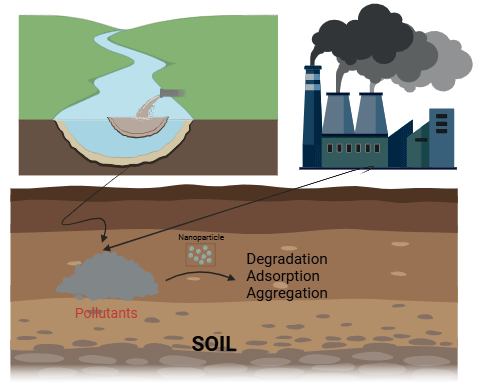
· Nano-enhanced phytoremediation helps plants remove organic contaminants and heavy metals from the soil in a sustainable manner.
· Engineered nanomaterials improve the adsorption, reduction, and degradation of pollutants.
· To avoid ecological dangers with the aid of Nanomaterials.
· To regulate the sustainability, nanomaterials are used wisely.
Please note: The following content displays the text-only preview. For the full article, complete with all illustrations, data tables, and equations, please download the free PDF from the sidebar at the top of this page.
Introduction
Human activities contribute to soil contamination through enrichment with nutrients, sediments, and pesticides. Inorganic and organic pollutants commonly found in soil are slowly decomposing because of a combination of industry and urbanization [1,2]. Point sources include emissions from manufacturing operations, effluents, and solid discharge, as well as metals from smelting and mining, vehicle exhaust, and the use of soluble salts, insecticides, and pesticides. The use of excessive fertilizer and the disposal of industrial and municipal waste in agriculture are examples of nonpoint sources [2-4]. Soil contaminated with metals and heavy metals can affect the food chain and cause health problems [2]. As an alternative to chemicals or physical methods, Rhizo-remediation uses microorganisms to clean soil [5,6]. Due to this limitation, nanotechnology is gaining interested now days. The ideal size range and increased surface area of Nanoparticles (NPs) make them ideal agents for environmental remediation. NPs can be used for a variety of purposes, such as nano adsorbents, nano catalysts, or nanofillers [7,8]. NPs can detect and remove contaminants, as illustrated in Fig. 1. These creative candidates continue to harm the ecosystem by contaminating and building up the environment, damaging plants, and destroying living creatures. NPs, particularly those that are difficult to degrade, may accumulate in live organisms over time. In ecosystems, this buildup can occur at several trophic levels. Because NPs are absorbed by smaller organisms, pollutants may magnify as they migrate up the food chain, posing dangers to higher-level predators. To fully understand the post-treatment behavior and migration of NPs in terrestrial and aquatic environments, it is essential to understand their technological importance.
NPs design, effective control during implementation, and post-application disposal strategies are essential to minimizing and limiting the risks they pose to the environment. The intended applications and potential environmental exposure of NPs should be considered when designing them. It is possible to manipulate the behavior and toxicity of NPs by modifying their size, shape, and surface chemistry. Choosing less toxic and more biocompatible materials by nature can help to reduce environmental impact. Green chemistry ideas can be used to guide the development of low-impact NPs. Developing recycling and reusing solutions for NPs can help to reduce waste generation. This technique is aligned with circular economic ideals and lowers the environmental impact of disposal. It is critical to find strategies for safely disposing of NMs at the end of their life cycle. This may imply specialist waste treatment processes that ensure waste containment [7,8]. It is essential that NMs are site-specific and contained to the site without aggregating, and they must also be site-specific to be effective as bioremediation agents. Collagen and starch can be used as organic stabilizers to overcome these difficulties. Nanotechnology can be combined with current techniques to solve the related problems associated with conventional Heavy Metals (HMs) removal techniques due to their numerous limitations. HMs are among the pollutants that have been removed by different NMs. One of these mechanisms is precipitation, which is catalyzed, conjugated, and adsorbed, and displays redox characteristics. Because they are easily recovered and reused with the aid of an external magnetic field, magnetic NPs are the most often utilized materials due to their efficiency and cost-effectiveness. Because of their special qualities, sensors, nanotubes, oxides, catalysts, and membranes can all benefit from them and play important roles. The needs of the application, such as required functionality, stability, toxicity, and economic concerns, determine which NM is best [8, 10, 11]. Due to their enormous specific surface area, NMs are excellent for removing contaminants using a variety of physicochemical and biological techniques, including redox processes, precipitation, co-precipitation, adsorption, ion exchange, bioremediation, and phytoremediation. As NMs are added to the system, pollutants are subject to a range of physicochemical processes, including absorption, dissolution, adsorption, and photocatalysis. Biocides, bio stimulation, bioaccumulation, biotransformation, and biocides are used in the following phase to remove pollutants [8, 13-15]. Utilizing NPs to boost the effectiveness of phytoremediation, the process of employing plants to remove toxins from the environment is known as nano-phytoremediation. Many variables, such as water solubility, vapor pressure, molecular mass, temperature, pH, organic matter, soil moisture content, root system types, and enzyme kinds, can affect how efficient nano-phytoremediation is. As such, these issues should be carefully considered while developing and putting into practice nano-phytoremediation strategies. It is crucial to select a nontoxic, environmentally benign nanoparticle for phytoremediation that also encourages plant growth, including biomass, seedling height, and plant height. Along with helping plants manufacture photo enzymes, the NP should also speed up the pace at which growth hormone is released. In terms of soil pollutants removal, nano-phytoremediation offers a wide range of applications. A wide range of contaminants can be effectively dealt with using this technique, which is highly effective at absorbing volatile chemical compounds. The use of nanomaterials to assist phytoremediation is particularly effective on organic pollutants, as it improves the removal of contamination from sites. A recent study shows that nanoparticles improve plant stress tolerance in both ex-situ and in-situ environments, boosting phytoremediation potential. [15-17].
Plants & NPs Interactions
Nanoparticles are taken up by plants based on their size, type, and chemical composition. NP size has a significant impact on its ability to penetrate inside plants and move from roots to other regions. As shown in Fig. 2, the penetration technique of NMs also determines how well plants absorb them [18]. Upon entering the plant roots, migrating inside the tissues can occur through two routes. Xylem vessels are located outside the plasma membrane, where apoplastic transport occurs [19], as shown in Fig. 2. A second type of transport, as illustrated in Fig. 3 NPs occurs when water moves between sieve plates and the cytoplast [19]. Uptake is influenced by environmental variables [20]. The temperature influences growth substances and, therefore, root length. Unlike in the greenhouse, the roots in the field have a different structure. To be successful, phytoremediation, particularly Phyto-extraction, requires a contaminant-specific hyper-accumulator [2].
Nanomaterials in phytoremediation.
The nano-phytoremediation process combines NPs with phytoremediation techniques for the remediation of contaminated soils. There are many applications for nano-phytoremediation in terms of removing soil pollutants. The method has a high efficiency of absorption for heavy metals as well as volatile chemical compounds. NMs-assisted phytoremediation is especially effective for organic pollutants and more efficient site contamination clearance. NPs and phytoremediation are critical stages in soil decontamination. The detoxification or remediation of organic, inorganic, and heavy metal contaminants in soils has been demonstrated in numerous studies using NMs. Among the organic pollutants that can be rapidly degraded in polluted soil environments are nZVI, carbon nanotubes, and bimetallic NPs (Pd/Fe), and magnetite (nFe3O4) NPs. Chlorpyrifos, atrazine, lindane, pentachlorophenol, trichloroethylene (TCE), pyrene, and Polychlorinated Biphenyls (PCBs) are a few of the contaminants. Pyrene, 2,4-dinitrotoluene, and ibuprofen. Diuron, p,p′-DDT, Pyrene, and Phenanthrene half-lives can be reduced in soil by nano TiO2 (nTiO2) acting as a redox catalyst, photocatalyst, and thermal destroyer under irradiation [23,24]. According to a recent study, PEI-copper NPs applied on montmorillonite and sand significantly degrade atrazine residues [2-chloro-4-ethylamino-6-isopropylamino-s-triazine] [25]. We can see some of the examples in Table 1; As stated, the mixed benefits of NMs may be explained by their indirect effects on soil microbes. nFe3O4 NPs (0.1-10 mg kg-1) have been found to have positive effects on soil bacteria in some circumstances, but silver (Ag) NPs (0.1-10 mg kg-1) have been found to have a negative effect [26]. According to recent research, NPs can improve plant stress tolerance in ex-situ and in-situ circumstances, consequently improving phytoremediation potential [27.28].
nZVI NMs
nZVI can absorb, reduce, and catalyze pollutants such as pharmaceuticals, heavy metal ions, organic pigments, and halogenated organic compounds also a powerful reducer. When placed into a contaminated environment, nZVI can react with water and produce ferrous iron (Fe2+) via ferric iron (Fe3+) reduction. The process produces Fe2+ iron, which can then react with oxygen or other oxidants to produce ferric iron. The increased concentration of Fe3+ iron in the system offers a favorable environment for heavy metal pollutants to precipitate. In the presence of high pH and Fe3+, several heavy metals, including arsenic, chromium, and lead, can produce insoluble hydroxides or oxides. These precipitates are frequently less soluble and so easily removed from the solution [15,17]
Magnetic nanomaterials (MNMs)
The MNMs are added to a polluted soil sample; they have a high surface area and are small enough to absorb or bind to the pollutants in the soil. An external magnetic field is used to remove the impurities once the MNMs have absorbed them. Arsenic and Cu (II) are just two of the HMs that iron oxide nanoparticles (Fe2O3 and Fe3O4 NPs) have been shown to be able to remove at pH levels between 3 and 7. Polymer-fused Fe2O3 NPs have been demonstrated to be effective at ejecting divalent metal microparticles such as Co, Ni, and Cu, making them suitable soil remediators [33,34].
Corban nanotubes (CNTs)
CNTs can eliminate organic and inorganic contaminants due to their extraordinary properties, such as their unusual shape, high reactivity, and substantial specific surface area. As a result of the reactants and catalysts used in the manufacture of CNTs, their adsorption characteristics can vary significantly. Rodriguez and Leiva (2019) investigated the use of oxidized and double-oxidized MWCNTs to remove Zn2+, Cu2+, and Mn2+ from acidic fluids. They found that it had a higher rate of adsorption near neutral pH than the former and could thus be employed as a substitute with a high-performance rate [35, 36]
Integration of nanotechnology in phytoremediation.
One of the most relevant advancements in environmental remediation is the application of nanotechnology in the context of phytoremediation. By optimizing the phytoremediation process, NPs may enhance the capacity of plants to attenuate, accumulate, and biodegrade pollutants, also enhancing the pollutant uptake from the plant [37]. Some NPs relevant to the enhancement of pollutant bioavailability and uptake by plant roots include fullerene and nZVI [38–40]. Metal oxide (MOX) NPs, such as ZnO and TiO2, can degrade complex organic pollutants, transforming them into forms that are more bioavailable [41]. Moreover, these NPs can modify the chemical forms of heavy metals through hyperaccumulating plants by reducing their oxidation state, raising their uptake [42]. This enhanced uptake not only enhances the remediation process but also expands the scope of toxins that can be efficiently removed by phytoremediation. Moreover, with contaminated conditions, this technology can enhance growth and stress tolerance in plants. The application of NPs enables plants to better resist the toxic effects induced by pollutants, such as oxidative stress and nutrient deprivation [43]. For example, NPs can enhance the activity of antioxidant enzymes, such as superoxide dismutase and ascorbate peroxidase, thereby preventing plants from oxidative stress induced by heavy metals and other toxicants. Moreover, NPs can deliver essential nutrients, such as iron and zinc, directly to the roots of plants, thereby enhancing their growth and capacity to resist environmental stressors [44]. In addition, inducing the activity of enzymes and benefiting root-associated microbes, they also enhance plant growth and nutrient uptake. With time, this increased tolerance to stress supports phytoremediation efficacy by enabling the plants to thrive and survive under stressful environments. Through the regulation of metal uptake and accumulation, NPs can also be able to mitigate heavy metal stress in plants. Through the immobilization of metals in soil, changing metal speciation, and improving the quality of the soil, they can lower the toxicity of the metals and facilitate the adaptation of plants to pollution [45]. Also, NPs may encourage the production of metal NPs in plants by a route known as photosynthesis. This pathway promotes heavy metal tolerance in plants through structural changes, gene expression modifications, and improved antioxidant defense systems promoted by NPs [46]. However, the metal type, application method, exposure time, and plant species can determine the efficacy of NPs in abiotic stress reduction of metal [47]. These novel pathways incorporated with nanotechnology help reduce the adverse effects of environmental contaminants, but also encourage improved growth and health in plants and the entire phytoremediation process with improved efficiency. In the past decade, many studies have been reported in this area. NPs have many different mechanisms of interaction with plant systems to improve their ability for metal and organic uptake, metal and organic detoxification, and metal and organic resistance in water and soil. The paragraphs below provide case studies to use NMs to enhance the phytoremediation of heavy metals and organic contaminants.
NMs interact with plant systems in many ways that can improve their capacity to absorb, detoxify, and tolerate metals in soil, as well as metals and organics in water. Much of their effectiveness is based on their ability to change the speciation of metals, enhance the plant’s antioxidant defenses, and modify the soil conditions, just to name a few. Collectively, this can strengthen the effectiveness of phytoremediation.
Zinc Oxide (ZnO) NPs have been shown to reduce cadmium bioavailability in wheat (Triticum aestivum) under cadmium stress, successfully decreasing cadmium bioavailability by 30% when applied, which stopped translocation to the edible portion of the plant. NPs improved soil quality status, helped with nutrient uptake, and induced cadmium-resistance in wheat. ZnO NPs improved soil structure, promoting root development and increasing stress tolerance of wheat [48]. Another study with Fe3O4 and ZnO NPs, promoting cadmium uptake in plants, obtained cadmium root absorption for plants above 75% and root cadmium accumulation 278%, compared to control plants. In this study, NPs behaved as cadmium ions and stabilized the ions in complexes, further promoting plant uptake and absorption. This study proposed that NPs can significantly enhance phytoremediation efficiency in severely contaminated areas. [49] A highly rigorously performed study used superparamagnetic iron oxide nanoparticles (nFe3O4) glutathione-functionalized to induce arsenic hyperaccumulation in Isatis cappadocica, a known arsenic hyperaccumulator, and found that those plants treated with the nFe3O4@GSH NPs tagged 56% more arsenic in their shoots than the control treatment. Researchers also found that the NMs increased antioxidant enzyme activity of the plant, reducing oxidative stress, thereby reducing the phytotoxicity of arsenic. This case study illustrates the potential role nFe3O4@GSH NMs could play in improving overall clean-up of arsenic-polluted sites by enhancing the physiological resistance of the plant to the contaminant. [50]. Fe NPs studies with Oryza sativa rice plants also found reduced arsenic content of 40%, partly due to down-regulation of the arsenic uptake genes or activation of iron uptake primarily from the roots and leaves. Fe NPs not only stimulated photosynthesis and induced oxidative stress defense systems, like some of the activities of Superoxide Dismutase (SOD) and Catalase (CAT), but also reduced the toxicity of arsenic due to enhanced phytoremediation from the Fe NPs [51]. Biochar (BC) has been utilized together with NPs to enhance the phytoremediation capabilities of plants. One author used NPs and biochar, which resulted in a 47.64-74.60% reduction in the bioavailability of cadmium. The diminished bioavailability was associated with the actions of NPs around cadmium ions at the time of replacement and consequently enhanced complexation, restricting uptake of cadmium ions by the roots of the plants. BC was also beneficial to soil quality through increased pH and plant resistance to cadmium. Similarly, the interaction of NPs and biochar had a positive improvement on antioxidant defense enzyme activity, which aids biomass, captures variation, and improves plant growth [52,53].
How to Select the Best NPs
- Consider the properties of the contaminants, such as oxidation state, bioaccumulation potential, and solubility of heavy metals.
- Consider the molecular composition and degradation potential of the organic contaminants. For the adsorption and degradation of pesticides or Polycyclic Aromatic Hydrocarbons (PAHs), use CNTs or chitosan NPs.
- Evaluate Species of Plants Characteristics: Select species based on antioxidant ability, absorption ability, morphology of the root system, and how it will interact with NPs. Also, consider soil moisture, organic content, and soil pH.
- When the soil is acidic, you can consider using NMs in combination with biochar to help balance the acidity of the pH while limiting excess metal mobility. Magnetic or TiO2-type NPs can be used in organic soils to improve the process of desorbing pollutants and improving plant uptake. Prioritize TiO2 NMs and Plant Growth Promoting Rhizobacteria (PGPR) in wetter soils to optimize the breakdown of organic pollutants.
- Investigate combinations that have a good level of compatibility to work together. If you combine charcoal with the NMs, you can produce improvements in soil structure, improve microbial activity, and increase the removal of organic or any metal pollutant type. Use the NMs in combination with PGPR to enhance the health of plants and the breakdown of the pollutants in more complex situations of contamination, especially when dealing with Persistent Organic Pollutants (POPs). Thus, ensuring that the technology employed is the right fit for the type of pollution and the environmental conditions of the remediation site. [37]
The obstacles of nano-phytoremediation
Phytoremediation is a cost-effective and eco-friendly process to reduce soil pollution by degrading or stabilizing the pollutants with the help of vegetation. NPs in phytoremediation will be handled very carefully to achieve environmental safety and efficacy. As shown in Fig. 4, the disadvantages being faced in this nano phytoremediation process [55,56]
· NMs are also susceptible to agglomeration, which limits their mobility and accessibility to plant systems. Aggregates can hinder root surfaces, restricting penetration and jeopardizing plant health. So, Optimal NP performance as simplified physical remediation
· Failure of proper containment of the NMs in the soil or plant matrix may lead to leakage into groundwater or migration to other areas, resulting in unintended environmental impacts.
· A comprehensive study must be conducted to determine the accumulation of NPs in plants, their effect on plant growth and development, and their potential transfer to higher trophic levels of the food chain.
· More reactive and mobile NMs can potentially be more toxic to plants, soil biota, and the environment.
· The development of guidelines and regulations regarding nanoparticles in phytoremediation is necessary to enable their safe use. Additionally, the establishment of reliable risk assessment methods is crucial to assessing the impacts of NPs on human health as well as the environment.[22]
Conclusion
Nano phytoremediation is a low-cost environmental remediation; soil nano-enhanced phytoremediation holds great promise. In cleaning soils contaminated with contaminants, this revolutionary method combines the natural powers of plants with nanoparticles’ unique capabilities. In addition to removing heavy metals, organic pollutants, and novel contaminants, nano-enhanced phytoremediation may also remove a range of toxins. A wide range of pollutant soil and environmental conditions can be treated with this technology due to its versatility. Despite their potential, nanoparticles are associated with risks and uncertainties that need to be carefully assessed before their application in phytoremediation. For a safe deployment of nanoparticles, it is necessary to thoroughly investigate their behavior, fate, and potential toxic effects in the environment. To realize nano-phytoremediation’s full potential and advance towards safe and successful deployment in real-world scenarios, continued research, technical innovation, and the establishment of appropriate regulatory frameworks are required.
Future prospective
Understanding the process of nanoparticle transport in the environment is vital in determining whether nanoparticles have toxicological effects on plants or the environment. To achieve high-resolution cleanup, it is necessary to select appropriate plant species and nanomaterials for contamination uptake, along with agronomic management optimization. A combination of the scope of potential opportunities, the cross-disciplinary character, the innovation potential, the history of success, and the potential benefits of nanotechnology all contribute to this sector’s growing importance.
Author contributions
Study Conception or Design: Ravikumara Moodalakoppalu Yogarajachari, Pathibha Hampapura Doddananjaiah
Data Acquisition: Ravikumara Moodalakoppalu Yogarajachari, Pathibha Hampapura Doddananjaiah
data Analysis or Interpretation: Ravikumara Moodalakoppalu Yogarajachari, Pathibha Hampapura Doddananjaiah
Manuscript Drafting: Ravikumara Moodalakoppalu Yogarajachari, Pathibha Hampapura Doddananjaiah
Critical Manuscript Revision:Lingaraju Honnuru Gurusiddappa. Charan Kuma Kachintaya. Shakamma Kalikeri
Conflict of interest
The authors declare that they have no conflict of interest related to the publication of this article.
AI Statement
The authors confirm that no AI tools or services were used during the preparation of this work.