
Document Type : Original Research Paper
Graphical Abstract
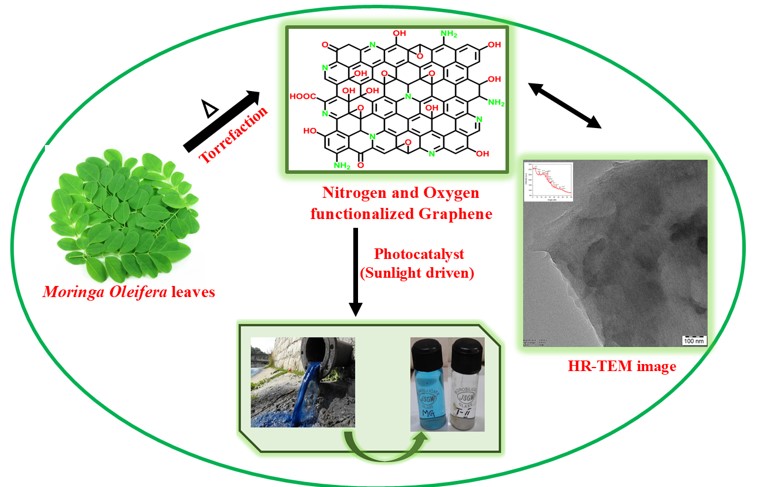
INTRODUCTION
The growing population, increased urbanization, and industrial activities result in a large number of discharges into aquatic ecosystems affecting its nature and quality [1]. The release of industrial effluents into the water bodies directly affects the environment by contaminating the whole aquatic system because it contains carcinogenic, mutagenic compounds that are difficult to degrade [2]. Among various industrial sectors, the textile industry largely affects the biological community by the direct release of dyes into lakes and rivers. Cationic dyes are one of the major contaminants present in the textile industry effluent especially in the handloom industries [3]. Hence, there is an urgent demand to address the need for clean water.
Traditional water treatment techniques like membrane filtration, reverse osmosis, adsorption, ozonation [4], coagulation, and flocculation [5,6], Fenton’s oxidation [7] and electrochemical techniques like electro-peroxide [8] are usually exorbitant and requires advanced instrumental facilities [9,10]. Hence, there is a compelling demand for a facile, cost-effective, and environmentally friendly method for the treatment of wastewater. One such ideal method is photocatalysis with its advantages like high efficiency, no byproduct formation, cost-effectiveness, and reproducibility [11].
Numerous metal oxide semiconductors have been explored as photocatalysts for the degradation of pollutants. However, their use in practical applications faces difficulties like utilization of visible bands and inadequate charge carrier separation in the catalysis process [12]. To resolve these setbacks, the use of Carbon-based nanomaterials as functionalized materials or along with other semiconductor photocatalysts has gained attention in recent days of research [13]. Graphene oxide, a two-dimensional carbon-based nanomaterial shows a remarkable improvement in photocatalytic activities due to their tunable/controllable band gap energy enabling the absorption of light in visible region, enhanced charge carrier separation, and increased surface-active sites [14]. Therefore, experimenting with Graphene oxide for photocatalytic activities offers a valuable direction for future research.
The present study aims at the conversion of biomass to Graphene oxide for photocatalytic discoloration of Malachite green dye found in various industrial effluents.
The preparation of GO by choosing biomass as a source of carbon is booming in the field of research because of its availability, low cost, and environmental friendliness. The use of bio-materials such as fir powder [15], grape extract [16], oil palm leaves [17], and various plant extracts [18] for the preparation of GO have been reported by researchers. The leaves of Moringa oleifera (MO) are a rich source of energy containing a lot of essential nutrients [19] with potent antioxidant properties. Carbon-based nanomaterials such as Carbon nanotubes and Carbon dots were prepared from MO tree branches [20], fruit shells [21], and leaves [22]. However, tapping the potential of MO leaves by processing them into a two-dimensional carbon material has not been much explored.
Malachite green dye (MG dye) is a triaryl methane-based cationic dye that has wide applications in the textile and paper industry. Besides its use in the textile industry, the MG dye is widely used as a stain for microscopic analysis, a food colorant (color enhancer) for green vegetables [23] such as lady’s finger, peas, etc., and as a protozoan and anti-parasitic agent in aquaculture. However, its use is prohibited in most countries in the world because of its toxic effects on mammalian cells. As per the Food Products Standards and Food Additives Regulation, 2020 issued by the Food Safety and Standards Authority of India (fssai), the maximum residue limit of MG dye is 1 mg/kg (1 ppm). The reduced form of MG dye (leuco malachite green) exhibits a structural resemblance to carcinogenic aromatic amines [24]. The release of this dye in untreated form into the water bodies causes serious health issues. Thus, the catalytic degradation study of MG dye as a representative cationic dye is a path forward study to the removal of more carcinogenic dyes such as crystal violet, rosaniline, fuchsine, etc.,
In summary, the research outlines the preparation of heteroatoms doped/functionalized graphene from Moringa oleifera (MO) leaves, with a focus on optimizing its photocatalytic properties for the degradation of Malachite green dye.
MATERIALS AND METHODS
The fresh leaves of Moringa oleifera were collected from the farm-grown areas of an interior village located in Thiruvallur district, Tamil Nadu, India. The collected plant leaves were authenticated by the Botanical Survey of India, Southern Regional Centre, Government of India (REF. NO. BSI/SRC/5/23/2024-25/TECH./374). Chemicals used for simulating textile industry effluent were Starch (Nice chemicals, India), Sucrose (Merck Emplura, India), Sodium hydroxide (Isochem, India), Sodium carbonate (Isochem, India), Sodium chloride (Nice chemicals, India), Acetic acid (Molychem, India), Sulfuric acid (Nice chemicals, India) and Sodium lauryl sulfate (Chenchems, India). The dye used for the degradation study and simulation of the textile industry effluent was Malachite green dye (Loba Chemie, India). Deionized water and double distilled (DD) water were used for the experiments. The chemicals were used as received.
Preparation of the Nitrogen self-doped graphene oxide
Torrefaction is a thermal pre-treatment process carried out at a temperature range of 200-300°C which is lesser than the temperature range of pyrolysis. The process results in a product having higher energy content, low moisture content, and improved storage stability (in terms of hydrophobicity) [25].
The leaves of Moringa oleifera were washed, shade-dried, and ground to a fine powder. Based on the thermogram of the dried Moringa oleifera leaves powder, the powdered leaves were subjected to torrefaction (low-temperature pyrolysis) at 220°C for 6 hours [26]. After this one-step energy-efficient torrefaction process, brown color solid Nitrogen self-doped graphene oxide (N-GO) was obtained.
The presence of heteroatoms and their nature of binding of the as-prepared graphene oxide was analyzed using Fourier-Transform Infrared spectroscopic analysis (IR Affinity-1). Further X-ray Photoelectron Spectroscopic (XPS) (Ulvac-Phi, Inc.; Model: PHI5000 Version Probe III) study was done to confirm the presence of surface functional groups. The thickness (D) and the interlayer spacings (d) of the graphene oxide were calculated from the Powder X-ray Diffractogram (PXRD) data using Cu-Kα radiation (PAN analytical model Xpert Pro). The thickness (D) of the graphene materials was calculated using the Debye-Scherrer equation [27, 28]
Where, n = constant (0.89 for layer morphology), λ = wavelength of the source (0.15406 for Cu-Kα radiation), β = Full Width Half Maximum (FWHM) of the peak.
The inter-layer spacing (d) of the as-prepared graphene oxide was evaluated using the Bragg’s equation [29],
Where, n = 1, λ = wavelength of the source (0.15406 for Cu-Kα radiation), and θ = angle of incidence in radians. The absorption (UV-SHIMADZU 1601) spectrum was obtained to study the bandgap of the prepared graphene oxide. The indirect band gap energy of the prepared graphene oxide was determined from Tauc’s plot [30].
Where, α = absorption coefficient, h = Planck’s constant, ν = frequency (Hz), β = Energy independent constant, Eg = band gap energy, and n = nature of transition (1/2 for indirect bandgap). The Micro-Raman Spectra for the prepared N-GO was recorded on a Micro-Raman spectrometer (Bruker, RFS). The surface morphology was confirmed through a High-Resolution Transmission Electron Microscopic (Joel) image. The thermal stability of the prepared N-GO was studied by performing thermal analysis using a NETZSCH STA 2500 TGA-DTA setup.
Photocatalysis by Nitrogen self-doped Graphene oxide
Effect of concentration of dye
In this study, five different concentrations of Malachite green dye (3 mg/L to 7 mg/L) were used while the other parameters, such as pH (7), amount of catalyst (300 mg/L), time (120 minutes), and temperature (room temperature) remained constant.
Effect of amount of catalyst
The amount of the catalyst was tested in the range of 300 mg/L to 700 mg/L, while other parameters such as pH (7), concentration of dye solution (6 mg/L), contact time (120 minutes), and temperature (room temperature) were maintained constant.
Effect of pH
The impact of pH on the removal of dye was studied by carrying out the degradation at pH 2 (Stable form of Malachite green), 7, and 11. while other parameters such as the amount of catalyst (300 mg/L), concentration of dye (6 mg/L), temperature (room temperature), and time (120 minutes) were maintained constant. The pH of the aqueous dye solution was altered using acetic acid and 0.1 N sodium hydroxide.
Effect of Time
In the present study, the effect of contact time was determined by measuring the absorbance value for every 15-minute duration up to 120 minutes. Other parameters such as the amount of catalyst equal to 300 mg/L were used for the dye degradation study and then pH (7), temperature (room temperature), and concentration of dye (6 mg/L) were kept constant.
The discoloration rate of the Malachite green dye solution was calculated as follows [31]:
Where, A0 is the absorbance value of the MG dye measured at zeroth minute and At is the absorbance value of the MG dye at “t” minutes (15, 30, 45, 60, 75, 90, 105, and 120 minutes respectively).
The absorbance value of MG dye was measured using a Visible-Spectrophotometer at 619 nm. The experiment was carried out in quintuplicate to confirm the reproducibility of the study.
Kinetics of photocatalytic (UV and sunlight) degradation of dye from aqueous solution:
The kinetics of the reaction were followed by measuring the absorbance value of the dye at 624 nm in every 15-minute interval. The kinetics of photocatalytic degradation of the dyes was evaluated using the Langmuir–Hinshelwood (L–H) model [32].
Where C0 is the initial MG dye concentration, C is the MG dye concentrations after the light irradiations, k is the apparent rate constant obtained from the slope, and t is the time duration of the photocatalytic reaction.
Recyclability of the catalyst
The stability and reusability of the catalyst for the dye degradation under UV and sunlight were validated for five continuous cycles of degradation study with the catalyst. The amount of catalyst and volume of dye for recyclability study were taken in the ratio of 1 g/L for the dye of concentration 6 mg/L.
Treatment of handloom textile industrial effluent water:
In today’s context, the textile (handloom) industry leaves effluent water with untreated dye due to processes such as de-sizing, bleaching, scouring, dyeing, and finishing [33]. The contaminants left in the effluent water are above the industrial permissible limits. Thus for the study on dye degradation in industrial effluent water, the handloom textile dyeing industry effluent was simulated by mixing malachite green dye (6 mg/L), starch (1000 mg/L), Acetic acid (200 mg/L), Sucrose (600 mg/L), Sodium hydroxide (500 mg/L), Sulfuric acid (300 mg/L), Sodium carbonate (500 mg/L), Sodium chloride (3000 mg/L), and Sodium lauryl sulfate (100 mg/L) as per the reports of Verma AK et.al., 2012 [34]. The maximum removal of dye from simulated effluent water using the prepared N-GO as photocatalyst was determined by carrying out the catalytic reaction with a catalytic dosage of 300 mg/L at room temperature under UV and Sunlight conditions respectively.
RESULTS AND DISCUSSION
The stacked-layer structure of the as-prepared N-GO was confirmed by the presence of a strong diffraction peak centered at 2θ of 24.6° (002 plane) shown in Fig.1a. The diffraction peak at 2θ of 43.4° (100 plane) arises due to the exfoliation of layers during the formation of graphene oxide [35]. Also, the broad peak at 2θ of 8.8° is indicative of the (001) plane of dispersed layers in graphene oxide with an interlayer spacing (d-spacing) of 1.0039 nm. Thus, the increased value of the d-spacing of prepared N-GO compared to that of graphite (0.3353 nm) suggests that the surface of the prepared N-GO is enriched with Oxygen functionalities which may be intercalated between the lattice planes in the layers [36]. It can be attributed to the oxidation of phenolic compounds present in the MO leaves towards the larger d-spacing value of the N-GO prepared through the process of Torrefaction. From the thickness (D) and the interlayer spacing (d) value of the (002) plane, it is concluded that the prepared material is a bi-layered functionalized graphene with more surface Oxygen functionalities [37].
The Micro-Raman spectra give qualitative and quantitative information about the presence of sp2 and sp3 hybridized carbon in the prepared graphene oxide. Generally, the D band around 1335 cm-1 arises due to the formation of structural defects and disorder by introducing hetero atom during oxidation of graphene-based materials while the G band around 1580 cm-1 arises due to the sp2 hybridized carbon atom in the lattice plane and the 2D band at 2700 cm-1 is the second order D band [38].
In the as-prepared N-GO, an intense D band, G band, and 2D band were observed at 1324 cm-1, 1547 cm-1, and 2847 cm-1 respectively as given in Fig.1b. The rise of the G band in the prepared N-GO indicates the formation of sp2 carbon framework during torrefaction process and the intense D band indicates the structural defects due to the presence of heteroatoms in the N-GO. The appearance of the 2D band confirms the layered structure of the prepared N-GO. The defect density ratio (ID/IG) of the prepared N-GO is 1.2567 which is found to be analogous to that of N-GO prepared by improved Hummer’s method [36]. The higher defect density ratio implies that the prepared N-GO has an increased number of defects which supports the observed higher value of d-spacing in PXRD analysis. The increased intensity of the D band, the shift in the 2D band position from 2700 cm-1 to 2847 cm-1, and the value of I2D/IG ratio less than one (0.3463) indicates that the prepared N-GO is not of a single layer which corroborates with the PXRD results [39].
The UV-Visible spectrum (Fig.1c) of the as-prepared N-GO shows an absorption band at 192 nm and a small hump at 262 nm due to the n-π* transition of C=O groups existing in the structure of the prepared graphene oxide. The blue shift observed in the prepared N-GO compared to that of reported literature works indicates the increase in n-π*transition [40], which correlates with the increased d-spacing value in PXRD and increased defects (ID/IG ratio) in Micro-Raman results respectively. The indirect band gap energy [Tauc’s plot (Inset in Fig.1c)] was in the range of 2.1 eV to 3.5 eV. Thus, the indirect band gap energy of the prepared N-GO lies in the range of semiconductors facilitating good light absorption capacity in the visible region. This visible light absorption characteristic of the prepared N-GO contributes to its photocatalytic activity as reported by Yeh et.al., (2011) [39] and Yokwana K et.al., (2023) [41].
The FT-IR spectrum of the prepared N-GO shows peaks due to C-O-C (1062 cm-1), C=O (1629 cm-1), C-H (2917 cm-1), O-H and N-H (3464 cm-1), C=C (1543 cm-1) and C-N (1386 cm-1) groups respectively (fig.1d). The presence of oxygen functionalities in the prepared N-GO enables its good dispersibility in water. The presence of C-N, C=O, and C-O-C peaks in the FT-IR spectrum strongly indicates the presence of heteroatoms in the structure of the as-prepared N-GO. The enhanced transmittance of the C=C peak and C-H peak in the FT-IR spectrum of the N-GO concerning that of the precursor strongly indicates the formation of the sp2 carbon frame network due to the torrefaction process [42] which matches with the Micro-Raman results. The reduction in the amount of -OH groups in the prepared N-GO compared to the precursor MO leaves indicates the high oxidation of oxygen functionalities in the precursor that correlates with the increased d-spacing value in the PXRD of the N-GO.
The percentage composition of Carbon, Hydrogen, Nitrogen, Sulfur, and Oxygen (calculated) in the as-prepared N-GO was found to be 43.62, 5.748, 5.37, 1.249, and 44.014 respectively from the elemental analysis. The elemental analysis report confirms that the structure of the prepared N-GO possesses heteroatoms such as Oxygen and Nitrogen in a significant amount. Thus, the role-play of Oxygen and Nitrogen in the structure of the prepared material is further evaluated by the XPS technique.
The surface composition and surface functionality of the prepared N-GO were identified through the XPS wide scan spectrum (Fig.2a), and deconvoluted spectra of C1s, N1s, and O1s (Fig. 2b-2d) respectively. The peaks at binding energy values 284 eV, 532 eV, 399 eV, 169 eV, and 351 eV confirm the presence of elements Carbon, Oxygen, Nitrogen, Sulphur, and Calcium at a percentage of 76.4, 20.8, 1.3, 0.8, and 0.6 respectively [43]. The peaks corresponding to surface functionalities such as C-C, C=C, C-OH, C-O-C, C=O, C-N, C-S and O-C=O were identified in the narrow scan spectra of C1s (Fig.2b). In the narrow scan spectra of O1s (Fig. 2c), the Oxygen functionalities were identified in terms of C-O-C (epoxy), C-OH (hydroxyl) and C=O (carbonyl or carboxylic) groups peak at binding energy of 532.3486 eV and 532.0486 eV respectively. From the C1s and O1s spectra, it is observed that the amount of epoxy functionality on the surface of the N-GO was found to be more than the carbonyl and carboxyl functionalities which correlates well with the FT-IR result. The presence of pyridinic (C=N-C), and graphitic (N-(C)3) nitrogen identified from the deconvoluted N1s spectra matches well with the FT-IR report. It is observed that about 24.2% and 47.3% of total Nitrogen and Oxygen (from elemental analysis data) respectively are present on the surface of the prepared N-GO. It can be strongly concluded that the conversion of various polyphenolic components (flavonoids, phenolic acids, phytochemicals, vitamins, etc.,) in the MO leaves to the self-functionalized graphene oxide (N-GO) was possible by one-step Torrefaction process without the use of strong oxidizing agents. The surface functionalities of the as-prepared N-GO match well with the N-GO prepared from the Brodie-Staudenmaier-Hummers Methods and Tour method [44]. The MO leaves highly influenced the surface functionalities of the prepared N-GO which in turn generate many oxidizing radicals and enable it as an excellent photocatalyst.
The HR-TEM images of the prepared sample (Fig.3a) depict the formation of a sheetlike structure with an interplanar distance of 1.1125 nm (calculated using ImageJ software). The calculated inter-planar distance matches well with the d-spacing value of the PXRD spectra. The morphology of the prepared N-GO was observed to be a thick flat flaky layer having a rough surface and disordered structure correlates with the graphene oxide prepared from graphite powder [45]. The disordered structure implies the high degree of exfoliation of the prepared N-GO sheets which is due to the oxidation of oxygen functionalities present in the precursor MO leaves during torrefaction as evidenced by the FT-IR, PXRD, and Micro-Raman results respectively.
The thermogram of the as-prepared N-GO is shown in Fig. 3b. The weight loss at 82°C-220°C confirms the presence of Oxygen functionalities in terms of hydroxyl, and epoxy groups respectively. The major weight loss (48.9%) at the temperature range of 220°C-535°C indicates the presence of ring carbons in the prepared N-GO. The TGA data correlates well with the GO from Fir powder reported by Zhu L et.al., 2015 [15].
N-GO as photocatalyst:
Effect of concentration of dye:
The concentrations of dye solution employed in the present study were 3 mg/L to 7 mg/L. There was a perfect linearity in the percentage degradation of dye concerning the increase in the concentration of dye solution from 2 mg/L to 6 mg/L under the Sunlight and UV conditions respectively (Fig.4a). On further increase in concentration of the dye to 7 mg/L, the dye discoloration percentage decreases. This may be due to the poor absorption of photons (light) with an increase in concentration of dye molecules resulting in reduced photocatalytic activity [31].
Effect of amount of catalyst:
The amount of catalyst used is a significant parameter for obtaining an effective photocatalytic decolorization process. The increase in catalyst quantity increases the number of active sites on the surface of the catalyst, thus increasing the formation of reactive radical species such as hydroxyl (•OH) and superoxide (•O2-) radicals [46]. The study results revealed a positive linear relationship between the amount of catalyst and the percentage discoloration of dye under the Sunlight and UV conditions (Fig. 4b). It can be ascribed to the rise in the sum of active sites (oxidizing radicals) generated on the N-GO surface.
Effect of pH:
One of the important parameters in the photocatalytic degradation of organic dyes is their pH since it varies with the surface charge of the catalyst. The maximum efficiency of 87% and 83% under sunlight and UV medium was observed at pH 7, and the minimum efficiency of 40% and 33% under sunlight and UV medium at pH 2. In alkaline pH, the dye undergoes self-degradation and it is unstable for further applications. Under acidic conditions, the -OH group on the surface of the prepared N-GO may get protonated and become positively charged. Thus, the active sites (oxidizing radicals) essential for the degradation of dye [47] get reduced which results in lower photocatalytic activity of the prepared N-GO at acidic conditions.
The UV-visible spectra of the photocatalytic degradation of Malachite green dye under UV and sunlight conditions were given in Figure 5a and 5b respectively.
Study of Kinetics:
The photocatalytic activity using the Langmuir–Hinshelwood (L–H) kinetic model for the as-prepared N-GO for the degradation of the dye was evaluated at pH 7. The kinetics of the dye degradation in the presence of sunlight and UV medium showed the R2 (regression coefficient) values close to unity which suggests the pseudo-first-order kinetics for the photocatalytic degradation reaction. The pseudo-first-order rate constant (k) of the dye under sunlight condition (0.0117 min-1) is slightly higher than the rate constant under the UV condition (0.0064 min-1) indicating the higher efficiency of the as-prepared N-GO under sunlight. It may be due to the faster growth of hydroxyl radicals by the sunlight which triggers the process. The kinetics of photocatalytic degradation of Malachite green (Fig. 6a and 6b) correlates well with the previously reported literature [48,49].
Trapping study and Recyclability of the catalyst:
The main effective radicals or active species involved in the process of photocatalytic degradation study are hydroxyl radicals, superoxide radicals, and photogenerated electron-hole pairs [50]. In the present study, the active species trapping experiment (trapping study) was carried out to trap the exact reactive species involved in the discoloration of the dye. The trapping study has been performed by incorporating scavengers like ethanol for hydroxyl species, NaCl (for h+), Ascorbic acid (for superoxide O2●- radicals), and the K2Cr2O7 (for e-) into the MG catalytic system under sunlight condition respectively [50]. It is found that the discoloration/degradation of dye was up to 87% in the absence of scavengers which shows a decrease to 31%, 45%, 49%, and 54% upon the addition of ethanol, NaCl, ascorbic acid, and K2Cr2O7 respectively. The positive role-play of oxidizing radicals in the dye degradation follows the order, OH● > h+> O2●- > e- which correlates with the reports of Saad AM et.al. 2020 [47]. Thus, in the present study, the highly reactive oxidizing radicals that help in the degradation of dye are hydroxyl radicals. The formation of more hydroxyl radicals in the catalytic system may be due to the presence of surface Nitrogen in the N-GO which reduces the electron-hole recombination by acting as the scavenger for the hole [51]. The presence of heteroatoms on the surface of the as-prepared N-GO creates more surface trap states which in turn lowers its band gap energy value for efficient photocatalysis.
The reusability of the catalyst was investigated and it was found that about 50% photocatalytic efficiency was retained even after five continuous cycles (Fig.7a) in both UV and Sunlight conditions. The FT-IR spectra of the recovered catalyst after five continuous cycles of dye degradation are represented in Fig.7b. It is evident that the prepared catalyst shows no significant change even after five continuous cycles which indicates its superior stability. Thus, the reusable nature of the prepared N-GO suggests it is an efficient photocatalyst for the degradation of organic dyes present in industrial effluents [31].
Based on the results of the radical scavenging study, a probable mechanism (Fig.8) for the photo-discoloration of dye was suggested as follows:
The prepared N-GO on introduction into the catalytic system interacts with the dye via their surface functional groups such as -OH, -NH, and COOH. Upon light irradiation, the formation of electron-hole pairs [52] on the surface of the catalyst takes place. The electrons in the conduction band of the N-GO formed by the absorption of light energy react with O2 molecules to produce superoxide anions which in reaction with water molecules produces hydroxyl radicals. Similarly, the positive holes in the valence band in reaction with water molecules produce hydroxyl radicals. Finally, the reactive species produced by the absorption of light energy react with dye molecules to convert them into less toxic products. The supremacy of hydroxyl radicals over other reactive species was confirmed via the trapping study.
TREATMENT OF TEXTILE INDUSTRIAL EFFLUENT:
Based on the above results, the photocatalytic efficiency of the prepared N-GO was screened for the degradation of textile (handloom) dyes. The untreated effluent from the textile (handloom) industries was simulated following Verma AK et.al., (2012) [34]. The Physicochemical characteristics of simulated water were fixed as per the procedure given by the Tamil Nadu Water Supply Drainage Board (TWAD) and the results are given in Fig. 9a.
The prepared N-GO is found to be an efficient photocatalyst (81% under sunlight conditions, Fig.9b) for the degradation of the Malachite green dye even in the presence of all other contaminants in the effluent. The result strongly indicates the higher selectivity shown by the Nitrogen self-doped GO (N-GO) in the wastewater treatment for the removal of Malachite green dye.
There are many reports available on the degradation of Malachite green dye using different photocatalysts. Among them, the research studies of Khosravi-Far et.al., 2024 [11], Nibedita Nayak et.al., 2024 [53], Nitika Tiwari et.al., 2023 [54, Xu Z et.al., 2023 [55], Mostafa et.al., 2022 [56], Rout DR et.al., 2022 [57], Marwa F. Elkady et.al., 2021 [58], Djebbari C et.al., 2021 [48], Sekar A et.al., 2021 [46], and Saad AM et.al., 2020 [47] reports the removal of Malachite green dye to the extent of 92% to 98% in a period of maximum 90 minutes. This higher level of efficiency was achieved using either metal oxide or their composites with CBNs as photocatalysts. Thus, the present research study is novel in the aspect of using the prepared N-GO as a sole solar-driven photocatalyst and achieving significantly higher (87%) removal efficiency (under Sunlight conditions).
APPLICATIONS AND FUTURE RESEARCH PROSPECTS:
The Nitrogen self-doped graphene oxide prepared from the leaves of Moringa oleifera is free from the need for toxic chemicals, high temperatures, and complex equipment. The potential of the prepared material as a photocatalyst paves the way for the development of affordable, environmentally benign, recyclable, and biodegradable catalysts for industrial applications. The current study emphasizes environmentally friendly preparation and applications promoting sustainable remediation. The self-doped Nitrogen atoms in the prepared graphene oxide contribute to the reduced band gap (indirect) energy, enhancing its ability for solar-light-driven photocatalysis. Therefore, the prepared N-GO can be employed for designing new industrial catalysts like ternary nanocomposite used in solar-based staircase photoreactors as reported by Razieh Mohebat et.al., (2024) [11]. Thus, in the future, the prepared N-GO can be used as an effective photocatalyst for the treatment of real wastewater effluents.
CONCLUSIONS
The present study results in an effective conversion of Moringa oleifera leaves into two-dimensional heteroatoms (Nitrogen and Oxygen) doped Graphene by a simple one-step Torrefaction process without the use of any chemical reagents. The enhanced surface-active principles of the prepared N-GO towards photocatalysis were well contributed by the presence of structural defects, surface functionalities (oxygen and nitrogen functionalities such as hydroxyl, epoxy, pyridinic, etc.,), and narrowed band gap energy value. Under the given experimental conditions, 87% of the Malachite green dye is decolorized within 120 minutes. It is also found that the prepared N-GO shows an enhanced photocatalytic activity under sunlight conditions than UV conditions. The photocatalytic activity of the prepared N-GO was explored specifically for the treatment of textile (handloom) industry effluents with an efficiency of 81% under Sunlight conditions. Thus, the prepared N-GO could compete with other metal oxide photocatalysts on the market and can be used industrially for the removal of dyes from textile industrial effluents.
ACKNOWLEDGEMENT
The authors acknowledge and thank the Directorate of Collegiate Education, Government of Tamil Nadu for funding the Research (Ref. No: Rc. No. 00160/L/2022 Dated 14.11.2023), and the Post Graduate and Research Department of Chemistry, Ethiraj College for Women for their support and encouragement.
Conflict of Interest
The authors declare that they have no conflict of interest related to the publication of this article.
AUTHOR CONTRIBUTIONS
