
Document Type : Original Research Paper
Graphical Abstract
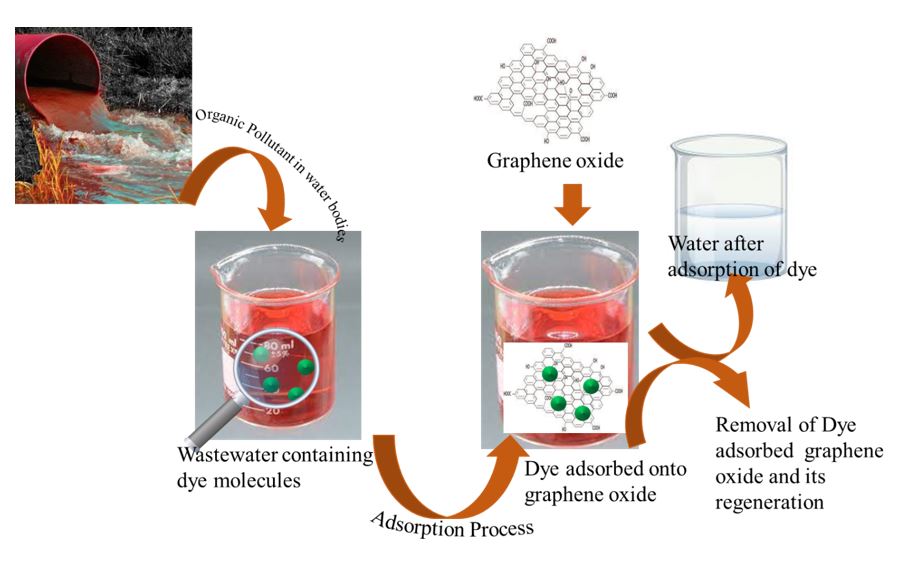
INTRODUCTION
Rapid urbanization, climate change, inadequate solid waste management, and the insufficient maintenance of wastewater and water facilities can collectively intensify flooding, water scarcity, pollution, adverse health effects, and rehabilitation costs, potentially surpassing a city’s resilience to disasters [1]. Each year, industries discharge a considerable volume, ranging from 70 to 200 thousand tons of dye-contaminated effluent into water bodies, with up to 15% of this being attributed to various industrial activities [2]. In the textile industry, over 100 liters of water are used to produce just 1 kg of textile, resulting in significant wastewater generation. This wastewater, containing dye effluents, poses severe risks to the environment, human health, and marine life due to its toxic, non-biodegradable, and carcinogenic properties [3]. Cationic dyes, particularly Malachite Green (MG) oxalate, are synthetic dyes widely used for various industrial applications, including textile dyeing. Due to its complex structure, high stability, non-biodegradable structure, and high resistance against light, it reduces the penetration of sunlight into water [4]. This, in turn, disrupts aquatic life by inhibiting photosynthesis, thereby affecting plant growth and the biological activity of aquatic species. When exposed to light and water, MG converts into leucomalachite green and carbinol, becoming even more toxic, especially to humans, by impacting the reproductive, immunological, and respiratory systems. Due to its durability, the dye has a half-life of 12.9 to 50.34 days in sediments [5-6]. The dye-containing effluents are harmful to the environment, human health, and marine life due to their toxic, non-biodegradable, and carcinogenic nature. Cationic dyes, particularly Malachite green (MG) oxalate, pose substantial environmental hazards due to their non-biodegradability and widespread use in industries such as textiles, painting, and printing, leading to ecosystem contamination and adverse health impacts [7-8]. To address this, regulations such as the Zero Discharge of Hazardous Chemicals Program (ZDHC) mandate industries employing malachite green oxalate to ensure that their discharged effluents meet stringent International Dye Industry Wastewater Discharge Quality Standards [9]. While various chemical, physical, and biological methods exist for organic pollutant removal from water bodies, adsorption stands out as one of the most effective approaches due to its low cost and ease of operation [10-12]. Therefore, for better adsorption of dye, adsorbents should possess high adsorption capacity, large specific surface area, ease of operation, low cost, and high porosity and pore volume. Over the past two decades, the adsorption efficacy of various porous materials like activated carbon, zeolites, silica, carbon nanotube, and graphene oxide have been investigated [13-15]. Among these porous materials, Graphene oxide, a new class of porous material has been used as superior adsorbents due to the presence of oxygen-containing functional groups and large specific surface area [16-17]. Recently, researchers have been focusing on Graphene-based composites which modified the properties of GO for specific applications. GO acts as reinforcing materials and is incorporated easily into the composites through various interactions like hydrogen bonding and electrostatic interactions [18]. The adsorption efficiency of graphene oxide toward the dye increased after modification with Montmorillonite due to an increase in the surface area of GO and the presence of additional functional groups results in the availability of more surface interaction of dye [19-21]. Montmorillonites have some unique characteristics like high specific surface area, high adsorption efficiency, and ion-exchange capacity. Due to its negatively charged surface and unique characteristics, Montmorillonite is well recognized for its high adsorption efficiency [22]. The combination of GO and clay generates a synergic effect that results in enhancement in not only the adsorption efficiency but also chemical resistance and thermal stability. The modified GO composite makes it more suitable for various types of cationic and anionic dye effluents, resulting in broadening the application of GO in wastewater treatment [23].
GO-based Montmorillonite composites
The novelty of this research article lies in the development of a graphene-based Montmorillonite composite for the efficient removal of an organic dye, Malachite Green oxalate from contaminated water. The isotherm and kinetic analysis are performed to elucidate the adsorption mechanisms and performance. Additionally, the reusability of the GO and GO-based Montmorillonite composites was also investigated showing possible practical application and sustainability of GO and GO-based Montmorillonite composites in real-world scenarios.
MATERIALS AND METHODS
Materials
Malachite green oxalate dye (molecular formula C52H54N4O12 and molecular weight = 927.02, λmax = 615 nm), Potassium permanganate (KMnO4) (purity=99%) Sodium nitrate (NaNO3), Sulfuric acid (H2SO4) (purity=98%), graphite powder, hydrogen peroxide (H2O2) was obtained from the Merck Pvt. Ltd. Bengaluru, Karnataka. Montmorillonite clay was procured from Sigma Aldrich Pvt Ltd, USA. The chemicals used in the present work were of analytical grade and were used further without additional purification. HCl and NaOH solution were used to adjust the pH of the MG oxalate dye solution.
Synthesis of graphene oxide
The synthesis of graphene oxide was conducted via a modified Hummer process [20]. Initially, graphite powder and NaNO3 were blended in 100 ml of H2SO4 and 15 ml of H3PO4 using sonication with an ultrasonicator. Following this, KMnO4 was gradually introduced into the solution while retaining a temperature of less than10°C. The suspension was left for a 4-hour reaction in an ice bath and then underwent an additional 2-hour reaction at a magnetic stirrer at room temperature until it achieved a pasty brown consistency.
Afterward, distilled water was gradually added to the mixture while maintaining the temperature at 100°C until the suspension reached a volume of 400 ml. After 10 to 15 minutes, an H2O2 solution was introduced into the suspension. The mixture was centrifuged followed by washing using distilled water and 10% HCl. The process was repeated at least 3 to 4 times. Finally, the resulting products were dried at 80°C for 24 hours to remove any remaining moisture and impurities.
Synthesis of Graphene oxide – based Montmorillonite composites
Initially, GO powder was introduced into 400 ml of distilled water, undergoing continuous sonication to achieve optimal dispersion. Subsequently, Montmorillonite clay was added to the dispersed GO to produce a Graphene Oxide-Montmorillonite suspension. The entire procedure was conducted under ultrasonication, maintaining a temperature of around 20°C. Allow the suspension to stand for half an hour and then further filter through vacuum filtration, washing with distilled water. The resulting composites dried at 80°C in a microwave oven for 24 hours.
Methodology for batch extraction of malachite green dye
Initially, a stock solution of Malachite green oxalate dye (500 mg/L) was prepared using double distilled water. Further, the standard solutions of MGO dye were then prepared through serial dilution of their respective stock solutions. The absorption measurements of these solutions were performed using a UV–Vis spectrophotometer to establish calibration curves. For batch extraction studies, 0.1 g of adsorbents (GO/ GO-based Montmorillonite composites ) were immersed in 25 ml of dye solution to investigate the effect of pH, time, and concentration of dye solution. The conical flask was placed on a mechanical shaker for a specific time. All the batch extraction studies were performed at room temperature. The dye uptake (qe) onto GO and GO-based Montmorillonite composites was calculated by the following equation:
here qe = amount of dye adsorbed onto GO and GO-based Montmorillonite composites at equilibrium (mg g-1),
Co and Ce = initial and equilibrium of dye concentration (mg L-1) in solution, respectively,
V = volume of solution (L),
M = weight of adsorbent (g).
Characterizations:
The structural characteristics of GO and GO-based Montmorillonite composites were investigated using various techniques. The surface morphology was investigated using a Field Emission Scanning Electron Microscope (FE-SEM, JSM5410, JEOL Ltd, Tokyo, Japan) with a thin gold coating. X-ray diffraction (XRD) patterns were obtained using a SHIMADZU-7000s diffractometer, utilizing CuKα radiation within the 2θ range of 2° to 60°, with a scanning rate of 2° min−1. Fourier transform infrared spectroscopy (FT-IR) spectra were acquired for synthesized adsorbents (JASCO instrument, Tokyo, Japan) over the range of 4000 to 400 cm−1. Additionally, a UV–Vis spectrophotometer was utilized to evaluate the removal efficiency of adsorbents, covering the wavelength range of 190 to 800 nm. Absorbance peaks were compared with those of standard dye solutions, following the Beer−Lambert law.
RESULTS AND DISCUSSION
Structural characteristics of GO and GO-based Montmorillonite composites
XRD study was used to determine the structure and interlayer spacing of GO and GO-based Montmorillonite composites. Fig. 1 shows XRD spectra of synthesized GO and GO-based Montmorillonite composites. The diffraction peak of graphite was found at a 2θ value of 26.57º indicating basal spacing of 0.34 nm. On oxidizing of Graphite to GO, the diffraction peak was also found at 2θ value = 12.5º indicating the basal spacing 0.71 nm while there is slight shifting of diffraction peak (26.57º in the case of graphite powder) found at 2θ angle 26.42º. The increment in the basal spacing of GO is due to the presence of various polar oxygen functionalities like hydroxyl, and epoxy present in the interlayer of GO and carboxyl group present on the edges of GO. The presence of a peak at 2θ angle of 26.42º indicated a well-ordered structure of GO [21].
For Mt clay, the diffraction angles are observed at 8.85°, 22°, 35°, 55°, and 62°, corresponding to (110), (105), (210), and (300) planes, respectively. From Fig. 1, it is confirmed that GO-based Montmorillonite composites exhibit all reflections of both GO and Mt clay except the peak of 2θ angle 8.85° which generally disappeared after interaction with GO. This disappearance suggests an exfoliated structure for GO-based Montmorillonite composites, where GO is evenly distributed onto the clay layers as shown in Fig. 2. This indicates a randomly stacked structure of platelet flakes, highlighting the effective dispersion of both GO and Mt within the composite [24].
Fig. 3 shows FT-IR spectra of GO and GO-based Montmorillonite composites. FT-IR spectra of GO showed apparent adsorption bands at 3620 cm-1 and 3416 cm−1 corresponding to the stretching vibration of the -OH group. The absorption band at 1720 cm-1 was attributed to the carboxyl group, while the bands 1356 cm-1 and 1225 cm-1 indicated the presence of alkoxy and epoxy C–O group. The presence of oxygen-containing functional groups, including C=O and C–O, confirmed the complete oxidation of graphite to Graphene oxide. Furthermore, the ample oxygen-containing functional groups are mainly responsible for the hydrophilic nature of graphene oxide which improves its solubility in water. On interaction with Mt, there is a slight shifting of the absorption bands of a hydroxyl group. The stretching vibration of Si-O-Si at 1051 cm-1 is observed as a very strong broad absorption band indicating the successful combination of Mt with GO.
The surface morphology of GO and GO-based Montmorillonite composites was investigated via scanning electron microscopy. FE-SEM images of GO confirmed its layered structure with a lateral dimension of several micrometers. FE-SEM images of GO-based Montmorillonite composites showed minor disorder when Mt combined with GO indicating the presence of GO on the surface of Mt (Fig. 4). Fig. 5 shows EDS analysis of GO and GO-based Montmorillonite composites. From the figures, carbon and oxygen, constituents of graphene oxide were confirmed indicating the presence of Graphene oxide in the case of GO and GO-based Montmorillonite composites. However, the weight % of carbon is reduced in the case of GO-based Montmorillonite composites due to the presence of other constituents present on Montmorillonite.
Batch extraction studies:
pH stability of Malachite green oxalate dye:
Malachite green oxalate dye belongs to the basic group of dyes. The color intensity of the dye generally depends on the pH of the dye solution. The electronic absorption spectrum of Malachite Green oxalate at its natural pH of 5.6 exhibits three absorption bands at wavelengths of 253 nm, 368 nm, and 615 nm. The absorption band at 368 nm contributes to the yellow component of the color, while the band at 615 nm contributes to the blue component. The combination of these two components gives rise to the overall color of the dye.
Investigation of the electronic absorption spectrum of MG oxalate in aqueous solution revealed that the λmax value varied with pH (Fig. 6). Although the λmax value remained constant within the pH range of 2 to 9, variations in absorbance were observed due to changes in pH. Absorbance increased up to pH 5, followed by a decrease beyond pH 5, continuing until pH 12. In highly acidic and basic conditions, the aqueous solution of MG oxalate becomes colorless. In highly acidic conditions, protonation occurs, leading to the formation of MG2+, which is unstable. In highly basic media, the carbinol form of MG oxalate is formed, disrupting conjugation between aromatic rings. From pH 3 to 9, the value of λmax varies with pH due to nucleophilic attack by H2O, resulting in discoloration but at a very slow rate [25]. Consequently, the absorbance value was found to be maximum at pH 5, prompting its selection for further experimentation.
Adsorption of MG oxalate dye as a function of pH
pH significantly influences the adsorption efficiency of adsorbents such as GO and GO-based Montmorillonite composites. A change in pH value could change the surface charge of adsorbents resulting in a change in adsorption efficiency. The impact of pH on the adsorption efficiencies of GO and GO-based Montmorillonite composites was investigated across a pH range of 1 to 12 as shown in Fig 7. In highly acidic and basic mediums, the adsorption efficiencies were found to be more due to the discoloration of dye as discussed in section 3.2.1. The transition from acidic to basic pH led to increased adsorption efficiencies for GO and GO-based Montmorillonite composites, attributed to the presence of OH- ions, resulting in a more negatively charged surface on the adsorbents. This facilitated electrostatic interactions between cationic dye molecules and the negatively charged adsorbents. The maximum uptake of dye was found at pH 7 for GO and pH 8 for GO-based Montmorillonite composites. It is observed that MG oxalate was sufficiently adsorbed in highly acidic conditions even with electrostatic repulsion indicating that electrostatic interactions are not only the main mechanism, but hydrogen bonding and π–π interactions also play significant roles. Similar findings were reported by Dotto G. L. et al. during their study on the adsorption of Methylene blue dye onto Chitin [26].
Effect of contact time
The investigation into the impact of contact time (5–120 min) on the adsorption efficacy of GO and GO-based Montmorillonite composites yielded notable results (Fig. 8).
Initially, a rapid adsorption rate was observed due to available active sites on the surface of GO and GO-based Montmorillonite composites, facilitating MG oxalate dye removal. Subsequently, the adsorption rate stabilized, indicating saturation of active sites. Equilibrium was achieved at 100 minutes for GO and 60 minutes for GO-based Montmorillonite composites. Upon saturation, dye molecules diffused into the internal channels of GO and GO-based Montmorillonite composites, leading to a decrease in the adsorption rate. Similar findings were noted in the extraction of Methylene blue dye using Montmorillonite clay.
Effect of initial dye concentration
The research examined how the initial concentration of MG oxalate dye influenced the adsorption effectiveness of both GO and GO-based Montmorillonite composites, considering optimized pH, contact time, and a consistent adsorbent dosage, as depicted in Fig. 9. The investigation scrutinized the effect of initial dye concentration across a range of 5 mg/L to 2000 mg/L for GO and from 5 mg/L to 3000 mg/L for GO-based Montmorillonite composites.
Initially, the removal efficiency of both GO and GO-based Montmorillonite composites increased, with the maximum dye uptake observed at 315 mg/g for GO and 675 mg/g for GO-based Montmorillonite composites at concentrations of 1400 mg/L and 2800 mg/L of MG oxalate dye, respectively. However, the increment in dye concentration results in a reduction of the adsorption efficiency for GO and GO-based Montmorillonite composites. This decline can be attributed to the saturation of available adsorption sites on the adsorbent as the dye concentration rises. At lower dye concentrations, excess adsorption sites are available, but with increasing dye concentration, the ratio of available sites on the adsorbent decreases, leading to easier saturation of available dye molecules due to the high dye concentration.
Comparatively, the adsorption efficiency of GO-based Montmorillonite composites was higher than pristine GO, primarily due to the modification of the surface chemistry of GO by Mt. This modification introduced additional functional groups and provided sites for chemical interactions with adsorbates, thereby enhancing the affinity of the nanocomposite for target pollutants and resulting in higher adsorption efficiency. Additionally, pristine GO tends to aggregate in aqueous solutions due to its hydrophobic nature and strong π-π stacking interactions. However, the incorporation of clay minerals helps disperse GO sheets, preventing aggregation and ensuring more accessible active sites for adsorption.
Adsorption isotherm
For dye removal, it is crucial to improve the adsorption system design to achieve the best results and create the strongest correlation between the system and equilibrium data. Experimental results are often interpreted through various equilibrium isotherm studies, which aid in determining adsorption capacity and understanding the interactions between the absorbent and adsorbate ions [27]. Adsorption isotherm models, including the Freundlich and Langmuir models, were employed to elucidate the adsorption characteristics of GO and GO-based Montmorillonite composites. The Langmuir isotherm model describes dye molecules uniformly adsorbed as a monolayer on the surfaces of both GO and GO-based Montmorillonite composites. Conversely, the Freundlich isotherm models suggest multilayer adsorption of MG oxalate dye resulting from the adsorption process.
The parameters derived from the two isotherm models thus provide valuable insights into the adsorbent’s surface characteristics, affinities, and adsorption mechanisms.
At equilibrium, the dye concentration (Ce) is measured in mg/L, while the absorbed amount of dye (qe) is quantified in mg/g. Constants Kf and n reflect the factors influencing adsorption capacity and intensity, respectively. The maximum adsorption capacity of the adsorbent is indicated by qmax, and the energy constant linked to the heat of adsorption is denoted as KL. Separation factor (RL), a dimensionless constant, can be used to characterize the fundamental characteristics of a Langmuir isotherm [28].
The shape of the isotherm can be obtained from RL as follows: RL = 0 (irreversible); RL > 1 (unfavorable); RL = 1 (linear); 0 < RL < 1 (favorable).
The parameters obtained from plotting of Langmuir and Freundlich isotherm models are shown in Figs. 10, 11, and Table 1. As shown in Table 1, the value of correlation coefficient (R2) for the Langmuir isotherm model for GO and GO-based Montmorillonite composites is found to be high as compared to the Freundlich isotherm model confirmed formation of monolayer onto the surface of GO and GO-based Montmorillonite composites. Furthermore, the maximum adsorption capacity obtained from fitting results for MG oxalate dye onto GO was 322.26 mg/g and it was 680.27 mg/g for GO-based Montmorillonite composites which shows a good correlation with experimental data for both adsorbents. Moreover, the value of RL is observed less than 1 in both cases confirming the favorable adsorption process. The value of 1/n (less than 1) obtained from the linear fitting of the Freundlich isotherm model further confirmed normal adsorption of dye onto synthesized adsorbents.
Adsorption Kinetics
In the adsorption process, kinetics is an important phase that helps to determine the rate of reaction during adsorption and the expression of possible mechanisms of interaction. To study the rate of reaction, two kinetic models, pseudo-first order and pseudo-second order kinetic models are generally used. The liner form of these two models is given as follows:
The pseudo-first-order model:
The pseudo-second-order model:
where qe and qt are defined as the adsorbed dye amount (mg/g) at equilibrium and time t, respectively, and K1 and K2 min-1) represent the kinetic rate constants [29]. The suitability of both models was investigated by plotting ln (qe − qt) and t/qt vs. t (Figs. 12 and 13). The intercept and slope obtained during the plot were employed to investigate K1 K2 and qe values while the results are shown in Table 2. The adsorption of MG oxalate dye onto GO and GO-based Montmorillonite composites closely resembles the pseudo-second-order kinetic model. The value of the correlation coefficient obtained from the pseudo-second-order kinetic plot is closely approached to unity suggesting a strong correlation with the experimental data. Furthermore, the value of qe obtained from the second-order kinetic model is almost the same as qe calculated experimentally which further confirmed that the adsorption process follows the pseudo-second-order kinetic model rather than the pseudo-first-order kinetic model.
Moreover, these findings suggest that the adsorption rate is impacted by two key factors: MG oxalate dye concentration and the accessibility of adsorption sites on GO and GO-based Montmorillonite composite surfaces. Additionally, the adsorption characteristics of dye molecules on GO and GO-based Montmorillonite composites are mainly dictated by chemical-controlling mechanisms.
Intraparticle diffusion model:
The intraparticle diffusion model, commonly referred to as Webber’s pore-diffusion model, was used to obtain insight into the diffusion mechanism (Fig. 14). Webber and Morris (1962) gave the following formula for intraparticle diffusion [30].
Where:
Kid and C are the rate constants of intraparticle diffusion (mg g-1 min-1/2).
Plotting the intraparticle diffusion model between t1/2 and qe, as shown in Fig. 7, indicated the presence of three separate stages, confirming three possible adsorption mechanisms. The initial phase denotes the spread of MG oxalate dye from the bulk solution onto the surface of GO and GO-based Montmorillonite composites due to the electrostatic interaction between adsorbate and adsorbent. Subsequently, pore diffusion characterizes the second phase where dye molecules diffuse through the pores of the adsorbent while reaching an equilibrium or reduction in adsorption rate marks the third step [31].
Comparison of dye adsorption performance with previous studies:
Table 3 highlights a comparative study of different Graphene oxide-based composites for the removal of Malachite green dye with the present data as discussed in the article. The table emphasizes on adsorption efficacy of GO-based composites with a notable research gap which is effectively addressed by this study’s innovative approach. Many adsorption investigations have relied on synthetic effluents, overlooking the complexities of real effluent, which can lead to unreliable conclusions when optimizing procedures for industrial wastewater treatment Remarkably, the synergistic combination of GO and Mt in GO-based Montmorillonite composites achieved an impressive 680 mg/g dye removal from aqueous media. GO-based Montmorillonite composites exhibited superior dye removal performance as an adsorbent compared to previous studies. The composite’s efficacy is intricately influenced by factors such as pH, time, concentration, adsorbent dose, and temperature. This nanocomposite presents a standout solution for the sustainable treatment of dye effluent.
Regeneration and reusability:
The regeneration and reusability study of GO and GO-based Montmorillonite composites are very crucial for practical application in wastewater treatment and sustainable environments. GO and GO-based Montmorillonite composites can be regenerated through various methods. One of the most common methods is chemical desorption using acid/ base or any solvent. These methods generally help with the desorption of dye molecules from the surface of the adsorbent, restoring its adsorption capacity. In the present study, the regeneration of GO and GO-based Montmorillonite composites was performed using 0.1N HCl solution and further used for reusability as an adsorbent for the removal of MG oxalate dye. To check the efficiency of adsorbents, five consecutive cycles were performed for GO and GO-based Montmorillonite composite, and results are shown in Fig. 15. The figure indicated that GO-based Montmorillonite composites offer more potential application repeatedly for the removal of MG oxalate dye from aqueous media.
Mechanism of adsorption of organic dye onto GO and GO-based Montmorillonite composites:
To clearly understand the interaction of organic dye with adsorbent during the adsorption process, it is essential to consider the adsorption mechanism. Several factors, such as the structure and charge of the adsorbate, associated functional groups, surface properties of adsorbents, and the nature of both adsorbate and adsorbent, influence the adsorption of organic pollutants onto adsorbents. As discussed in section 3.2.2, maximum dye uptake occurs in basic media (at pH 7 for GO and pH 8 for GO-based Montmorillonite composites) due to electrostatic interactions between the positively charged dye and the negatively charged surface. Increasing the pH enhances the negative charge on the surface of GO/GO-based Montmorillonite composites, resulting in stronger electrostatic interactions. Additionally, MG oxalate is effectively adsorbed in highly acidic conditions, despite electrostatic repulsion, indicating that hydrogen bonding and π–π interactions also play significant roles, alongside electrostatic interactions (Fig. 16).
CONCLUSIONS
In the current study, the efficiency of Graphene oxide and Graphene oxide-Mt adsorbents were investigated for adsorption of MG oxalate dye. GO and GO-based Montmorillonite composites were successfully fabricated by modified Hummer’s method. The results obtained from various analytical techniques like XRD, FT-IR, and FE-SEM revealed the structural and morphological characteristics of both adsorbents in detail. The impact of pH, contact time, and concentration of dye solution was also investigated on the adsorption efficiencies of both the adsorbents. From isotherm and kinetic models, the adsorption process was well explained through the linear fitting of the Langmuir isotherm model and pseudo-second-order kinetic model. When GO-based Montmorillonite composites (675 mg/g) were compared to pristine MG (315 mg/g), it was discovered that the adsorption effectiveness of GO-based Montmorillonite composites was better because it provided more sites for dye interaction by adding an extra functional group. GO and GO-based Montmorillonite composites showed better regeneration ability, and GO-based Montmorillonite composites showed better recyclability than GO. The results obtained from the study confirmed that GO-based Montmorillonite composites are better and low-cost adsorbent to remove the MG oxalate dye which can be further used for the removal of other organic pollutants with remarkable potential from wastewater.
Disclosure statement
The authors report there are no competing interests to declare.
Data Availability
The research data used to support the findings of this study is included in the article.
Acknowledgment
The authors are thankful for the financial support provided for these studies by K.R. Mangalam University, Gurugram, and technical support from USIC-Delhi University.
Conflicts of interest
The author do not have any conflicts of interest.
24.. Muhammad, Z. I., Pal, P., Shoaib, M., Abdal, A. A. (2017). Efficient removal of different basic dyes using graphene. Desalination and Water Treatment, 68, 226-235. https://doi.org/10.5004/dwt.2017.20213
25 . Kalita, S., Das, D. G. (2023). Basic Red 9 dye encapsulated graphene oxide-montmorillonite composite: Fluorescent and electrochemical sensor for dopamine in presence of ascorbic acid and uric acid. Indian Journal of Chemistry, 62, 834-842. https://doi.org/10.56042/ijc.v62i8.4767
