
Document Type : Review Paper
Graphical Abstract
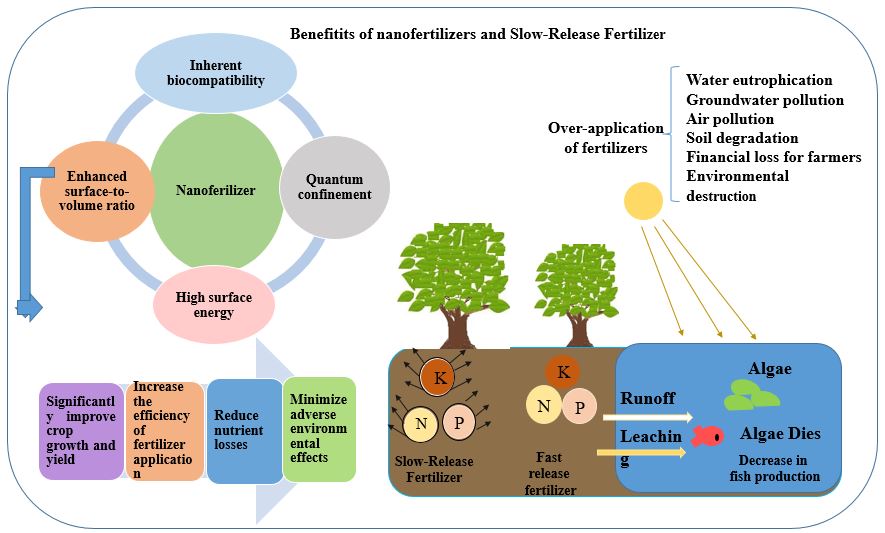
INTRODUCTION
Due to the global overpopulation, current fertilizer application methods do not suffice the food production needed by this population. Given its significant economic importance to developing agricultural countries, using conventional fertilizers leads to substantial, economic damages, due to the leaching problems [1, 2]. The continued unbalanced use of fertilizers poses a serious threat to soil health, reducing both the quantitative and qualitative yields of crops and increasing harmful environmental effects. It is estimated that up to 50% of conventional fertilizers are lost for various reasons, including leaching and/or evaporation, once applied to agricultural soils, or due to poor nutrient use efficiency (NUE) by the crops remaining in the matrix [3]. Nutrient use efficiency (NUEs) is decreased when the release of nutrients from fertilizers is more than the absorption of plants, or the nutrient elements become not bioavailable to plants. Therefore, there is a keen interest in developing innovative fertilizers to increase NUEs [1].
Nutrients such as nitrogen, phosphorus, potassium, sulfur, calcium, magnesium, manganese, copper, zinc, iron, molybdenum, etc., are essential for proper plant growth and the production of agricultural products. However, the plant's growth might be intensely affected by the deficiency of these elements in the soil, but little attention to the correct modification of these soils [4, 5]. To alleviate these deficiencies in the soil, new fertilizers must be produced to provide the plants with nutrients slowly over time, thereby reducing nutrient loss and increasing crop yields [6]. The use of nano fertilizers makes it more efficient for the plants to absorb nutrients and increase fertilizer efficiency, because of their unique properties. Nanofertilizers are economically cost-effective, and they can improve effects on the chemical and physical properties of soil; for example, they can increase the water-holding capacity of the soil [7, 8]. Such a change will be necessary for fertilizer practices, saving money and environmental damages [9]. Kah et al. [10] categorized nanofertilizers as follows: 1) NPs containing micronutrients; 2) NPs containing macronutrients; 3) NPs carrying coarse macronutrients.
Different studies indicate that using nanomaterials as the carrier for macronutrients has the highest median efficacy (29%), compared to nanomaterials made of micronutrients or macronutrients. Because of their high surface-to-volume ratio, NPs can supply nutrients slowly and steadily, depending on the plant's demands [11]. Polymeric NPs, which are used as agrochemical, carriers, can be considered a very significant release system, due to their slow and controlled release of nutrients. Controlled release of nutrients is an exciting strategy for dealing with the lack of nutrients in the soil. This strategy is based on nanocarriers, which release the cargo with appropriate quantity and time and act as nano vehicles [12].
Therefore, the overall purpose of this article is to review the micronutrient and macronutrient nanofertilizers, as well as novel technologies for the fabrication and application of the mentioned nanofertilizers and their effects on the increase in plant yields. In this paper, natural coatings for application in nanocomposite structure, with controlled release of nutrients to plants and lower toxicity than conventional coatings and enhancement of plant performance are reviewed.
Environmental Impact
The application of new strategies in the synthesis of nanoparticles and their use in the production of nano-fertilizers, nano-pesticides, etc. has increased crop production and increased soil quality and environmental protection [5]. The application of NPs in formulations provides the possibility of designing more complex products that can contribute to the environment and global food security [10]. Despite the positive effects of NPs in increasing agricultural products that have been stated in previous studies, it should be noted that the effects of these NPs are different depending on the type of plant how they are used, and their morphology and concentration [2]. Therefore, the application of these NPs in different plants and farm environments should also be investigated, and for the widespread use of these NPs and their introduction to global markets, more complete studies should be conducted and various aspects should be measured, and the standards for the use of the permitted amount of these NPs for health environment to be expressed.
The fate of nano-fertilizers after being released into the environment should be investigated in water, soil, and atmosphere. Physical, chemical, and biological processes change the shape of nanometal oxide in the environment. The essential processes that affect the fate of materials in the environment in aquatic and terrestrial environments include dissolution, mineralization, sulfidation, redox reactions adsorption, accumulation/agglomeration, and sedimentation [13].
Nanoparticles that are used as fertilizers for plants can enter the environment in different ways. Plants play an important role in the entry of nanoparticles into the food chain. Plants can cause nanoparticles to enter the food chain through the absorption of nanoparticles from the roots and contact with nanoparticles in the air [13]. Nano fertilizers can be used in different ways such as foliar spraying, irrigation, and soil method. The movement of nanoparticles in the soil is by Brownian motion into the pores of the soil. Soils are composed of fine pores like a network of humic substances soil particles and coarse pores. Nanoparticles can enter fine pores and their absorption on mobile colloids increases their mobility, and if they are absorbed by immobile particles, their mobility decreases. Therefore, soil conditions are effective in the mobility of nanoparticles [14]. Also, nano-fertilizers can enter aquatic environments. The solubility of nanoparticles in water controls the interaction between nanomaterials and natural chemicals in biological systems and processes, the state of nanomaterials in water. Nanoparticles settle in water more slowly than other particles made of that material. Nanoparticles may stick to the soil or other settling particles and settle with them [15, 16].
Some nanoparticles are also decomposed biologically and non-biologically [15]. In general, the review of various studies shows that to use nanoparticles as fertilizer, these nanoparticles should be used in the right concentration. The use of these nanoparticles in high concentrations produces toxic effects on plants and living organisms in the soil. Environmental effects and risks associated with nanotechnology have been investigated by various researchers. For example, investigations of the fate of nanoparticles in soil [17]. Biological mechanisms [18] and transport and bioavailability of nanoparticles in water and soil environment [13].
Macronutrient Nanofertilizers
Macronutrient nano fertilizers contain one or more nutrients, such as potassium, phosphorus, nitrogen, magnesium, and calcium that can supply these elements to plants [6]. Nutrient fertilization is an essential factor in yield production. Total non-fertilizer nutrients (N, P2O5, and K2O) are projected to reach 50.21 million tons by 2020 [1319]. Due to the loss of macronutrient elements such as nitrogen (N), phosphorus (P), and potassium (K) in the soil by 40-70, 80-90, and 50-90%, respectively their use in agriculture has increased [8].
Nitrogen (N NPs)
Nitrogen plays a vital, role in plants' nitrogen consumption efficiency plants from soluble nitrogen fertilizers, such as urea are often as low as 30–40%. In the case of high nitrogen content in the soil, a significant loss of nitrogen will occur in the form of volatile ammonia (NH3), nitrate leaching (NO3), nitrous oxide (N2O), immobilization denitrification, and leaching. Also, the high nitrogen fertilizer consumption leads to economic and environmental damages [20-22].
Potassium (K NPs)
Potassium fertilizers are one of the main fertilizers to increase crop yield. Potassium increases plant photosynthesis, and carbon dioxide absorption and facilitates carbon transfer. Potassium has favorable effects on the metabolism of nucleic acids, vitamins, and proteins. Also, potassium plays a role in osmotic regulation, membrane potential regulation, and plant metabolism [23-25]. Rady et al., [23] investigated the effects of potassium nano-fertilizer in salinity conditions on squash plants. The results showed that the application of this nano-fertilizer increased the photosynthetic pigment contents, photosynthetic efficiency, nutrient contents, and K+/Na+ ratio.
Phosphorus (P NPs)
One of the engineering challenges associated with fertilizer use is the improvement of nutrient release and absorption by plants [26]. Ideally, the release of nutrients from nanofilters should be controlled in a manner appropriate to the plants' needs. It should be noted that the supply of nutrients to meet the needs of plants reduces the conversion of nutrients to some forms of phosphorus sources, which are unavailable to plants. Also, it reduces environmental casualties [11, 27].
New phosphorus fertilizers, including apatite nanoparticles, have been developed to enhance agronomic performance, increase phosphorus application efficiency, and decrease eutrophication. These fertilizers exhibit significantly lower interactions with the soil, with a substantial proportion of the nanoparticles in the soil solution being absorbed by the roots In contrast, most phosphate ions in petrochemical fertilizers are absorbed by the soil, leading to reduced plant uptake [6].
The potential of hydroxyapatite nanoparticles (HAp NPs) as a replacement for conventional phosphorus fertilizers was investigated. Carboxymethyl cellulose (CMC) stabilized HAp NPs were used as a phosphorus fertilizer on soybeans, demonstrating increased biomass content compared to TSP (triple superphosphate) samples [2819]. Furthermore, investigations on HAp NPs in both andisol and oxisol acidic soils, focusing on wheat (Triticum aestivum), revealed that the faster dissolution of HAp NPs compared to bulk HAp resulted in higher efficiency than conventional fertilizers [29].
The efficiency of HAp NPs on other plants is also confirmed by increased plant yields. HAp NPs are used as a phosphorous source for the lettuce (Lactuca sativa L.) plant and have shown beneficial properties. Apart from hydroxyapatite, other NPs are applied as a phosphorus nutrient source to plants. Nanozeolite is of interest for this purpose [30]. Hagab et al. [31] studied nanozeolite phosphorus fertilizers (20.9% P2O5), to supply the phosphorus required by the peanut plant, and the results of their study showed that the use of this type of fertilizer increased plant yield and reduced environmental risks.
Calcium Nanoparticles (Ca NPs)
Calcium is among the essential nutrients for plants, with concentrations ranging from 0.1 to over 5% of the dry weight. Calcium plays a vital role in the stability of cell walls and membranes and plant growth [32, 33]. Beyond its structural role in cell walls and membranes during cell wall formation, calcium functions as the second messenger within cells and membranes. Additionally, calcium enhances plants' resistance to diseases[34]. The deficiency of Ca in the soil is rare. Xiumei et al. [32] conducted a study on the efficiency of nanocalcium carbonate on peanuts in a greenhouse experiment. However, using nanocalcium fertilizers has shown advantageous effects on the plant's growth. Applying nanoCaCO3 fertilizer combined with humic acid and organic fertilizers increased peanut growth improved the physiological properties of peanut plants, and could advance the absorbability of nutrient elements by peanuts.
Deepa et al. [35] showed that the nanoparticles of calcium oxide (n-CaO), unlike bulk materials, can be transported through the phloem tissue of groundnut. The foliar application of n-CaO with dosages of 500 ppm and average sizes of approximately 30 nm increased groundnut growth. Yugandhar et al. [38] studied the biosynthesis of CaCO3 (Calcite) nanoparticles by using CaCl2. In this study, selective boswellia ovalifoliolata plant species were used as a reducing agent for CaCO3 biosynthesis. The results showed that applying of calcite nanoparticles has increased the seed germination and the seedling growth of V mungo. Also, nano-calcium fertilizer is suitable for tomato plants under salinity stress conditions [39, 40].
Magnesium Nanoparticles (Mg NPs)
Magnesium (Mg) is one of the main minerals needed by plants primarily serving as a cofactor for various enzymes including photosynthetic carbon fixation and metabolism [41, 42]. In recent decades, the importance of magnesium for plants has not been adequately emphasized. However, in recent decades, the importance of magnesium for plants has not been adequately emphasized. In comparison with other nutrients, much attention has been given to its counterparts by agronomists and scientists, leading to the term "Forgotten Element" being applied to magnesium [43]. Delfani et al. [44] investigated the effect of iron and magnesium in two nano and bulk forms on black-eyed pea growth. The results showed that iron has increased plant yield, and increasing the amount of iron in leaf and plasma had led to more stability of membrane, and chlorophyll content. Magnesium also increased the plant yield and the combined application of iron and magnesium had a synergistic effect on the increase in the yield of plant production. Based on these reports, the use of new technologies, such as applying nano fertilizers in agriculture, is essential due to the inevitable impact of chemical fertilizers on agricultural products' production. A summary of the application of macronutrient nanofertilizers is given in (Table 1).
However, in recent decades, the importance of magnesium for plants has not been adequately emphasized. In comparison with other nutrients, much attention has been given to its counterparts by agronomists and scientists, leading to the term "Forgotten Element" being applied to magnesium [43].
There is a critical challenge for decreasing the consumption of the elements in nutrients due to the new issues, which have resulted from the extensive consumption of these elements in the soil. The required concentration of these elements is low (≤100 ppm), but important, while many of them are included in protein structures, and, therefore, involved, in enzyme activation [48, 49]. Micronutrients (or trace elements), including Fe, Mn, Zn, Cu, and Mo in tiny amounts, combined with Hoagland's solution, are needed for proper plant growth. It has been shown that [50] the use of low concentrations (˂ 5 mgL−1) of micronutrients as salt dissolved in NPK-containing composite fertilizers will produce sufficient nutrients and reduce environmental hazards. However, the availability of micronutrient elements for plants is decent, in the case of the low solubility of micronutrient elements, calcareous soils, high pH soil, coarse texture, and low organic matter (SOM) [6, 51]. The Nanoscale of micronutrients increases their bioavailability to plants and increases the quantity and quality of the product through proper and balanced nutrition [4938].
Micronutrient Nanofertilizers
Iron Nanoparticles (Fe NPs)
Iron plays a fundamental role in various physiological and biochemical pathways of plants, particularly in photosynthesis. Iron deficiency in plants reduces the efficiency of chlorophyll in photosynthetic efficiency [52]. In one study, iron nano fertilizer was compared with iron chelate, and the results showed that the application of nano-iron fertilizer improved the growth of the plant and had a positive effect on the biochemical properties of Catharanthus roseus [53]. The higher efficiency of nano iron fertilizer on the plant's growth and yield is confirmed in different studies [54, 55]. Hu et al. [56] used citrus maxima plants in their research and treated them with various concentrations of γ-Fe2O3 NPs and Fe3+ ions. Using γ-Fe2O3 NPs with a concentration of 50 mg L-1, led to an increase in chlorophyll content and root activity. Also, their results show that the 100 mg L-1 concentration Fe3+ has a more phytotoxic impact than with γ-Fe2O3 NPs. Li et al. [57] reported that the application of γ-Fe2O3 nanoparticles increased seed germination and chlorophyll content in corn (Zea mays L.). They showed that applying these nanoparticles at 20 mg L-1 concentration increased root growth and resistance index. Also, at concentrations of 20-100 mg L-1, MDA levels of corn roots of corn were increased compared to the control sample (Table 2).
Manganese Nanoparticles (Mn NPs)
Manganese (Mn) in plants is a necessary micronutrient that activates several critical physiological processes, particularly photosynthesis, and its deficiency in the plants causes chlorosis [58, 59]. The significance of manganese in agriculture production has been underestimated in the past [43]. However, much attention has been paid to this element by scientists in recent decades. Thus, Cakmak and Yazici [43] expressed the term "forgotten element" [43]. Pradhan et al. [60] stated that manganese nanoparticles at a concentration of 0.05 mg L-1 have increased the growth of the mung bean plant (vigna radiata). The nanoparticles at the recommended values for leguminous plants perform better than common fertilizers such as MnSO4 (Table 2).
Zinc Nanoparticles (Zn NPs)
Zinc is an essential element for plant growth, playing a crucial role in regulating plant development and contributing to the nutritional needs of both humans and animals. It is necessary for various enzymatic reactions, increases plant tolerance under stress conditions, and significantly influences the protection of plants against free radicals [61, 62]. Bandyopadhyay et al. [48] studied using zinc oxide NPs, bulk zinc oxide, and zinc chloride on alfalfa. The results showed that at 500 and 750 mg kg-1 concentrations of zinc oxide, germination was reduced by 50%, and all concentrations of
ZnCl2, ZnO, and ZnO NPs reduced root, and shoot biomass (Table 3).
Copper Nanoparticles (Cu NPs)
Copper (Cu) is one of the plant's micronutrients that are relatively absorbed by the plant and plays a significant role in the photosynthesis process. Also, copper contributes to RNA synthesis and activates various enzymes [75]. The effects of Cu NPs on Vigna unguiculata (cowpea) were investigated and revealed that increased the uptake of this element and increased APX and GR activity in root and leaf tissues [76]. Furthermore, the level of APX- and GR activity can be a useful prediction tool for evaluating the toxicity of nano-copper in this plant. CAT activity in the root increased by both nanoparticles of copper is increased, while these nanoparticles reduced the activity of SOD in the leaf and root. The toxicity of NPs in Vigna unguiculata is observed by antioxidant enzymes' response (Table 4).
Molybdenum Nanoparticles (Mo NPs)
One of the essential elements for plant growth is molybdenum, although relatively needed by plants in lower amounts than other elements. However, this element plays a vital role in regulating the vital functions of the plant. That is, nitrate is converted to nitrite and ammonium [77]. Taran et al. [78] have revealed that knot creation in combination with the treatment of seed with Mo NPs with a concentration of 8 mg L-1 was four times higher than the control. Also, increasing the number of nodules and increasing chickpea yield in CSNM treatment were more than microbial treatments. Kanneganti and Talasila [79] used MoO3 NPs to study the germination of the percentage of vigna unguiculata and their results showed that the use of these nanoparticles increased seed germination and plant growth.
Beneficial Element
Beneficial elements are those that increase plant growth in many herbaceous species, and, when present in the environment, contribute to improved plant growth. Also, the concentration required for different plant species varies, but it is not necessary to complete the vital cycle of the plant. Several beneficial elements for plant growth include Aluminum (Al), silicon (Si), sodium (Na), cobalt (Co), and selenium (Se). Plants' resistance to environmental stresses increases with these beneficial elements [8675]. Beneficial elements are those that enhance plant growth in various herbaceous species and, when present in the environment, contribute to improved plant growth. The required concentration varies for different plant species, although it may not be necessary for the completion of the plant's vital cycle. Several beneficial elements for plant growth include aluminum (Al), silicon (Si), sodium (Na), cobalt (Co), and selenium (Se). The presence of these beneficial elements increases plants' resistance to environmental stresses.
Silicon Nanoparticles (Si NPs)
In the early 1900s, silica was considered one of the essential elements required for plants. However, its need for plants is still under discussion. At the same time, there is insufficient evidence to show a direct role of silica in plant metabolism and the production of silica-containing organic compounds. Various forms of silica are used to produce agricultural fertilizers that improve crop growth. Plants usually use silica in mono and poly-silicic acids [87]. According to the authors, nano silica improves plant growth by increasing the accumulation of proline, amino acids, and the concentration of nutrients, which enhances the efficiency of the photosynthetic system [88]. A study on corn and barley showed that nano FeSiO2 had reduced the germination time of crops [89]. There is a hope that using silicon is efficient in reducing the effects of biotic stresses caused by pests, diseases, and abiotic stresses [90]. Pei et al. [91] reported that while the role of silica as an essential element in plant growth has not yet been definitively determined, its beneficial effects on growth, yield, and increased resistance to environmental stresses in various plants have been proven. The application of nanosilica had positive effects on the germination, root, and stem length, the efficiency of photosynthesis, and biomass of corn seedlings [92]. Although silicon is considered a non-essential nutrient for the majority of plants, this element's application enhances the yield of many crops, such as rice, chili, and sugarcane, and many horticultural crops [87, 93-100].
Silicon NPs have unique properties that give them different properties in terms of physical and chemical properties. Moreover, it can influence metabolism. The function of silicon in unfavorable environmental conditions by entering plant tissues is observed [97]. In the study by Wang et al. [101], the effects of nano-silicon on cadmium stress in rice plants have been investigated. It was observed that after the use of nanoparticles, plant growth increased and increased the amount of magnesium and iron and also increased the amount of chlorophyll in plants. Also, using these nanoparticles reduces cadmium toxicity by decreasing cadmium accumulation, the process of cadmium dispersion in the shoot, and the MDA level.
In general, it can be said that the effects of cadmium stress in the plant are reduced by using silicon nanoparticles. Their results showed that the use of nano-silica increases the silicon content in the plant and the expression of organic compounds. The features of silica NPs, such as large surface areas, high diversity in surface functionalization, adjustable pore sizes and volumes, nontoxicity, biocompatibility, and stable mesoporous structures, have made them great candidates for various applications, especially nano fertilizers. However, fertilizer delivery systems based on nSiO2 have been less studied. An ideal controlled release system for fertilizer has the following characteristics: a) releasing the elements on demand, b) proper protecting of light unstable and easily hydrolyzable elements like urea from rapid degradation, c) reducing pollution in soil, water, and food products, d) reducing of soil compaction and quality deterioration, e) and decreasing of plant stress [102]. Table 5 shows some of the studies that evaluate the impact of Si or nano Si on different plants. Silicon in both bulk and nano types has different effects on plants, based on their size and properties and the type and growth stage of plants.
Selenium (Se) NPs
Selenium (Se) is a trace element essential for humans and animals in small amounts. However, excessive selenium quantities are toxic and could cause disease in humans [103, 104]. Wang et al. [105] have evaluated the effects of various Se forms on the accumulation and distribution of this element in the wheat-maize rotation cropping system. They also studied the residual concentration of selenium in products after applying fertilizer. Foliar Se increased selenium content in corn and wheat grain compared to the control treatment. A low concentration of nano-Se treatment was observed to cause an accumulation of this element in the plant tissue. This observation indicates less transfer than other selenium treatments. The availability of selenium depends on its distribution, chemical forms, and different plant species (Table 5).
Novel technologies for the fertilization of nutrients
In this section, we will discuss the products and technical aspects of novel technologies for producing nanofertilizer nutrients. Plants need 17 elements to grow naturally and complete their life cycle. They include nitrogen, phosphorus, potassium, calcium, magnesium, sulfur, boron, chlorine, iron, manganese, zinc, copper, molybdenum, nickel, and three inorganic elements, carbon, hydrogen, and oxygen 13 of which are taken from the soil. To provide these elements in the soil, nanofertilizers gently release these elements in the soil. This gradual release increases the mobility of nutrients within plants, leading to budding, rapid growth, and elevated nutrition levels [106]. In the last 20 years, various slow/controlled-release fertilizers have been produced using hydration polymers, nitrification inhibitors, urea-formaldehyde, and other materials [107]. In many countries, applying advanced nitrogen fertilizers increases nitrogen uptake efficiency by 5- 8% [108] Low fertilizer-MUE efficiency in crop soils, usually less than 5%, affects crop production, increases production costs, and increases environmental hazards [109]. Hence, many researchers have tried to produce fertilizers that enhance MUE, while minimizing adverse material effects. One of the technologies that help solve this problem is Nanofertilizers, which significantly increase MUE levels compared to conventional fertilizers [110].
Controlled-release of nutrients
Slow/controlled-release fertilizers are nutrient fertilizers that provide nutrients to the plant at the right time and increase plant access to nutrients. Controlled release nanofertilizer (CRF) fertilizers have limitations compared to traditional fertilizers: These fertilizers are more expensive due to the use of coatings in manufacturing. CRFs may be unable to provide nutrients based on plant needs [111]. Improper use of them, and inappropriate places of their use, prevent their practical use [112]. CRF provides the nutrients plants need slowly and over time by using nanoscale carriers. Nanomaterial coatings may slow down the release of nutrients by various mechanisms. For example, porous nanofertilizers may have channels that retard nutrient release. Regarding the unique properties of nanoscale materials, the slow release of nutrients from this type of fertilizer causes these elements to be provided to plants slowly over time. It could be due to high surface tension and more vital intermolecular interaction, which is a result of the immediate dissolution of fertilizers [113, 114]. Therefore, fertilizer's controlled release has a high potential to improve fertilizer application efficiency and reduce environmental problems [115]. Nanoparticles, coatings, or capsules facilitate slow or controlled diffusion. The release of nutrients through polymeric membranes/capsule-controlled release fertilizers is independent of the soil properties, such as pH, soil salinity, texture, microbial activity, regenerative potential, and ionic strength of soil solution. However, temperature and penetration are the factors, which affect the release process [116].
Production of slow-release fertilizers and fertilizers with good quality are the main problems of the chemical industry in agriculture. To date, providing macro and micro elements to plants and enhancing or retaining the desired performance has been an essential reason for using fertilizers [117]. An attractive approach for improving the formulation of fertilizers is using nanoscale materials. The meaning of the application of nanoscale materials as a carrier of elements is derived from the pharmaceutical industry to be slow/controlled release (SCR). Despite the application or coverage of commercial fertilizers having promising results, the widespread use of these materials has specific requirements, including competitive cost, suitability for agricultural applications, and being safe and healthy from an environmental perspective [118]. Coated and bonded nano and sub-nanocomposites by SCR Nanofertilizers can control the release of essential elements from the capsulated fertilizers [119].
Recently, several strategies have focused on studying the technologies to provide new delivery systems for nanofertilizers, which can adapt to changes that occur in the environment. The ultimate goal of Nanofertilizer production is the controlled (either slow or rapid) release of their cargo in response to various environmental signals (e.g., heat, moisture, etc.) [120] (Table 6). In the case of polymer-coated fertilizers, the choice of coating material and application of coating techniques should be carefully considered. Scientists have studied different coatings to produce slow-release fertilizers to achieve adequate efficiency. Slow-release fertilizers have been studied, and to date, many fertilizers with controlled-release mechanisms have reached the commercialization stage [121]. An exciting approach for obtaining controlled-release fertilizers is using superhydrophobic bio-based coating materials. In this regard, nano lauric acid copper is synthesized in a single step with the coating of urea fertilizer with bio-polyurethane and used as a controlled-release fertilizer. The synthesized nano lauric acid copper was a cost-effective and multifunctional coating material for controlled release [122].
Nano-encapsulated nutrients
Nano-encapsulation of fertilizers is an effective method, which enhances the uptake of elements [123]. In this method, the given compound is coated or embedded in a homogeneous or heterogeneous matrix [124]. Nano-encapsulated fertilizer is a new method, which is performed in three ways: 1) encapsulation of nutrients by nanoporous materials, 2) polymer coating, and 3) delivering as NPs or nanoemulsions [125]. To prepare appropriate coatings, in a method, called the wet method, a polymeric solution or pure solvent (generally N, N-dimethylformamide) has been sprayed onto the fertilizer granules [126]. This coating reduces the release rate of the elements, which leads to slow-release fertilizers. The proper use of water and fertilizers is the prime potential application of the technology [127]. For example, mesoporous aluminosilicates, as nutrient delivery systems, can provide macro and microelements and MN to the soil and plant [109]. The composition of the capacity of three materials in immobilizing urease enzymes and hydrolyzing urea into ammonium has been investigated [128]. The materials include PE-MCM-41 (pore-expanded mesoporous silica), MCM-41, and silica gel. It was observed that the hydrolysis reaction rate on PE-MCM-41 is much lower than that on other materials. Huo et al. [129] used attapulgite clay minerals as a silica and aluminum source. The pore diameter, wall, and diaphragm of this embedded MS with copper NPs were smaller and thicker, compared to pure silica, and its thermal stability was higher. Yuvaraj and Sotremanyan [130] synthesized nano hollow core shells of manganese for the slow release of zinc nutrients. A significant increase in the efficiency of Zn in Oryza Sativa growth was noticed and reduced the waste of elements and environmental pollution. Therefore, more research is needed to apply nanotechnology to manufacture this type of fertilizer to reduce the cost of raw materials and optimal commercial production, effectively reducing environmental risks [111].
Materials used in Nanofertilizers (slow and controlled released fertilizers)
Today, various coatings have been used for slow-release fertilizers, including natural organic polymers such as peat, inorganic polymers such as sulfur, and synthetic polymers such as various resins [111, 117].
Polymeric materials
Various materials were investigated for the nutrient's coatings for the slow-release purpose (including polymeric and non-polymeric materials). Apart from polymeric NPs, polymers with no nanostructure are used as binders or protective layers for nanostructured fertilizers [1]. A polymeric Nanofertilizer was reported by Kumar et al. [131], in which the fertilizer is a polymeric formulation of polyvinyl alcohol (PVA)-starch-supported copper-zinc NPs, carrying carbon nanofibers (CNFs). In this study, the potential of a PVA-starch polymeric formulation has been evaluated, to be used as a base for the slow release of copper-zinc microelements carrying CNFs. To prepare this nanoparticle in a polymerization step, Cu-Zn/CNFs have been dispersed in a PVA/starch solution.
Natural materials
For the slow release of nutrients and increasing productivity, various materials are used as coatings. Several efforts have been focused on providing environmentally friendly coatings for fertilizer production. Many of these coatings are made of natural materials. These natural coatings have many advantages over synthetic materials, including easy access and biodegradability [135]. A practical method for slowly releasing elements into the soil is fertilizer coatings with hydrated, soluble, or biodegradable polymers [136]. A number of both natural and synthetic polymers, including starch Kumar et al. [131], cellulose Bortolin et al. [136, 139], and chitosan [140, 141] (have been examined (Fig. 1)).
Chitosan (CS)
Chitosan is a linear polysaccharide and is a derivative of glucan. It is cheap, biodegradable, and non-toxic. Chitosan is promising for application in the fertilizer industry for providing controlled release systems, especially as mixtures with hydrophobic materials, such as humic substances [136, 142]. The CS NPs obtained through the polymerization of methacrylic acid could be applied to produce NPK fertilizers [140]. The results show that the addition of nitrogen and potassium causes more stability of the colloidal suspension of chitosan-polymerized methacrylic acid compared to the addition of phosphorous. It could be due to the more anion charge of calcium phosphate than potassium chloride and urea. The effect of nano chitosan-polymerized methacrylic acid and chitosan on plant growth and crop yield of rice has been evaluated [141]. It was observed that nano chitosan increased the absorption of nitrogen, phosphorous, and potassium, which leads to vegetative growth, and grain yield of crops up to 49% compared to conventional NPK (nitrogen, phosphorous, and potassium). Furthermore, it has led to the reduction of the rice growth cycle by 40 days. Also, these researchers examined the effect of foliar application of NPK loaded on chitosan NPs on wheat. Their findings indicate that using nanofertilizers increases plant growth and significantly enhances the harvest index and other wheat yield components [141].
Sodium alginate (SA)
Sodium alginate is a water-soluble polymer and natural anionic polymer and can be derived from brown seaweed (Phaeophyceae) as well as capsular polysaccharides in some bacteria [143]. However, sodium alginate-based hydrogels, similar to many biopolymer-based hydrogels, have low mechanical strength. To overcome this problem, physical or chemical modifications are used to improve SA hydrogels' properties [144]. The other problem with these hydrogels is that they do not always release the elements slowly, and they release the remaining elements explosively after a slow release. To solve this problem, fertilizers coated with sodium alginate have been attached to other polymers or materials [135]. Nitrogen fertilizer has produced SA hydrogels to increase fertilizer productivity and reduce environmental pollution [145]. An example of a sodium alginate application in coated fertilizers is potassium Nanofertilizer fabrication. This material is a SA by the ionotropic pre-gelation method reported by [113]. The controlled-release fertilizer contained 29.75 % of potassium (w/w), and only 14.6 % of the potassium was released after 24 hours in the Britton-Robinson buffer mixture.
Starch and its derivatives
Starch is a natural biopolymer, which can be extracted in large amounts from different plant sources. Recently, researchers have focused on using starch and its derivatives to coat nutrients for fertilizer production. This is due to the biodegradability and beneficial properties of this biopolymer. Starch is low-cost, abundant, biocompatible, and capable of being renewed. Also, starch can be used as a biopolymer matrix for the fabrication of nanoscale materials. Thus, researchers have been using starch as an encapsulating agent to prepare agrochemical materials [146-148]. Some researchers developed a substrate from the polymeric formulation of PVA–starch for the slow release of the copper-zinc microelements containing CNFs and examined the effects of nanoparticles on chickpea plants [131]. Their findings showed that this formulation can provide iron and zinc for the studied plant. The use of this fertilizer increases the growth of plants and reduces the harmful effects of ROS.
Cellulose
Cellulose is the most abundant natural biopolymer on earth [149]. Essawy et al. [138] synthesized a new superabsorbent polymer using a hybrid material, containing both CS and cellulose for the controlled release of nutrients into the soil. This fertilizer has improved the resistance to acidic conditions, has absorbed water, has increased mechanical strength, and has been resistant to temperature. Kotgoda et al. [139] examined hydroxyapatite nanoparticles encapsulated in pressure conditions to load the nutrients into cavities of the softwood. The released nitrogen has been measured over time at three different pH levels. Nanofertilizer releases nitrogen slowly over 60 days, a significant advantage compared to commercial fertilizers.
Lignin
After cellulose, lignin is the second most naturally abundant and renewable biopolymer [150, 151]. Due to its helpful functional features, it has excellent potential for various applications in agriculture. Lignin is a relatively cheap and biocompatible polymer and can be derived from plants [135, 150]. Detroit [151] developed a slow-release fertilizer by cross-linking lignin with formaldehyde or formaldehyde-forming material, and combinations of glutaraldehyde and epichlorohydrin. This formulation provided slow-release solubility to urea fertilizer. Using lignin and ethyl cellulose is suitable for producing a controlled-release formulation for urea fertilizer [152].
Biochar
Carbon-based materials are abundant materials, applied to the agricultural industry. These materials are eco-friendly, have useful physiochemical features, and are suitable materials for industrial applications [118]. Biochar is carbon-rich and is derived from the thermal pyrolysis of plant residues. Biochar could be used as a carrier agent to form high-quality nitrogen fertilizers, enriched with biochar matter [154, 155]. Utilization improved soil fertility and plant productivity. This material as a bio-fertilizer or preservative for controlled retirement of fertilizer has excellent effects on the environment, including increasing the profit of agricultural activities, decreasing the risk of eutrophication, strengthening the destroyed lands, reducing environmental pollution, and mitigating climate change [156-159] (Table 7).
Nanoclays
Slow/controlled-release fertilizers could effectively prevent or reduce the loss of conventional fertilizers and environmental pollution [162]. Nanoclay polymer composites, as potential agro-biotechnological materials, could improve the input use efficiency, especially fertilizer and water consumption under abiotic stress conditions. This composite material increases the water retention capacity (WHC) and raises the release behavior of nutrients. In many recent studies, polymer compounds have been made with appropriate formulations for simultaneous water storage capacity improvement and proper nutrient release [163-164]. However, because pure polymers have high cost and their uses are not cost-effective in saltwater and soil, are not suitable [166]. In clay nanocomposite, the combination of nano clay and active material (for example, oxide nanoparticles, metal, and non-metal) can be used to transport micronutrients, pesticides, etc. for better crop growth [167]. Using composites of these polymers with cheaper fillers is a suitable approach for overcoming this problem. Highly permeable hydrogels tend to release nutrients quickly, and therefore, the production of materials with proper physical strength and nutrient-holding capacities is an aim. Various materials are used to build polymeric networks, including clay materials such as attapulgite, montmorillonite, kaolin, mica, and vermiculite. These materials are of interest, due to their low price and swelling properties, which improve the properties of hydrogels [162]. Liang and Liu [165] reported that the diffusion coefficient of urea had been reduced by the application of kaolin nanopowder, a super absorbent polymer.
Zeolite-based Nanomaterials
The use of nanocomposite fertilizers and nanofertilizers has some advantages, and the controlled release of nutrients needed by plants is one of them [11]. The controlled and slow release of nutrients by these fertilizers improves nutrient utilization efficiency. It prevents the fixation or loss of elements in the environment [167]. And supplies a range of proper concentrations [169]. Zeolite and nanoporous zeolite are applied as slow-release fertilizers in agriculture [170-172]. Slow-release zeolite-based nanofertilizers incorporating urea, potassium sulfate (K2SO4), and calcium hydroxyapatite have improved the availability for 60 days [139]. A slow-release nanocomposite fabricated using nanoclays and zeolite regulated nitrogen availability for up to 45-49 days for maize [173].
Silica-based Nanomaterials
Silica has been demonstrated as a crucial material for enhancing crop production, leading to its widespread use in the production of various fertilizers [174]. Extending biocompatible nano silica is significant, due to an environmental viewpoint. Consequently, biocompatible nano silica is synthesized, and its efficiency is assessed [175]. The results indicate that the California Bearing Ratio (CBR) strength of nanosilica-cured soil increased the optimum amount of biogenic Nanosilica [176].
Modification of mesoporous silica surfaces can enhance their adsorption features by providing a better surface for electrostatic interaction or by offering binding sites for metals [177]. These unique properties make them excellent nanomaterials in drug delivery systems, catalysts, etc. [178-180]. However, a rare attempt has been made to study fertilizer delivery systems based on MSN [102]. Modification of mesoporous silica surfaces can improve their adsorption features by offering a better surface for electrostatic interaction or by offering binding sites for metals [177]. It was found that the KIT-6 loaded by phytase efficiently hydrolyzed phytate and delivered inorganic P to growing Medicago truncatula plants. The plants accumulated this newly available P in their roots and shoots [181]. Researchers reported the controlled release of salicylic acid from decanethiol-gated MSNs in A. thaliana, and cellular glutathione was used as a stimulus [182].
Phytase enzyme is made by a large number of bacteria and fungi. It can mobilize the phytate a general organic form of P. Plants release a small amount of the enzyme into their rhizosphere [183]. Trouillefou et al. [181] used nanoporous siliceous materials. These nanomaterials are tunable to accommodate most proteins. They immobilized phytase in silica mesoporous nanomaterials. Silica increases salinity tolerance in plants [184, 185]. Of this property, Mushtaq et al. [186] used nano silica as a controlled release system to increase salinity tolerance. The nanoparticles are modified by sodium alginate and lanolin to increase water uptake. The release showed slow, and the particles were stable for up to 6 months at room temperature. A hybrid silica-based material is synthesized for the controlled release of urea. The nanoparticles were shown to be stable, and the release was performed for up to 10 days under ambient conditions [187].
Carbon-based Nanomaterials
Nano-carbon materials can be used as nutrient carriers in agriculture due to their unique properties, especially the high surface-to-volume ratio. These materials can retain water and nutrients for a long time and provide them with water and nutrients in a suitable proportion the plants need. This property could reduce environmental pollution. Due to these characteristics, these nanomaterials are classified as intelligent fertilizers [59]. In recent studies, the efficiency of various carbon nanomaterials, including carbon nanohorns, carbon dots, carbon nanotubes, graphene oxide, and fullerenes C60, has been studied on different plants [188-190]. These nanomaterials have had optimistic effects on the germination of seeds, growth, and plant yield. However, some studies have reported the side effects of carbon-based nanoparticles on the physiological traits of plants [191-192].
The use of graphene oxide in the synthesis of new fertilizers and slow-release fertilizers was investigated [193-194]. Graphene oxide-enriched biochar was synthesized as a nutrient carrier for copper and zinc elements, and it was investigated on bean plants, zinc and copper elements in this fertilizer were less soluble in water, and the use of graphene oxide increased the effectiveness of the fertilizer) [193]. The study of Kabiri et al. [194], used GO-supported graphene sheets as a new material for nutrient utilization and showed that these sheets allow the slow release of consumables such as Zn and Cu. They stated that nutrient release in the fertilizers made with graphene oxide had two stages. In the first stage, when the plant needs more nutrients, the release is faster, and in the later stages of plant growth, when the release of fertilizer is slower, it creates conditions suitable for plant growth and reduces the loss of micronutrient elements.
For the first time, the carbon nanotubes application in agriculture began the research by Khodakovskaya et al. [188]. The researchers indicated that carbon nanotubes (CNTs) increase water penetration into tomato seeds, increasing their growth and seed germination. Liang et al. [189] examined different concentrations of CNP in tobacco plants. Their results showed that applying these carbon-based nanomaterials enhanced the amount of nitrogen and potassium in plants and increased plants growth, compared to conventional fertilizers. Also, the results of a study by Tripathi et al. [190] showed that using water-soluble carbon nano-onions (wsCNO) increases fruit yield, protein production, and the absorption of micronutrients. Also, this type of fertilizer can act as a stimulant for the growth and development of plants. Wang et al. [195] examined the effects of carbon dots on mung bean plant growth. Their results showed that the application of this fertilizer has increased root and stem growth and has increased biomass and chlorophyll content. More studies are needed in the application of this type of nanofertilizers, due to the different effects on the plants. Their effects on the ecosystem need to be examined more closely.
Uptake and track of delivered nanosystems
Plants are one of the most important and potential routes for transferring nanoparticles in the environment and their accumulation in the food chain Nair et al. [196] most MNs are mainly adsorbed from soil solution as ionic organic chelates. They are also absorbed as ions. MNs are obtained from plant roots through active diffusion or transfer from the soil solution. After adsorption of Fe, Zn, Mn, and Cu nanoparticles from the soil solution, these nanoparticles are transported through the root membrane of the root or leaf to the woody vessel for transfer, use, internal recycling, and storage in the plant [109]. After the uptake of nanoparticles by plants, the plant cell wall acts as a barrier to the easy entry of any foreign agent, including nanoparticles, into plant cells [196].
Therefore, only nanoparticles whose diameter is less than the diameter of the cell wall's pores can pass easily through these pores and reach the outer membrane. Cell wall cavities have dimensions between 5 and 20 nm. Thus, theoretically, nanoparticles with dimensions less than 20 nm can pass through the cell wall [196]. The engineered nanomaterials (ENMs) may be translocated through the cells via plasmodesmata, approximately 40 nm wide. Also, it is easy to collect very small ENMs through apoplastic pathways. However, in the case of significant particles, the chemical composition of their surface can have a large effect on stimulating adsorption [197] however, there are many aspects of the adsorption mechanism. The transfer of nanomaterials in plants has not been studied and these aspects need to be the focus of future research in this field.
Challenges and current perspectives on nano fertilizer
Although nanotechnology has different applications in human life, such as agriculture, industry, food, medicine, and cosmetics [197], due to the reactivity of nanoparticles due to their unique properties, such as their small size and large area, there are many concerns about their undesirable environmental effects on biological systems and safe application of nanotechnology [4]. There is much research on the health and environmental impacts and safety concerns of nanotechnology. Furthermore, there are many studies which are conducted on animals. Additionally, it is reported that the people who are directly exposed to nanomaterials, i.e., the type of research, and the workers are in real peril. Therefore, it is desired that nanotechnology innovation should be continuous, but the relevant regulatory rules should be in place [198].
Since fertilizers are the most crucial fertility factor in soil, supply, maintenance, distribution, and optimal use of fertilizer, balanced plant nutrition, and monitoring of fertilizer quality are some of the main concerns of the agricultural sector. Although a wide range of nano fertilizers is made, the lack of global rules and standards for the use of nano fertilizers, such as the amount and manner of their use, as well as the assessment of their toxicity risks, as well as the non-assessment of environmental hazards, the quality of monitoring challenged on fertilizer. Because the absorption, transfer, and accumulation mechanism varies with plant species, precise information on the nature of the products with their adsorption/adsorption behavior before their application and their application method is necessary [199]. Also, studies should be conducted on the evolution, fate, and bioavailability of NPPs in the environment [200].
Future research should focus on the development of nanoscale recycling techniques and materials and the measurement of their release to environmental systems [201]. Future research can focus on the release and movement of nanoparticles in the plant and their localization in the cell and on tracing the fate of metals encapsulated in nanoparticles. [202, 207]. Also, more research should be done on the toxicity caused by carrier residues in plants or soils and solving their possible problems [203]. Various studies have been conducted on the impact of nanoparticles on the environment and their positive effects on the removal of environmental pollution have been reported, [204-208]. However, the impact of these NPs on the environment and their tracking should be more thoroughly investigated in the environment.
Conclusion and Future Roadmap for Using Nanofertilizers and Nanonutrients
Given the widespread application of nanotechnology in various agricultural sectors, its significance in this domain has become paramount. Considering the food security issues for the world's growing population and facilitating the trade of efficient and eco-friendly fertilizers, comprehensive and complete assessments are needed in this area. These assessment systems shall be developed based on the projected challenges to maintain global food security against the growing population and to facilitate the trade of efficient and eco-friendly fertilizers.
Considering that the fate of nanoparticles is mostly unknown in the ecosystem and limited information about the effects of these substances on ecosystem health, environmental removal, and safe disposal of nanomaterials, the toxicity of these materials has to be continuously evaluated. It is essential to develop and implement appropriate programs and world standards for these. For example, environmentally - friendly fertilizers seem to be an effective way to improve the efficiency of using nutrients, minimize leaching, and reduce the environmental risks resulting from a reduction or even control of nutrient emissions.
CONFLICT OF INTEREST
The authors declare no conflict of interest.
